
- 1 - 1 Person US$ 1,550
- 2 - 5 Person US$ 1,450
- 6 - 12 Person US$ 1,399
- 13 - 20 Person US$ 1,350
3*** Hotel in Kathmandu and Pokhara and Lodge during the trek.
Breakfast in Kathmandu and all meals during the trek.
Highlights
- The only Himalayan base camp with cozy lodges offering comfortable accommodation
- Explore traditional Gurung and Magar mountain villages rich in culture and hospitality
- Experience dramatic changes in landscapes, vegetation, and climate zones
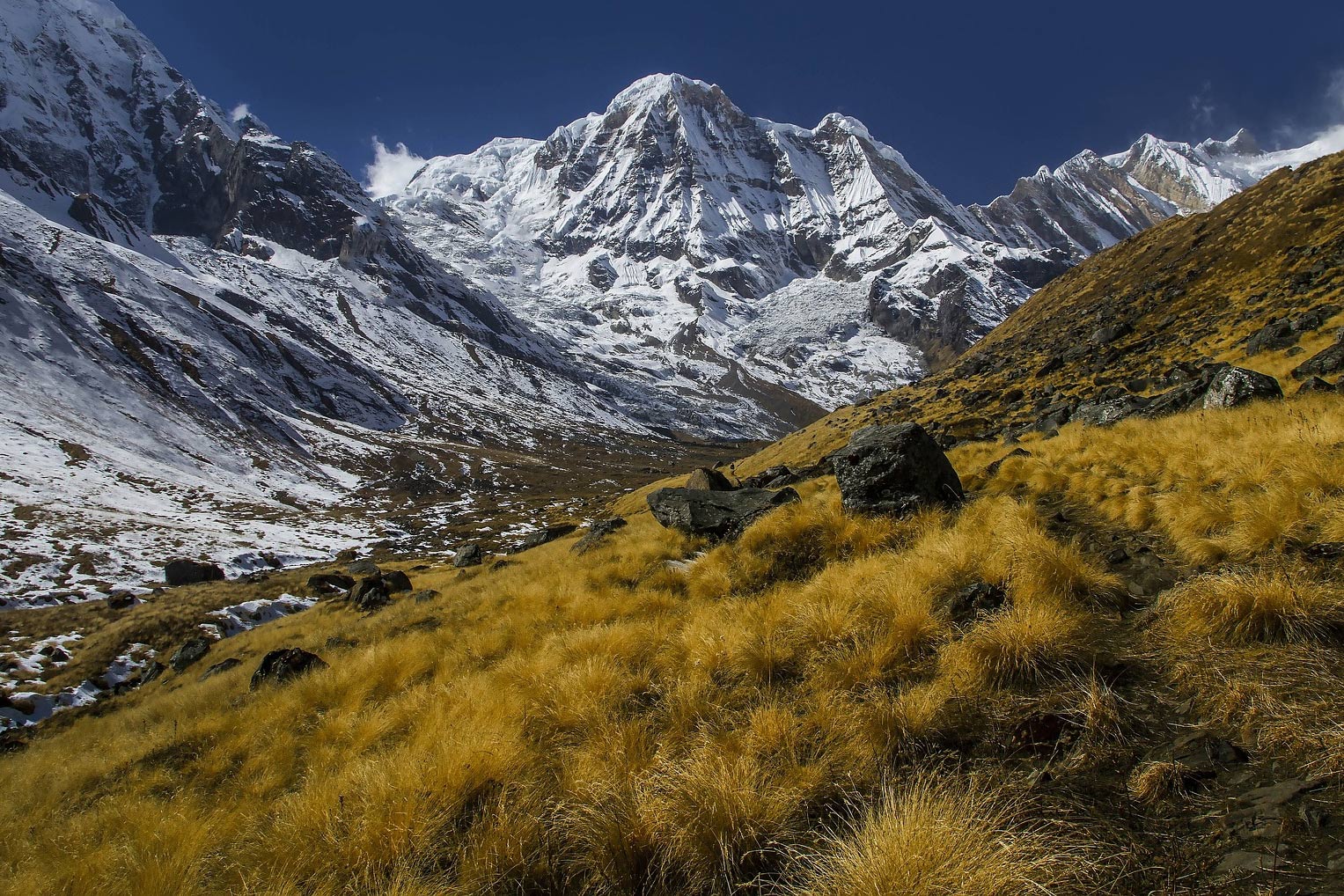
- Trek deep into the heart of the Annapurna massif and the stunning Annapurna Sanctuary (4130 m)
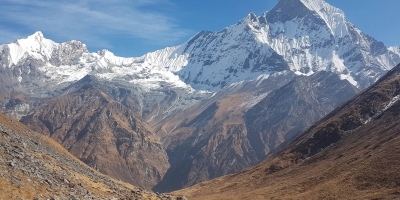
- Spectacular panoramic views of Annapurna I, Machhapuchare (Fishtail), and other towering peaks
- Opportunity to soak in natural hot springs at Jhinu Danda for relaxation
- Scenic flight from Kathmandu to Pokhara showcasing Himalayan foothills and lakes
- Diverse flora and fauna, including rhododendron forests and Himalayan bird species
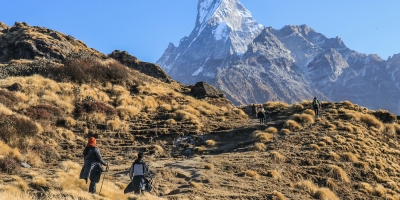
- Well-established trekking route with teahouses providing warm meals and lodging
- Chance to witness spectacular sunrises and sunsets over the snow-capped peaks
- Cultural encounters with ethnic mountain communities and visits to local markets
Overview
The Annapurna Base Camp Trek is one of the most breathtaking Himalayan adventures not only in Nepal but worldwide. Often referred to as the "Sanctuary of the Gods," the Annapurna region captivates trekkers with its extraordinary natural beauty and spiritual significance. Early explorers who first set foot in this region were awestruck by the majestic Annapurna Sanctuary—a vast amphitheater of towering snow-capped peaks surrounding a serene plateau.
What makes this trek especially unique is its accessibility. Unlike other Himalayan treks that can take weeks or months, the Annapurna Base Camp trek can be completed in just about a week. This short duration combined with stunning mountain views makes it one of the most sought-after and exclusive trekking experiences in the Himalayas.
The trek starts from the vibrant city of Pokhara, nestled in a lush valley blessed with clear lakes and panoramic mountain vistas. From here, the journey leads through traditional Gurung villages like Ghandruk and Chomrong, passing through lush forests of bamboo, rhododendron, and pine as the trail gradually climbs higher into alpine terrain.
At 4,130 meters, the Annapurna Base Camp sits on an oval plateau surrounded by giant peaks including Annapurna I—the tenth highest mountain in the world and the first 8,000-meter peak ever successfully climbed in 1950 by a French expedition. Alongside Annapurna I, trekkers are treated to views of Annapurna South, Gangapurna, and Machhapuchare (Fishtail), creating a breathtaking panorama that is truly a once-in-a-lifetime experience.
After soaking in the spectacular views and mountain air at base camp, the descent follows a similar trail with a rewarding detour to Jhinu Danda, a village famous for its natural hot springs—perfect for relaxing tired muscles after the trek.
Everest Adventure Tour ensures that every step of this journey is comfortable and memorable, with cozy mountain lodges and experienced guides who share insights into the region’s culture, history, and natural wonders. The Annapurna Base Camp Trek is not just a physical adventure but a soulful journey into the heart of the Himalayas.
Whether you are an experienced trekker or a nature enthusiast seeking majestic landscapes, the Annapurna Base Camp Trek with Everest Adventure Tour promises an unparalleled Himalayan experience filled with stunning views, cultural encounters, and unforgettable memories.
Itinerary Overview of Annapurna Base Camp Trek
Everest Adventure Tour proudly offers the Annapurna Base Camp (ABC) Trek, one of Nepal’s most iconic trekking experiences. This trek combines rich cultural encounters with breathtaking natural beauty, taking trekkers through terraced fields, traditional Gurung villages, and rhododendron forests before reaching the majestic Annapurna Sanctuary. At 4,130 meters, the Annapurna Base Camp offers a panoramic view of some of the highest peaks in the world, including Annapurna I, Machhapuchare (Fishtail), and Hiunchuli.
The trek spans roughly 7 to 12 days, depending on the itinerary, with Everest Adventure Tour’s package designed to balance adventure with comfort and safety. From the bustling city of Kathmandu to the tranquil valleys around Pokhara and the rugged mountain trails, this journey highlights Nepal’s rich diversity. It is a trek suited for those seeking a moderate challenge combined with stunning scenery and authentic local culture.
Key Points:
- Duration: Typically 10-14 days
- Maximum altitude: 4,130 meters (Annapurna Base Camp)
- Starting point: Pokhara or Nayapul
- Trek style: Moderate difficulty, suitable for beginners with good fitness
- Highlights: Annapurna Sanctuary, Machhapuchare, rhododendron forests, Gurung culture
Major Places for Annapurna Base Camp Trek
The Annapurna Base Camp Trek passes through numerous culturally and scenically important locations that showcase the beauty and heritage of the Annapurna region. Starting from Nayapul or Kimche, trekkers encounter lush green landscapes and traditional villages that provide a glimpse of rural Nepali life.
Ghandruk: One of the largest Gurung villages in Nepal, Ghandruk is famous for its stone houses, friendly locals, and panoramic views of Annapurna South and Machhapuchare. It’s a perfect place to learn about the Gurung culture and traditions.
Chomrong: Nestled in a deep valley, Chomrong is a major stop on the trek and acts as a gateway to the higher reaches of the Annapurna Sanctuary. It’s a lively village with plenty of guesthouses and teahouses.
Bamboo and Dovan: These small hamlets are nestled amidst dense forests and offer a serene trekking environment with chances to spot wildlife and birds.
Machhapuchare Base Camp: Offering stunning close-up views of Machhapuchare (Fishtail) Peak, this camp provides a rewarding stop before the final ascent to ABC.
Annapurna Base Camp: The trek’s pinnacle, Annapurna Base Camp is set in a natural amphitheater surrounded by towering Himalayan peaks, offering breathtaking sunrise and sunset views.
Key Points:
- Ghandruk: Cultural hub, Gurung heritage
- Chomrong: Gateway to higher altitudes
- Bamboo & Dovan: Scenic forested villages
- Machhapuchare Base Camp: Spectacular mountain views
- Annapurna Base Camp: Majestic mountain amphitheater
Best Season for Annapurna Base Camp Trek
The Annapurna Base Camp Trek can be attempted year-round, but the best seasons to visit are spring (March to May) and autumn (September to November). These periods provide clear skies, moderate temperatures, and the best visibility of the Annapurna massif.
In spring, the trail is vibrant with blooming rhododendrons and other wildflowers, making the trek especially scenic. The weather is warm during the day and cooler at night, ideal for trekking without extreme cold or heat.
In autumn, after the monsoon rains, the air is fresh and the skies are clear, offering some of the best panoramic mountain views. This is the most popular trekking season and the trails are lively with other trekkers.
Winter (December to February) is colder with possible snowfall at higher elevations, which can be challenging but rewarding for those who prefer solitude. Monsoon season (June to August) is least favorable due to heavy rains, slippery trails, and landslide risks.
Key Points:
- Best seasons: Spring (Mar-May) and Autumn (Sep-Nov)
- Spring: Blooming rhododendrons, moderate temperatures
- Autumn: Clear skies, great mountain views
- Winter: Cold, possible snow, fewer trekkers
- Monsoon: Heavy rain, slippery trails, avoid trekking
Annapurna Base Camp Trekking Difficulty Level
The Annapurna Base Camp Trek is classified as a moderate-level trek, suitable for trekkers with a reasonable level of fitness and some trekking experience. The trail is well-established with teahouses and lodges along the route, making it accessible for most ages.
The daily trekking duration averages between 4 to 6 hours, covering a mix of gradual ascents, descents, and some steep climbs, especially as you approach the higher elevations near Machhapuchare Base Camp and ABC itself. Altitude sickness is a possibility above 3,000 meters, so proper acclimatization days and gradual ascent are critical.
Trekkers should be prepared for varied weather conditions, including chilly nights and occasional rain or snow depending on the season. A good level of endurance, proper gear, and guidance from experienced staff (which Everest Adventure Tour provides) will ensure a safe and enjoyable trek.
Key Points:
- Difficulty: Moderate
- Average trekking hours: 4-6 hrs/day
- Altitude range: 860 m to 4,130 m
- Requires good fitness and stamina
- Acclimatization days recommended
- Suitable for beginners with preparation
Food and Accommodation for Annapurna Base Camp Trek
During the Annapurna Base Camp Trek, trekkers experience a blend of traditional Nepali hospitality and simple comforts that make the journey enjoyable. Everest Adventure Tour ensures that all accommodations on the trail are safe, clean, and comfortable enough to recharge after long trekking days. The trek mainly follows the well-established teahouse trekking route, where lodges and guesthouses provide basic yet adequate lodging with warm blankets, clean beds, and shared bathrooms. Some lodges also offer hot showers for an additional fee, which is a welcome luxury after chilly days on the trail.
Food options along the Annapurna trail are diverse, ranging from authentic Nepali cuisine to popular Western dishes catering to international travelers. Trekkers can enjoy staples like dal bhat (lentils and rice), momo (dumplings), soups, noodles, and vegetables. Most places also serve tea, coffee, and hot chocolate, vital for keeping warm in the mountain chill. The availability of fresh fruits and vegetables varies, but Everest Adventure Tour ensures travelers have access to nutritious meals throughout. Vegetarian and non-vegetarian options are widely available, and special dietary requests can be accommodated with advance notice.
Overall, food and lodging provide a cozy retreat that balances comfort with the rustic charm of mountain life, allowing trekkers to fully enjoy the spectacular natural surroundings while replenishing energy for the next day’s adventure.
Key Points:
- Accommodation: Teahouses and lodges with basic amenities
- Food: Nepali dishes (dal bhat, momo), Western options available
- Hot drinks: Tea, coffee, and hot chocolate widely available
- Facilities: Shared bathrooms, optional hot showers
- Dietary options: Vegetarian and non-vegetarian available
Network and Communication for Annapurna Base Camp Trek
Staying connected during the Annapurna Base Camp Trek has become easier in recent years, thanks to improved telecommunications infrastructure. However, network availability still varies depending on altitude and remoteness. Everest Adventure Tour recommends carrying a local SIM card with data to maintain communication throughout the trek.
In the major villages like Ghandruk, Chomrong, and Bamboo, mobile networks such as Ncell and Nepal Telecom generally provide reliable 3G and sometimes 4G connectivity. At higher elevations near Machhapuchare Base Camp and Annapurna Base Camp, signals can be weak or completely absent. However, some lodges offer Wi-Fi for a small charge, mainly in lower villages, although speeds may be slow and intermittent.
For safety, Everest Adventure Tour guides carry satellite phones or radios to ensure communication in emergencies. Trekkers are advised to inform family or friends regularly when possible and use messaging apps when network permits. Battery chargers are available at most lodges, but power outages can occur, so carrying power banks is essential.
Despite some limitations, trekkers can balance the experience of digital connection with the opportunity to unplug and immerse themselves in the natural environment.
Key Points:
- Mobile networks: Ncell and Nepal Telecom available in villages
- Connectivity: Generally reliable up to Bamboo, weaker at higher altitudes
- Wi-Fi: Available at some lodges for a small fee
- Emergency communication: Guides carry satellite phones/radios
- Power: Chargers available; power banks recommended
Annapurna Base Camp Trekking Transportation
Transportation logistics play a vital role in making the Annapurna Base Camp Trek smooth and enjoyable. Everest Adventure Tour provides comprehensive transport services from arrival to departure, ensuring comfort and convenience throughout the journey.
The trek begins with an international arrival in Kathmandu, where airport pickup and hotel transfers are arranged. On Day 3, trekkers take a scenic 30-minute domestic flight from Kathmandu to Pokhara, offering breathtaking views of the Himalayan foothills and lakes. This flight saves time and adds to the adventure.
From Pokhara, trekkers take a drive to Kimche or Nayapul, the starting point for the trek. The drive is typically a few hours on winding mountain roads and offers a glimpse of rural life and landscapes. Along the trek, walking remains the primary mode of transport, with porters and mules assisting with heavy luggage to ease the physical burden.
For the return journey, trekkers drive back to Pokhara and fly to Kathmandu. Everest Adventure Tour handles all transfers, including private vehicles and airport pickups/drop-offs, ensuring a hassle-free experience.
Key Points:
- Airport pickup and hotel transfer in Kathmandu
- Domestic flight: Kathmandu to Pokhara (30 minutes)
- Road transfer: Pokhara to Kimche/Nayapul (3-4 hours)
- Trekking on foot with porter/mule support available
- Return transfers: Trek to Pokhara, flight to Kathmandu
Annapurna Base Camp Trekking Permits
Obtaining the correct trekking permits is essential for a smooth Annapurna Base Camp adventure. Everest Adventure Tour assists trekkers in acquiring all necessary permits well before the trek begins to avoid any hassle during the journey.
The two main permits required for the ABC trek are the Annapurna Conservation Area Permit (ACAP) and the Trekkers’ Information Management System (TIMS) card. ACAP is mandatory as the Annapurna region is a protected conservation area aimed at preserving the unique ecology and culture of the region. The permit fee contributes to conservation efforts and sustainable tourism development.
The TIMS card is required to monitor trekkers' movements in Nepal’s trekking regions and enhance their safety. Everest Adventure Tour facilitates the permit application process, ensuring all paperwork is correctly submitted and approved. Trekkers must carry these permits at all times and present them to local authorities and checkpoints.
By handling these logistics, Everest Adventure Tour allows trekkers to focus on the breathtaking experience without worrying about administrative formalities.
Key Points:
- Required permits: Annapurna Conservation Area Permit (ACAP) and TIMS card
- ACAP fee contributes to conservation efforts
- TIMS helps monitor trekking routes for safety
- Everest Adventure Tour assists with permit acquisition
- Trekkers must carry permits during the trek
Why Choose Annapurna Base Camp Trek with Everest Adventure Tour
Choosing Everest Adventure Tour for your Annapurna Base Camp Trek guarantees a professionally managed, safe, and memorable adventure. With years of experience and deep local knowledge, Everest Adventure Tour offers tailored packages that blend cultural immersion, breathtaking landscapes, and physical challenge at a comfortable pace.
The company provides expert guides who are not only knowledgeable about the terrain and culture but also trained in first aid and emergency response. Their passion and professionalism ensure personalized support throughout the trek. Porters are employed under fair working conditions, promoting ethical and responsible tourism.
Everest Adventure Tour’s commitment to quality extends to accommodation, meals, transportation, and permit handling, ensuring every aspect is seamless and stress-free. Their itineraries balance acclimatization and trekking time, optimizing safety and enjoyment. They also offer flexibility for individual preferences and contingency days, making the trek accessible to a broad range of trekkers.
Ultimately, Everest Adventure Tour offers not just a trek, but a journey into the heart of Nepal’s Himalayas with a reliable partner by your side.
Key Points:
- Experienced and knowledgeable guides
- Ethical porter employment and responsible tourism
- Comprehensive logistics: permits, transport, accommodation
- Emphasis on safety, acclimatization, and flexibility
- Personalized service for a memorable trekking experience
Important Note
Trip Itinerary

Max. altitude

Accommodation

Meals
Max. altitude
Accommodation
Meals
Max. altitude
Accommodation
Meals
Max. altitude
Accommodation
Meals
Max. altitude
Accommodation
Meals
Max. altitude
Accommodation
Meals
Max. altitude
Accommodation
Meals
Max. altitude
Accommodation
Meals
Max. altitude
Accommodation
Meals
Max. altitude
Accommodation
Meals
Max. altitude
Accommodation
Meals
Max. altitude
Accommodation
Meals
Max. altitude
Accommodation
Meals
Max. altitude
Accommodation
Meals
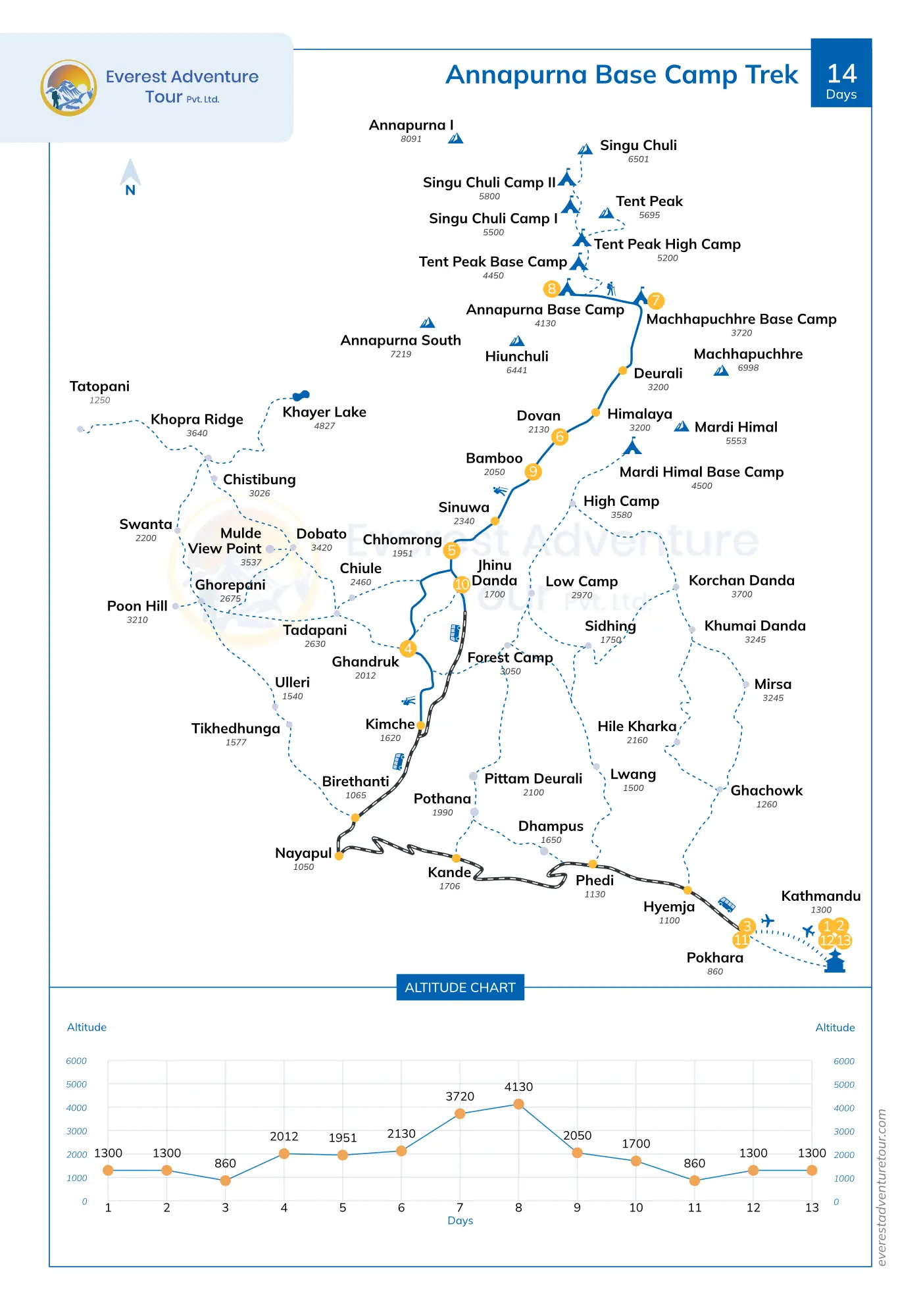
Route Map
Gallery


Includes
- All Arrival and Departure Transfer from airport to hotel and vice-versa, vehicles according to group size.
- Three Star hotels in Kathmandu & Pokhara on bed and breakfast basis only.
- Transportation on start of trekking and after trek to and from Pokhara. Includes domestic airfare Kathmandu-Pokhara-Kathmandu.
- Full board trekking includes twin sharing accommodation on best available local lodges, includes Breakfast, lunch, dinner with afternoon tea / snacks.
- Service of guide, trekking staff as per size of a group with porters.
- Wages, meals, medical allowance of guides, trekking staff and porters.
- Applicable Special Trekking Permits TIMS (Trekking Information Management Systems). Includes ACAP (Annapurna Conservation Area Project) Entrance Fees.
- Comprehensive Medical Kit carried by our guide if required for minor wounds and sickness.
- Sightseeing tour around Kathmandu valley as per the itinerary.
- Welcome or Farewell dinner in Kathmandu.
Doesn't Include
- Nepal Visa, Personal Medical & Travel Insurance.?
- Expenses of personal nature, meals in Kathmandu and gratitude or tipping? for trekking staff, drivers, porters and guide, including extra snacks and refreshments.?
- Personal trekking gear, including sleeping bags and down jackets (if it is not included on the trip cost).?
- Emergency Evacuation if required by any means of transportation, including? Helicopter Service.?
- Personal medical kit, as advised by you doctors.?
- Early return from the trek due to personal domestic or medical reasons, ?no refund will be entertained on breaking the journey.
- Excellent customer service. Our travel experts are ready to help you 24/7.
- Best price guaranteed.
- No credit card or booking fees.
- 100% financial protection.
- Environmentally-friendly tours.
Reviews
Recommended!
I embarked on a trek with Everest Adventure Tour and had an amazing experience. The views were breathtaking, and our guide and porter were excellent. The guide took great care of us, ensuring our safety throughout. We thoroughly enjoyed our time in the mountains and highly recommend this company. We'd love to return with them again, it was that good!
Recommended !!
I just went trekking for the first time in my life. It was worth the fatigue with the stunning and magnificent panoramic view that you have to see with your own eyes at least once in a lifetime. Our guide's name is Yadu Bhatta, and he was able to plan for me and my friends to reach our destination each day very well and accurately estimate the time it took us to walk to each location. Moreover, he was very helpful and took care of all our needs very well.
Need a guide? Take Babu's agency!
Babu, the owner, is really very friendly and helpful guy. He recommended us very nice places and epoerences in Nepal for good price. No haggling and price stretching.. Really reccomended! Standa and Lida CZ

Annapurna trek kathmandu nearby places
Great experience it was very safe and fun loved the guide was very polite and full filled all that was promised i would love to book a tour again soon
More then services
Very good, freindly and honest comunication. Babu and his team is very helpfull and funny! Really recommending his agency and peacefull, clean and cheap hotel! Thank you so much for all!
Equipment List
- Thermal underwear (top and bottom)
- Moisture-wicking long-sleeved t-shirts
- Moisture-wicking underwear
- Fleece jacket or pullover
- Insulated down or synthetic jacket (lightweight and warm)
- Waterproof, windproof jacket (Gore-Tex or similar)
- Waterproof, windproof pants
- Trekking pants (convertible preferred)
- Warm beanie or wool hat
- Sun hat or baseball cap
- Neck gaiter, buff, or scarf
- Waterproof trousers (for rain and snow)
- Lightweight inner gloves (thermal or liner gloves)
- Insulated outer gloves or mittens (waterproof)
- Waterproof, broken-in hiking boots with ankle support
- Comfortable camp shoes or sandals (for evenings)
- Trekking socks (wool or synthetic, several pairs)
- Gaiters (optional, for snow and mud)
- Trekking backpack (30-40 liters) with rain cover
- Daypack (optional, for short hikes)
- Sleeping bag (rated to at least -10°C / 14°F)
- Insulated sleeping pad or foam mattress
- Adjustable trekking poles (with rubber tips)
- Insulated water bottles or hydration bladder (2-liter capacity recommended)
- Sunglasses with UV protection
- Headlamp with extra batteries
- Power bank and chargers (for electronics)
- Camera and extra batteries/memory cards
- Travel-size toiletries (toothbrush, toothpaste, biodegradable soap)
- Quick-dry towel
- Wet wipes and hand sanitizer
- Sunscreen (high SPF) and lip balm with SPF
- Personal first aid kit (bandages, blister pads, antiseptic, medication)
- Medications for altitude sickness (Diamox if prescribed)
- Pain relievers, anti-diarrheal, antihistamines
- Earplugs (for noisy lodges)
- Notebook and pen
- Portable solar charger (optional)
- Plastic zip-lock bags (to keep gear dry)
- Lightweight stuff sacks or packing cubes
- Snacks (energy bars, nuts, chocolates)
- Reusable water bottle or hydration system
- Small knife or multi-tool
- Passport-size photos (for permits if needed)
Frequently Asked Questions
It all depends upon the trip cost as per the itinerary set by Everest Adventure Tour. Normally we accommodate trekkers on normal standard lodge having nice rooms with good foods. But if the clients request us to upgrade the standard of lodge accommodation, we will certainly comply with the request and need of our valuable clients. Where the cost will be slightly higher on Luxury type lodges than on budget or standard lodge accommodation.
But after Ghandrung and Chomrong villages on route Annapurna Base Camp, there are no luxury or deluxe standard hotels or lodge. Where simple and basic rooms are available but clean with friendly warm environment and hospitality.
From Chomrong onwards all lodges with common bath and toilets, but with nice spacious and warm dining rooms. Serves excellent food menu as per your choice of meals and snacks.
?Trekkers will be surprised to find good food menu of varieties, from Tibetan, Nepali, Indian and Chinese to Continental. Includes long list of snacks and drinks for the customer delights in most lodges on treks.
The lodge accommodation are nice and lovely according to the choices of the trekkers. From budget, standard to luxury accommodation till Chomrong village, either attached or non-attached bath and toilets.
Trekkers should remember as the trek leads beyond from main village of Chomrong, attached bath and toilets are not available due to freezing temperatures in the night and morning. Where all plumbing systems freeze, and stops the flow of water which will be filled with ice.
On higher areas the lodge provides rooms with common toilets and bathrooms, which is much better than having in rooms. Due to harsh climate and terrain conditions, where all trekkers will understand and has to compromise.
However, all lodges are clean with good rooms, having large dining with potbellied stoves to make the environment warm and cozy.
Annapurna Base Camp where all types of people can join for the treks, where altitude gains at gradual slow pace. Chances of catching High Altitude Sickness of?AMS (Acute Mountain Sickness) is very slim. The highest is 4,130 m at ABC, most of the treks and overnight halt is around the safe altitude. Which is below 3,000 m around Bamboo, Dovan, walking and staying at designated overnights. Allows trekkers to get acclimatize with the heights and surroundings. The only toughness of the trek is steep uphill and down hills.
Annapurna Base Camp is a wonderful and best country walks, but leads to much steep climb and long down hills. Rest of the journey is pleasant and very scenic with touch of local cultures. As the trek involves walking uphill and down on stone steps, it will best before planning and booking the trip. Enjoying some routine exercise like jogging, walking upstairs and downstairs. Including swimming, aerobic or any other good physical and breathing exercise will do you good to stay healthy for Annapurna base camp. As well for any other treks around the Himalayas to enjoy the adventure holidays.
Some people minor medical problem, can join for ABC treks after taking advice from your doctors and inform the company on booking.
Although it is just 40 km or 24 ½ miles, direct route from Pokhara city, however the walks before few hours from Ghandruk. Average of 5-6 hours the most, and minimum walks of 3-4 hours some days. The mileage that covers on this trek not counting the drive will approx. 65 k.m to 70 km or 41 / 43 miles from Kimche to Ghandruk onwards till Jhinu to road-head.
The ideal times for trekking are during the spring (March to May) and autumn (September to November) seasons. These periods offer clear skies, moderate temperatures, and vibrant natural scenery. Everest Adventure Tour advises against monsoon season (June to August) due to heavy rains and slippery trails, and winter trekking (December to February) requires preparation for cold and possible snow.
Trekkers need two main permits: the Annapurna Conservation Area Permit (ACAP) and the Trekkers’ Information Management System (TIMS) card. Everest Adventure Tour assists with all permit arrangements before the trek begins, ensuring smooth entry into the conservation area. These permits help protect the environment and monitor trekkers for safety.
Yes, Everest Adventure Tour offers experienced guides and porters to assist trekkers. Guides provide invaluable support with navigation, cultural insights, and safety. Porters carry heavy backpacks, making the trek less physically demanding. Employing porters supports local communities and ensures a more enjoyable trekking experience.
Weather conditions vary greatly due to changes in altitude. Lower elevations experience mild, pleasant temperatures, while higher altitudes can be chilly, especially early morning and late evening. Everest Adventure Tour prepares trekkers for sudden weather changes and advises on layering clothing. Rain is common in monsoon season, while winter can bring snow and cold.
The trek is rated as moderate, suitable for individuals with good fitness levels and no major health issues. Daily walks involve uphill and downhill sections, sometimes steep, with altitudes reaching over 4,000 meters. Everest Adventure Tour encourages physical preparation and proper pacing to manage exertion and reduce fatigue.