

- 1 - 1 Person US$ 1,300
- 2 - 5 Person US$ 1,199
- 6 - 12 Person US$ 1,150
- 13 - 20 Person US$ 1,099
3*** Hotel in Kathmandu and Pokhara and Lodge during the trek.
Breakfast in Kathmandu and all meals during the trek.
Highlights
- Enjoy the scenic country walks around the green hills of Annapurna Himalayas
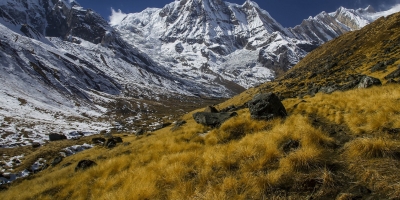
- Continuous views of towering snow-capped peaks from start to finish
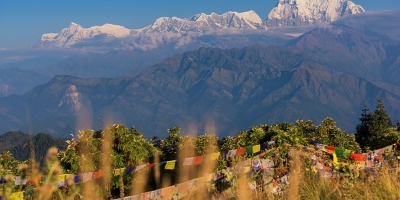
- Breathtaking sunrise from Poon Hill (3,210m) with views of Dhaulagiri, Annapurna, and Manaslu
- Experience the rich culture of Magar-Poon and Gurung ethnic communities
- Walk through beautiful rhododendron forests, especially stunning in spring (March–April)
- Explore the traditional villages like Ulleri, Ghorepani, Tadapani, and Chomrong
- Follow the Modi Khola river gorge to the glacial source at Annapurna Base Camp
- Reach the heart of Annapurna Sanctuary, a natural amphitheater of 7,000–8,000m peaks
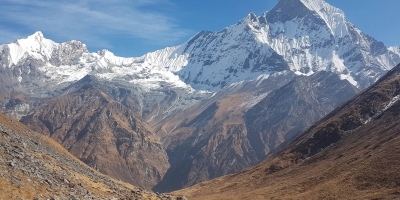
- Visit Machhapuchhre Base Camp (MBC), beneath the sacred Fishtail Peak
- Walk from lush green forests to the stark, icy landscapes of the high Himalayas
- Relax in the natural hot springs at Jhinu Danda after the high-altitude adventure
Overview
The Ghorepani and Poon Hill with Annapurna Base Camp Trek is a carefully crafted Himalayan journey that combines the beauty of the lower Annapurna foothills with the dramatic alpine grandeur of the Annapurna Sanctuary. Offered exclusively by Everest Adventure Tour, this 15-day trek is a complete experience—blending rich cultural encounters, lush natural landscapes, and awe-inspiring mountain vistas. What makes this trek especially attractive is its accessibility and gradual altitude gain, allowing trekkers of all levels to explore the Himalayas comfortably without the high risks of altitude sickness. From the traditional hill villages to the high-altitude amphitheater of Annapurna Base Camp, every step of the journey is designed to leave a lasting impression.
The first part of the trek leads to Ghorepani and Poon Hill, two iconic names in Nepal’s trekking landscape. This section winds through dense rhododendron forests, stone-paved staircases, and lively ethnic villages. Ghorepani, located at an elevation of 2,885 meters, is a vibrant Magar village perched on a high ridge, offering splendid views of the surrounding peaks. The early morning hike to Poon Hill (3,210 meters) is a highlight for all trekkers, offering a panoramic sunrise that unveils the towering snow-capped peaks of Dhaulagiri (8,167 m), Annapurna I (8,091 m), Manaslu (8,163 m), and several others. This moment of golden light on the Himalayas is one of the most cherished experiences in all of Nepal.
From Ghorepani, the trek transitions into the heart of the Annapurna region, following a scenic and less crowded trail through Tadapani, Chomrong, Bamboo, and Dovan. As the elevation increases, trekkers follow the stunning Modi Khola River gorge, passing through bamboo forests and high Himalayan valleys. The final stretch to Annapurna Base Camp (4,130 meters) takes you through Machhapuchare Base Camp, with unparalleled views of the sacred Fishtail Peak (Machhapuchare). The Annapurna Sanctuary is a dramatic bowl-shaped amphitheater of mountains, including Annapurna South, Hiunchuli, Tent Peak, and the mighty Annapurna I, the first 8000-meter peak to be summited in human history in 1950. This spot is not only sacred to the local people but also one of the most iconic destinations for trekkers worldwide.
What sets this trek apart is the variety it offers—lush forests, remote highlands, warm hospitality, hot springs, and the reward of standing at the foot of giants. The return journey via Jhinu Danda, with its natural hot springs, is the perfect finale to soothe tired muscles and reflect on the unforgettable adventure. From start to finish, Everest Adventure Tour ensures a well-paced, expertly guided, and culturally immersive experience. For those seeking both challenge and comfort, culture and nature, Poon Hill combined with Annapurna Base Camp is a journey of a lifetime—one that offers the best of the Annapurna region in a single, unforgettable trek.
Major Places for Ghorepani Poon Hill with Annapurna Base Camp Trek
The Ghorepani Poon Hill with Annapurna Base Camp Trek covers a wide variety of fascinating places, both culturally rich and naturally breathtaking. The journey begins in Kathmandu, Nepal’s historic capital, where you’ll visit ancient temples and UNESCO heritage sites. After a short flight, you reach Pokhara, the beautiful lake city and the gateway to the Annapurna region.
As the trek begins, you'll pass through charming villages like Ulleri, a traditional Magar settlement known for its stone steps and terrace farms. The trail leads to Ghorepani (2,885m), a popular stop nestled in rhododendron forests. An early hike from here takes you to Poon Hill (3,210m), the most scenic viewpoint in the region, offering a 360° sunrise panorama of Dhaulagiri, Annapurna, Manaslu, and more.
The journey then takes a dramatic turn into the high Himalayan valleys. Chomrong marks the last permanent village before entering the Annapurna Sanctuary. Villages like Bamboo, Dovan, Deurali, and Machhapuchhre Base Camp (MBC) lead the way up to the trek's ultimate destination: Annapurna Base Camp (4,130m), a natural amphitheater surrounded by towering peaks.
The return journey through Jhinu Danda, with its natural hot springs, offers a perfect place to relax before ending your trek in Pokhara.
Highlights:
- Poon Hill sunrise view of Dhaulagiri and Annapurna ranges
- Sacred Fishtail Mountain from MBC
- Annapurna Sanctuary’s breathtaking high alpine environment
- Natural hot springs at Jhinu Danda
- Traditional Gurung and Magar villages
Best Season for Ghorepani Poon Hill with Annapurna Base Camp Trek
Timing is crucial to enjoying the full beauty of the Ghorepani Poon Hill with Annapurna Base Camp Trek. The trek is accessible throughout most of the year, but spring (March to May) and autumn (September to November) are considered the best seasons due to clear weather and optimal trail conditions.
During spring, the trail comes alive with colorful blooms, especially the famous rhododendron forests, which are in full blossom around Ghorepani and Tadapani. Temperatures are mild, skies are generally clear, and the snow-capped peaks are fully visible. This season is ideal for photographers, bird watchers, and nature lovers.
Autumn, following the monsoon, offers the clearest skies and the most stable weather. Visibility is at its best, and the mountain vistas are sharp and striking. This season also aligns with Nepal’s biggest festivals, such as Dashain and Tihar, offering trekkers a chance to witness local celebrations.
While winter (December to February) can also be a beautiful time, the higher sections near Annapurna Base Camp can be snowbound, and temperatures drop significantly. Monsoon (June to August) brings heavy rain, slippery trails, and potential landslides, so it’s the least recommended.
Best Seasons:
- Spring (March–May): Blooming rhododendrons, moderate temperature
- Autumn (Sept–Nov): Clear skies, sharp mountain views
- Winter (Dec–Feb): Quiet trails, but cold and snowy at high altitude
- Monsoon (June–Aug): Lush vegetation, but rainy and challenging
Ghorepani Poon Hill with Annapurna Base Camp Trekking Difficulty Level
The Ghorepani Poon Hill with Annapurna Base Camp Trek is classified as a moderate-grade trek, making it suitable for both novice and experienced trekkers. While it does not require any technical climbing skills, a reasonable level of fitness is essential due to the long walking days, steep ascents, and altitude gain.
The trek begins at lower elevations with relatively easy trails from Hille to Ghorepani. However, sections like the Ulleri staircase (over 3,000 stone steps) and the climb to Chomrong and Deurali can be physically demanding. The trail to Annapurna Base Camp involves ascending to over 4,100 meters, so proper acclimatization is necessary, though the risk of altitude sickness is lower compared to treks like Everest Base Camp.
With professional guides from Everest Adventure Tour, the trek is paced well to ensure gradual altitude gain and proper rest. The presence of teahouses and regular access to food and water makes the trek manageable even for first-timers. That said, preparation through regular cardio exercises, walking, and light strength training before the trip is highly recommended.
Difficulty Summary:
- Grade: Moderate
- Highest Point: 4,130 m (Annapurna Base Camp)
- Total Trekking Days: ~11 days
- Challenging Sections: Ulleri stairs, Chomrong climb, MBC to ABC ascent
- Fitness Needed: Moderate (daily 5–7 hours walking)
Food and Accommodation for Ghorepani Poon Hill with Annapurna Base Camp Trek
One of the best aspects of the Ghorepani Poon Hill with Annapurna Base Camp Trek is the wide availability of teahouse accommodations and fresh-cooked meals throughout the route. Unlike remote expeditions that require camping, this trek offers the comfort of cozy mountain lodges in every overnight stop, making it both convenient and culturally immersive.
Most lodges provide twin-sharing rooms with basic bedding, blankets, and attached bathrooms in lower altitudes. As you ascend toward Annapurna Base Camp, facilities become more basic, but are still comfortable and clean. Electricity and Wi-Fi are available in most teahouses (for a small fee), and hot showers are offered in many stops, although they may use solar heating.
Food on the trail is hearty, diverse, and perfect for trekkers. You’ll find traditional Dal Bhat (rice, lentils, vegetables), as well as noodles, soups, momos (dumplings), pasta, and even pancakes and omelets. Fresh fruits and snacks are available in some villages. Everest Adventure Tour ensures that all meals are freshly prepared and meets hygiene standards to keep you energized throughout the trek.
Drinking water is available at teahouses and refill stations. It’s recommended to use purification tablets or boiled water, which is safe and eco-friendly.
Food & Stay at a Glance:
- Accommodations: Local teahouses with beds, blankets, and meals
- Meals Available: Dal Bhat, noodles, pasta, momos, tea/coffee
- Drinks: Filtered/boiled water, soft drinks, herbal teas
- Services: Wi-Fi, hot showers, phone charging (extra cost)
- Support: Organized by Everest Adventure Tour with safe, clean options
Network and Communication for Ghorepani Poon Hill with Annapurna Base Camp Trek
While trekking in the Annapurna region, having access to mobile networks and internet connectivity can be an important factor for many travelers. On the Ghorepani Poon Hill with Annapurna Base Camp Trek, communication facilities are available in most of the popular villages, but coverage becomes limited as you ascend higher into the mountains. Everest Adventure Tour ensures that trekkers are well-informed about when and where they can expect to connect with the outside world.
In the lower regions like Pokhara, Hille, Ulleri, Ghorepani, and Chomrong, Nepal Telecom (NTC) and Ncell mobile services offer fairly good signal strength for both voice and data. As you move toward Bamboo, Dovan, Deurali, and the Annapurna Sanctuary, signal reception gets weaker or even unavailable. However, many teahouses in these areas offer paid Wi-Fi, powered by solar energy or local networks. It's reliable enough for messaging and basic browsing, but not ideal for streaming or heavy usage.
Everest Adventure Tour guides are equipped with local SIM cards and basic communication devices for emergency use. While this trek doesn’t require satellite phones like remote expeditions, our team maintains regular contact with our base to ensure your safety and updates throughout the trek.
Communication Highlights:
- Good network: Available in Ulleri, Ghorepani, Chomrong, and Jhinu
- Wi-Fi access: Paid Wi-Fi at most lodges above Ghorepani
- Emergency contact: Guides carry local SIMs for emergency use
- Best SIMs: NTC and Ncell work best in this region
- Tip: Download offline maps and inform loved ones in advance
Ghorepani Poon Hill with Annapurna Base Camp Trekking Transportation
The Ghorepani Poon Hill with Annapurna Base Camp Trek begins and ends in two major cities—Kathmandu and Pokhara—making transportation both scenic and efficient. With Everest Adventure Tour, all transport logistics are professionally managed to ensure a smooth journey from arrival to departure.
The adventure begins in Kathmandu, where you're welcomed at the international airport and transferred to your hotel. On the third day, a short and scenic 30-minute domestic flight takes you to Pokhara, offering breathtaking aerial views of the Himalayas, including Annapurna and Machhapuchhre. Ground transportation is arranged for a drive from Pokhara to Hille, the trek's starting point, passing through beautiful mid-hill countryside and traditional villages.
After completing the trek at Jhinu Danda, a private jeep or tourist vehicle picks you up for a return drive to Pokhara. The final day includes another domestic flight back to Kathmandu, followed by hotel transfers. Everest Adventure Tour uses comfortable, reliable vehicles and works with reputable airlines to make sure all transitions are timely and secure.
Transportation Overview:
- Kathmandu Arrival/Departure: Airport pickup and drop-off
- Domestic Flights: Kathmandu ⇄ Pokhara (30 minutes each way)
- Ground Transfer: Pokhara to Hille (start) & Jhinu to Pokhara (end)
- Vehicles Used: Private jeep or tourist van with A/C
- Flight Backup Plan: Road travel arranged in case of flight delays
Ghorepani Poon Hill with Annapurna Base Camp Trekking Permits
Trekking in the Annapurna region requires specific permits issued by the Government of Nepal. As part of your comprehensive trekking package, Everest Adventure Tour handles all the permit arrangements so you don’t have to deal with any administrative hassles.
For the Ghorepani Poon Hill with Annapurna Base Camp Trek, you’ll need two essential permits:
- Annapurna Conservation Area Permit (ACAP): This allows you to trek within the protected Annapurna region, helping fund conservation and sustainable tourism.
- TIMS Card (Trekkers' Information Management System): A safety and registration document issued to all trekkers to help maintain a record in case of emergencies.
Both permits are checked at several checkpoints along the route, including Nayapul, Ghorepani, and Chomrong. It’s important to carry them at all times. Everest Adventure Tour ensures that all your documentation is correctly processed before you hit the trail, giving you peace of mind.
Required Permits:
- ACAP (Annapurna Conservation Area Permit): NPR 3,000 (approx. USD 25)
- TIMS Card: NPR 2,000 (approx. USD 15)
- Documents Needed: Passport copy and passport-size photo
- Permit Checks: Done at trail checkpoints by local authorities
- Included in Package: Everest Adventure Tour handles all costs and paperwork
Why Choose Ghorepani Poon Hill with Annapurna Base Camp Trek
The Ghorepani Poon Hill with Annapurna Base Camp Trek offers the best of both worlds—scenic mid-hill trekking and high-altitude Himalayan adventure—making it one of the most rewarding treks in Nepal. This journey is a perfect balance of culture, nature, and elevation, with breathtaking views, welcoming mountain communities, and the iconic Annapurna Sanctuary at its climax.
Unlike some high-altitude treks that demand rigorous acclimatization and carry a higher risk of altitude sickness, this trek is designed for trekkers of moderate fitness who want to experience both lower and higher Annapurna regions in one itinerary. From the sunrise at Poon Hill to standing beneath the mighty Annapurna I, this journey is filled with iconic moments. Add to that the spiritual peace of Machhapuchhre, the adventure of walking through gorges and forests, and the comfort of natural hot springs at Jhinu Danda, and you have a complete Himalayan experience.
Choosing Everest Adventure Tour means you're traveling with a reputed local company that provides expert guides, well-planned logistics, and personalized support throughout the journey. We prioritize your safety, comfort, and enjoyment, offering full transparency, 24/7 assistance, and a rich cultural experience every step of the way.
Why This Trek:
- Best of Annapurna: Combines Poon Hill & Annapurna Base Camp
- Stunning Views: Sunrise over Dhaulagiri, Annapurna I, Machhapuchhre
- Cultural Immersion: Gurung, Magar villages with warm hospitality
- Moderate Difficulty: Suitable for beginners and experienced hikers
- Professional Support: Expert guides, logistics & safety by Everest Adventure Tour
Important Note
Trip Itinerary

Max. altitude

Accommodation

Meals
Max. altitude
Accommodation
Meals
Max. altitude
Accommodation
Meals
Max. altitude
Accommodation
Meals
Max. altitude
Accommodation
Meals
Max. altitude
Accommodation
Meals
Max. altitude
Accommodation
Meals
From Chomrong morning walks on stone steps downhill to a fast running stream, crossing the bridge. Start the climb to Sinuwa Danda a high ridge with few nice shops and guest-houses. Walk leads on winding gradual trail into dense rhododendron, oaks and pine trees with short descend to Bamboo.
A nice place with number of lodges and restaurants, located amidst bamboo thickets and pine forest above Modi River gorge. Possible lunch stop, afternoon few hours of good climb to Dovan with few nice simple lodges. Situated on a shelf of Modi River, enjoy the comfort of homely type guest house with the sound of a river flow.
Max. altitude
Accommodation
Meals
Max. altitude
Accommodation
Meals
Today adventure takes you in the heart of Annapurna Sanctuary at Base Camp on the highest point of the trek. Morning walk follows to a grassy slope uphill to enter the picturesque sanctuary enclosed by series of snow-capped peaks.
A pleasant gradual walks of few hours to reach at the end of the valley and plateau of Annapurna Sanctuary. Where Annapurna Base Camp situated on a top of the flat valley with number of lodges. Enjoy lunch in the lodge restaurants and marvel the glorious stunning panorama of Snow Mountains range.
The view stretches from Annapurna South, Huin Chuli to the south with Annapurna-I, Vara Shikar / Annapurna Fang; with Gangapurna Himal towards North-West. The views includes of Tent Peak / Tharpu Chuli as far towards Machhapuchare Himal and Glacier Dome in the north east.
Max. altitude
Accommodation
Meals
Max. altitude
Accommodation
Meals
From Bamboo leaving the Modi River gorge, morning starts with short steep up to Khuldi Ghar. At one time existed a check-post for trekking and conservation permits, from here on winding path to Sinuwa Danda. Walk continues downhill to?Chomrong River with steep climb on stone steps to Chomrong village for lunch.
Afternoon walk an easy downhill for an hour or more to Jhinu village, with number of good lodge for overnight stop. At Jhinu enjoy short walk down where ?natural hot spring is located for refreshing bathe and a dip in warm pools.
Max. altitude
Accommodation
Meals
Max. altitude
Accommodation
Meals
Max. altitude
Accommodation
Meals
Max. altitude
Accommodation
Meals
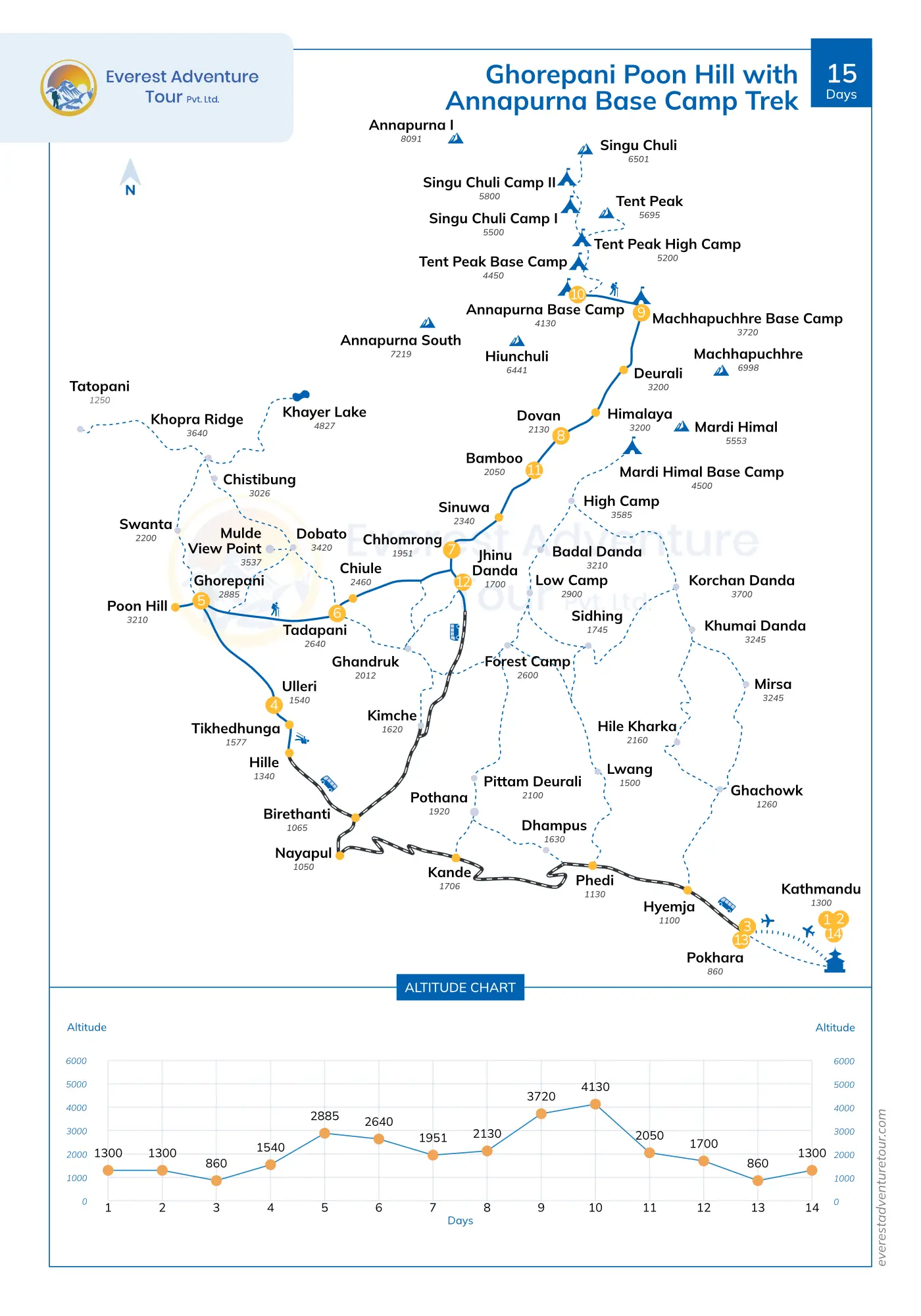
Route Map
Gallery


Includes
- All Arrival and Departure Transfer from airport to hotel and vice-versa, vehicles according to group size.
- Three Star hotels in Kathmandu & Pokhara on bed and breakfast basis only.
- Transportation on start of trekking and after trek to and from Pokhara. Includes domestic airfare Kathmandu-Pokhara-Kathmandu.
- Full board trekking includes twin sharing accommodation on best available local lodges, includes Breakfast, lunch, dinner with afternoon tea / snacks.
- Service of guide, trekking staff as per size of a group with porters.
- Wages, meals, medical allowance of guides, trekking staff and porters.
- Applicable Special Trekking Permits TIMS (Trekking Information Management Systems). Includes ACAP (Annapurna Conservation Area Project) Entrance Fees.
- Comprehensive Medical Kit carried by our guide if required for minor wounds and sickness.
- Sightseeing tour around Kathmandu valley as per the itinerary.
- Welcome or Farewell dinner in Kathmandu.
Doesn't Include
- Nepal Visa, Personal Medical & Travel Insurance.?
- Expenses of personal nature, meals in Kathmandu and gratitude or tipping? for trekking staff, drivers, porters and guide, including extra snacks and refreshments.?
- Personal trekking gear, including sleeping bags and down jackets (if it is not included on the trip cost).?
- Emergency Evacuation if required by any means of transportation, including? Helicopter Service.?
- Personal medical kit, as advised by you doctors.?
- Early return from the trek due to personal domestic or medical reasons, ?no refund will be entertained on breaking the journey
- Excellent customer service. Our travel experts are ready to help you 24/7.
- Best price guaranteed.
- No credit card or booking fees.
- 100% financial protection.
- Environmentally-friendly tours.
Equipment List
- Thermal underwear (top and bottom)
- Moisture-wicking long-sleeved t-shirts
- Moisture-wicking underwear
- Fleece jacket or pullover
- Insulated down or synthetic jacket (lightweight and warm)
- Waterproof, windproof jacket (Gore-Tex or similar)
- Waterproof, windproof pants
- Trekking pants (convertible preferred)
- Warm beanie or wool hat
- Sun hat or baseball cap
- Neck gaiter, buff, or scarf
- Waterproof trousers (for rain and snow)
- Lightweight inner gloves (thermal or liner gloves)
- Insulated outer gloves or mittens (waterproof)
- Waterproof, broken-in hiking boots with ankle support
- Comfortable camp shoes or sandals (for evenings)
- Trekking socks (wool or synthetic, several pairs)
- Gaiters (optional, for snow and mud)
- Trekking backpack (30-40 liters) with rain cover
- Daypack (optional, for short hikes)
- Sleeping bag (rated to at least -10°C / 14°F)
- Insulated sleeping pad or foam mattress
- Adjustable trekking poles (with rubber tips)
- Insulated water bottles or hydration bladder (2-liter capacity recommended)
- Sunglasses with UV protection
- Headlamp with extra batteries
- Power bank and chargers (for electronics)
- Camera and extra batteries/memory cards
- Travel-size toiletries (toothbrush, toothpaste, biodegradable soap)
- Quick-dry towel
- Wet wipes and hand sanitizer
- Sunscreen (high SPF) and lip balm with SPF
- Personal first aid kit (bandages, blister pads, antiseptic, medication)
- Medications for altitude sickness (Diamox if prescribed)
- Pain relievers, anti-diarrheal, antihistamines
- Earplugs (for noisy lodges)
- Notebook and pen
- Portable solar charger (optional)
- Plastic zip-lock bags (to keep gear dry)
- Lightweight stuff sacks or packing cubes
- Snacks (energy bars, nuts, chocolates)
- Reusable water bottle or hydration system
- Small knife or multi-tool
- Passport-size photos (for permits if needed)
Frequently Asked Questions
Trekkers will be surprised to find good food menu of varieties, from Tibetan, Nepali, Indian and Chinese to Continental. Includes long list of snacks and drinks for the customer delights in most lodges on treks.
The lodge accommodation are nice and lovely according to the choices of the trekkers. From budget, standard to luxury accommodation till Chomrong village, either attached or non-attached bath and toilets.
Trekkers should remember as the trek leads beyond from main village of Chomrong, attached bath and toilets are not available due to freezing temperatures in the night and morning. Where all plumbing systems freeze, and stops the flow of water which will be filled with ice.
On higher areas the lodge provides rooms with common toilets and bathrooms, which is much better than having in rooms. Due to harsh climate and terrain conditions, where all trekkers will understand and has to compromise.
However, all lodges are clean with good rooms, having large dining with potbellied stoves to make the environment warm and cozy.
Ghorepani & Poon Hill with Annapurna Base Camp where all types of people can join for the treks, where altitude gains at gradual slow pace. Chances of catching High Altitude Sickness of AMS (Acute Mountain Sickness) is very slim. The highest is 4,130 m at ABC, most of the treks and overnight halt is around the safe altitude. Which is below 3,000 m around Bamboo, Dovan, walking and staying at designated overnights. Allows trekkers to get acclimatize with the heights and surroundings. The only toughness of the trek is steep uphill and down hills.
Choosing this wonderful adventure offers one of the best country walks, but leads to much steep climb and long down hills. Rest of the journey is pleasant and very scenic with touch of local cultures. As the trek involves walking uphill and down on stone steps, it will best before planning and booking the trip. Enjoying some routine exercise like jogging, walking upstairs and downstairs.
Including swimming, aerobic or any other good physical and breathing exercise will do you good to stay healthy for Annapurna base camp. As well for any other treks around the Himalayas to enjoy the adventure holidays.
Some people minor medical problem, can join for ABC treks after taking advice from your doctors and inform the company on booking.
?It is the most popular and famous adventure destinations the both treks Ghorepani and Annapurna Base Camp. Due to its easy accessibility to the starting point and end of the trek, from Pokhara to Pokhara. The other reasons is where high altitude does not affect trekkers, where all types of people can enjoy.
The next is all places on route treks to ABC with good facilities of lodge accommodation and foods. As well the scenic views of beautiful landscapes and snow-capped peaks along with local cultures. Makes this trek most popular than all adventure destination around the Himalayas.
All lodges have hydro-power to run electricity, but from Chomrong onwards to ABC, have electricity run by solar power. Trekkers can charge their electronic items and gadgets. A fee is charged per hour for each items, as for internet and Wi-Fi, have connection. Depending upon the areas in deep gorge and valley, as well weather wise, can be disturbing with bad receptions. The best place is Ulleri, Ghorepani and Chomrong villages. Other places works well with local SIM, which can be bought in Kathmandu at reasonable cost.
To trek in the Annapurna region, you will need two primary permits: the Annapurna Conservation Area Permit (ACAP) and the Trekkers’ Information Management System (TIMS) Card. Everest Adventure Tour arranges all necessary permits for you as part of the trekking package. These permits help support conservation efforts and ensure trekker safety by tracking movement in the region. You must carry your permits throughout the trek, as there are multiple checkpoints along the route.
The best seasons for the Ghorepani Poon Hill with Annapurna Base Camp Trek are spring (March to May) and autumn (September to November). Spring brings blooming rhododendron forests, mild temperatures, and clear skies. Autumn, on the other hand, offers stable weather, crisp mountain views, and dry trails. While winter (December to February) is also possible with proper gear, some sections can be snowy and cold. The summer/monsoon season (June to August) is the least ideal due to heavy rain and slippery trails. Everest Adventure Tour organizes treks year-round, but always recommends spring and autumn for the best overall experience.
This trek is suitable for both beginners and experienced trekkers. Although it reaches up to 4,130 meters at Annapurna Base Camp, the route is well-paced with gradual ascents, making it accessible to those who are physically prepared. Everest Adventure Tour welcomes first-time trekkers, providing trained guides and full support throughout the journey. With a few weeks of physical preparation and mental readiness, even those without prior high-altitude trekking experience can successfully complete and enjoy this adventure.
On average, trekkers walk between 5 to 7 hours per day, depending on the section of the trail. The initial days may involve longer walks with ascents, like the climb to Ulleri or the trek from Tadapani to Chomrong. As you reach higher elevations, the walking hours may reduce slightly to allow for acclimatization. The Everest Adventure Tour itinerary is carefully planned to balance trekking hours with ample rest and scenic stops. Breaks are provided along the way for tea, lunch, and photos, making the journey enjoyable and manageable.
Everest Adventure Tour stands out for its professionalism, safety standards, and in-depth local knowledge. With experienced, government-licensed guides and well-organized logistics, they ensure your trek is safe, enjoyable, and culturally enriching. The company focuses on personalized service, small group sizes, and responsible tourism practices. Whether you’re a solo traveler, a couple, or a group, Everest Adventure Tour provides 24/7 support, customized itineraries, and authentic experiences that go beyond ordinary trekking tours. Their reputation, hospitality, and attention to detail make them a trusted choice for exploring the Annapurna region.