

- 1 - 1 Person US$ 799
- 2 - 5 Person US$ 750
- 6 - 9 Person US$ 720
- 10 - 15 Person US$ 699
- 16 - 20 Person US$ 650
Hotel in Kathmandu and Tea house / Lodge during the trek
Breakfast in Kathmandu and all meals during the trek
Highlights
- A scenic and cultural walk through traditional Tamang villages, the ancient indigenous tribe of Nepal.
- Explore remote villages enriched with age-old heritage, vibrant customs, and unique Tibetan Buddhist influences.
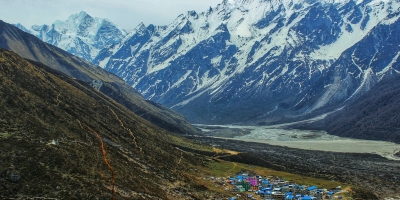
- Trekking beyond the Central Himalayan massif with stunning views of Ganesh Himal and Langtang Himalayan ranges.
- Experience warm local hospitality with traditional greetings and homestays at every overnight stop.
- Reach Nagethali Gyang (3,165 m), the highest point of the trek, offering breathtaking panoramic mountain vistas.
- Visit natural hot springs at Tatopani for relaxation and rejuvenation.
- Walk along the historic Trans-Himalayan salt trade route linking Nepal and Tibet.
- Discover ancient shamanistic healing traditions and local art such as Thangka paintings.
- Enjoy diverse flora and fauna in Langtang National Park including rhododendron forests and Himalayan birds.
Overview
On the ancient Trans-Himalayan trade route through Tamang heritage villages
The Tamang Heritage Trail Trek, offered by Everest Adventure Tour, is a culturally immersive and scenic journey that takes you deep into the heart of the Langtang Himal region, nestled close to the Tibetan border in northern Nepal. Unlike more commercialized trekking routes in Nepal, this off-the-beaten-path adventure explores the rich traditions, customs, and daily lives of the Tamang people—indigenous highland communities descended from Tibetan lineage. This 12-day experience is ideal for those seeking authentic cultural interaction, traditional hospitality, and stunning Himalayan vistas without the crowds.
What sets this trek apart is its deep connection with the ancient Trans-Himalayan Salt Trade Route, once used by Tibetan traders traveling to barter goods with Nepalese locals. The trail winds through quaint Tamang villages such as Gatlang, Tatopani, Thuman, and Briddim—each with its own charm and distinct traditions. These villages have remained culturally intact over generations, offering visitors a rare opportunity to observe Buddhist rituals, traditional music and dance, and even sacred healing practices led by local shamans. The homestay experiences are warm and welcoming, often involving shared meals, cultural performances, and storytelling by the hearth.
Throughout the journey, trekkers are greeted by stunning landscapes dominated by snow-capped peaks of Langtang Lirung, Ganesh Himal, and even glimpses of Manaslu in the distance. The trail also takes you to Nagethali Gyang (3,165 m), the highest point of the trek, offering a panoramic Himalayan viewpoint that is both spiritually and visually uplifting. The lush forests, terraced farmlands, and natural hot springs of Tatopani add further dimension to the journey—making it both relaxing and revitalizing. It’s not just a trek, but a complete sensory experience.
This trek is rated moderate and suitable for travelers with a basic level of fitness. It's an excellent introduction to Himalayan trekking for beginners, yet deeply rewarding for seasoned trekkers seeking a cultural expedition. With Everest Adventure Tour, your journey is managed by experienced guides who are intimately familiar with the terrain, history, and people. From your arrival in Kathmandu to your last day of leisure in the capital, every detail is arranged to ensure a smooth, memorable, and transformative adventure. The Tamang Heritage Trail Trek is more than a hike—it’s a step into a living museum of Himalayan life, waiting to be explored with open heart and mind.
Major Places for Tamang Heritage Trail Trek
The Tamang Heritage Trail Trek is a culturally rich journey that passes through some of the most fascinating villages and scenic spots in the Langtang region of Nepal. Each village and location along the route reflects the unique lifestyle, traditions, and religious practices of the Tamang people, who are closely connected with Tibetan Buddhism. The route is less commercialized, which preserves its authenticity and provides a more intimate experience with local communities.
Some of the major highlights include:
- Gatlang Village (2,238 m): A picturesque Tamang settlement surrounded by terraced fields. The houses are built in traditional style, and visitors are welcomed with khada (ceremonial scarves) and traditional dances.
- Tatopani (2,607 m): Known for its natural hot springs, Tatopani is a perfect place to relax and rejuvenate tired muscles. The name itself means "hot water" in Nepali.
- Nagethali Gyang (3,165 m): The highest point of the trek, offering a 360-degree view of Langtang Lirung, Ganesh Himal, and even glimpses of the Tibetan plateau. It's also a sacred meditation site for local monks and nuns.
- Thuman (2,338 m): A village rich in Tibetan influence where you can experience deep-rooted Buddhist practices and rituals. Local people often perform cultural dances for trekkers.
- Briddim (2,230 m): A model village for community-based tourism with traditional homestay accommodation. Visitors are immersed in daily Tamang life and hospitality.
These places not only offer stunning mountain views but also allow you to witness age-old cultures, architecture, and traditions that have survived for centuries. It’s not just a trek through nature—it’s a walk through living history.
Best Season for Tamang Heritage Trail Trek
Choosing the right time to trek is crucial for an enjoyable and safe experience on the Tamang Heritage Trail. Due to its moderate elevation and proximity to the Himalayas, the region experiences four distinct seasons, each offering a unique trekking experience. However, spring and autumn are considered the best times for the trek, when weather conditions are stable and the skies are clear.
- Spring (March to May): This is a popular season for trekking in the Langtang region. The temperature is mild, and the forests along the trail are alive with blooming rhododendrons, magnolias, and other wildflowers. Wildlife is also more active during this period, and the air is fresh and clean.
- Autumn (September to November): Another ideal time for trekking, especially after the monsoon rains. The skies are crystal clear, offering stunning views of the Langtang and Ganesh Himal ranges. The weather is cool, perfect for hiking long hours.
Other seasonal considerations:
- Winter (December to February): While trekking is possible, higher areas like Nagethali Gyang can be cold with occasional snowfall. Trails are less crowded, which can be an advantage for solitude seekers.
- Monsoon (June to August): Not recommended due to heavy rain, muddy trails, and leeches. However, the landscape is lush and green during this time.
Trekking in the ideal season enhances visibility, comfort, and cultural experiences, ensuring that you make the most of your journey with Everest Adventure Tour.
Tamang Heritage Trail Trekking Difficulty
The Tamang Heritage Trail Trek is considered a moderate trek in terms of difficulty, making it accessible to a wide range of trekkers, including beginners with basic fitness. The trail involves daily walks of 5 to 6 hours on average, with manageable ascents and descents. The highest point reached is Nagethali Gyang at 3,165 meters, which poses little risk of altitude sickness for most people due to the gradual acclimatization built into the itinerary.
Unlike high-altitude treks such as Everest Base Camp or Annapurna Circuit, the Tamang Heritage Trail stays mostly below 3,500 meters, reducing the risk of Acute Mountain Sickness (AMS). Nevertheless, it’s important to be cautious, walk at your own pace, and stay well-hydrated throughout the trek.
Key points about the trek’s difficulty:
- No technical climbing required, but good footwear and physical stamina are essential.
- Gradual altitude gain helps with acclimatization.
- Well-maintained trails, though some sections can be steep and rocky.
- Suitable for families, solo travelers, and those looking for a less strenuous Himalayan experience.
Proper preparation with light physical training such as hiking, jogging, or yoga a few weeks before the trek will enhance your comfort and performance. Everest Adventure Tour ensures that our experienced guides support you every step of the way, making this trek both enjoyable and achievable.
Food and Accommodation for Tamang Heritage Trail Trek
The Tamang Heritage Trail offers a unique blend of traditional hospitality and rustic comfort, providing trekkers with the chance to stay in locally-run teahouses and homestays. The food is freshly prepared using organic ingredients sourced from local farms, giving you a taste of authentic Tamang and Nepali cuisine.
Accommodation along the trail is basic yet clean, comfortable, and full of cultural character. Most villages offer homestays, where travelers sleep in traditional wooden homes, often with intricately carved windows and shared facilities. This setup allows you to live as the locals do, share meals, and even participate in cooking or farming if you're interested.
Food and lodging highlights:
- Meals include: Dal Bhat (rice, lentils, vegetables), Tibetan bread, noodles, soups, pancakes, and seasonal vegetables.
- Hot drinks: Tibetan butter tea, masala tea, and organic coffee are widely available.
- Accommodation type: Twin-sharing rooms, mostly with shared bathrooms. Blankets are provided, but bringing a sleeping bag is recommended for colder nights.
- Hygiene and water: Boiled or filtered drinking water is available at most stops; we recommend bringing water purification tablets as backup.
Meals are typically served in a central dining area, which often becomes the cultural hub where locals and travelers gather around the fire to exchange stories. Everest Adventure Tour ensures that food hygiene, dietary preferences, and comfort are prioritized throughout your stay on the trail.
Network and Communication for Tamang Heritage Trail Trek
While the Tamang Heritage Trail Trek takes you into remote Himalayan villages far from urban development, basic communication infrastructure is gradually improving across the region. Trekkers should not expect uninterrupted mobile or internet connectivity throughout the trek, but there are key points where limited network access is available. For those who wish to stay connected during the trek, preparation is key.
In many villages such as Syabrubesi, Gatlang, and Briddim, you may find cellular signals—mostly through Nepal’s major telecom providers like NTC (Nepal Telecom) and NCELL. However, the signal can be patchy or weak, especially in more elevated or forested areas. Wi-Fi is rarely available, and even when offered in teahouses, it may be slow and unreliable. For important communications, purchasing a local SIM card with a data pack in Kathmandu before starting the trek is highly recommended.
Key communication tips:
- Buy a local SIM card (NCELL or NTC) in Kathmandu for better regional coverage.
- Signal availability: Moderate in Syabrubesi and Gatlang; limited or none in Nagethali and Tatopani.
- No consistent Wi-Fi; offline communication and power banks are essential.
- Satellite phones may be used by guides in emergencies.
Despite these limitations, the beauty of being disconnected is the freedom to fully immerse yourself in the culture and natural surroundings. With Everest Adventure Tour, our guides carry necessary tools to ensure communication is available in case of emergency, giving you peace of mind throughout your journey.
Tamang Heritage Trail Trekking Transportation
Transportation plays a vital role in making your trek smooth and enjoyable. Everest Adventure Tour ensures that all logistics—from your arrival in Kathmandu to your journey into the Langtang region and back—are well managed with comfortable and safe vehicles. The most common mode of transport for this trek is private 4x4 vehicles or tourist jeeps, especially given the rugged terrain leading to Syabrubesi, the starting point of the trek.
Your journey begins with a 6-hour scenic drive from Kathmandu to Syabrubesi, passing through picturesque landscapes, small villages, and deep river valleys. The roads are partly paved but become rough and winding as you get closer to the Langtang region. For safety and comfort, Everest Adventure Tour uses well-maintained jeeps or vans with experienced drivers who are accustomed to mountain driving.
Transportation overview:
- Kathmandu to Syabrubesi: Private jeep or van (approx. 6 hours).
- Return trip: Same route from Syabrubesi to Kathmandu after the trek.
- Vehicle type: 4x4 for off-road sections, especially during monsoon or winter.
- Airport transfers: Included in the package (arrival and departure).
All transportation arrangements are covered in your trekking package, so you don’t need to worry about logistics. With our local expertise and safety-first approach, you can focus entirely on enjoying the scenic beauty and cultural richness of your trek.
Tamang Heritage Trail Trekking Permits
Like most trekking routes in Nepal, the Tamang Heritage Trail Trek requires specific permits that allow you to enter and explore the protected areas and local communities. These permits contribute directly to the conservation of the environment and development of local infrastructures, ensuring a sustainable trekking experience. Everest Adventure Tour takes care of all permit arrangements on your behalf, so you don’t have to deal with administrative hassles.
For this trek, two main permits are required:
- Langtang National Park Entry Permit: The Tamang Heritage Trail falls within the Langtang National Park boundary. This permit is mandatory for all trekkers and is checked at various entry points.
- Trekking Information Management System (TIMS) Card: Issued by the Nepal Tourism Board and TAAN (Trekking Agencies Association of Nepal), the TIMS card helps track trekkers in case of emergencies and ensures safety in remote areas.
Permit details:
- Langtang National Park Permit: NPR 3,000 per person for foreigners.
- TIMS Card: NPR 2,000 per person for individual trekkers or NPR 1,000 for group trekkers.
- Documents required: Passport copy, passport-size photos.
Everest Adventure Tour ensures that all permit fees are included in your package. Our team obtains and verifies the necessary documents ahead of your departure to Syabrubesi, allowing you to travel with confidence and without delay.
Why Choose Tamang Heritage Trail Trek
The Tamang Heritage Trail Trek is not just a trek—it’s a profound cultural and natural experience that takes you into the heart of one of Nepal’s most vibrant ethnic communities. Unlike more crowded trails like Everest or Annapurna, this route offers a peaceful and authentic Himalayan experience, ideal for those who want meaningful interactions with local people, without sacrificing scenic beauty or adventure. At Everest Adventure Tour, we believe this trek offers a perfect balance of culture, nature, and personal discovery.
What makes the Tamang Heritage Trail special is its unique combination of off-the-beaten-path exploration, warm village hospitality, and stunning Himalayan views. You’ll visit villages where traditions are centuries old, stay in homes rather than hotels, and engage with locals whose stories, songs, and lifestyle remain untouched by modernization. Additionally, the trail offers breathtaking views of the Langtang, Ganesh, and even Manaslu Himalayas, without the extreme altitudes of more technical treks.
Why this trek stands out:
- Authentic cultural immersion with the Tamang community.
- Less crowded trails with serene landscapes and peaceful paths.
- Moderate trekking difficulty, suitable for most fitness levels.
- Homestay experience, offering local meals, traditions, and warmth.
- Great value for time and effort with panoramic mountain views and cultural depth.
Choosing the Tamang Heritage Trail with Everest Adventure Tour means traveling with a company that values both cultural sensitivity and traveler comfort. Our expert guides, ethical practices, and passion for the Himalayas ensure that every step of your journey is memorable and meaningful.
Important Note
Trip Itinerary
Route Map
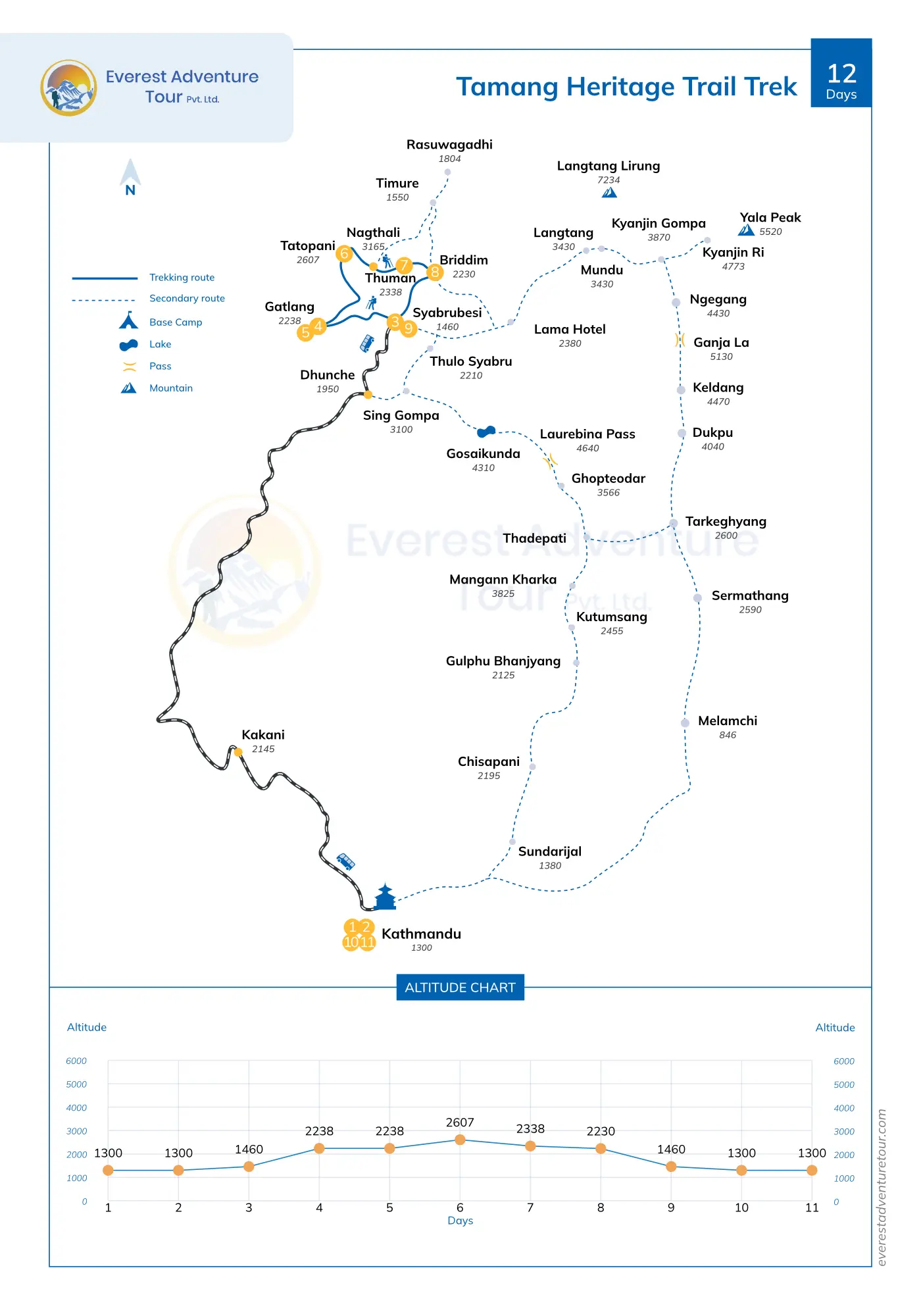
Includes
- All Arrival and Departure Transfer from airport to hotel and vice-versa, vehicles according to group size.
- Three Star hotels in Kathmandu on bed and breakfast basis only.
- Transportation on start of trekking and after trek to and from Kathmandu.
- Full board trekking includes twin sharing accommodation on best available local lodges, includes Breakfast, lunch, dinner with afternoon tea / snacks.
- Service of guide, trekking staff as per size of a group with porters.
- Wages, meals, medical allowance of guides, trekking staff and porters.
- Applicable Trekking Permits TIMS (Trekking Information Management Systems). Includes Langtang National Park entrance Fees.
- Comprehensive Medical Kit carried by our guide if required for minor wounds and sickness.
- Sightseeing tour around Kathmandu valley as per the itinerary.
- Welcome or Farewell dinner in Kathmandu.
Doesn't Include
- Nepal Visa, Personal Medical & Travel Insurance.?
- Expenses of personal nature, meals in Kathmandu and gratitude or tipping for trekking staff, drivers, porters and guide, including extra snacks and refreshments.?
- Personal trekking gear, including sleeping bags and down jackets (if it is not? included on the trip cost).?
- Emergency Evacuation if required by any means of transportation, including? Helicopter Service.?
- Personal medical kit, as advised by you doctors.?
- Early return from the trek due to personal domestic or medical reasons, no refund will be entertained on breaking the journey.
- Excellent customer service. Our travel experts are ready to help you 24/7.
- Best price guaranteed.
- No credit card or booking fees.
- 100% financial protection.
- Environmentally-friendly tours.
Equipment List
- Thermal underwear (top and bottom)
- Moisture-wicking long-sleeved t-shirts
- Moisture-wicking underwear
- Fleece jacket or pullover
- Insulated down or synthetic jacket (lightweight and warm)
- Waterproof, windproof jacket (Gore-Tex or similar)
- Waterproof, windproof pants
- Trekking pants (convertible preferred)
- Warm beanie or wool hat
- Sun hat or baseball cap
- Neck gaiter, buff, or scarf
- Waterproof trousers (for rain and snow)
- Lightweight inner gloves (thermal or liner gloves)
- Insulated outer gloves or mittens (waterproof)
- Waterproof, broken-in hiking boots with ankle support
- Comfortable camp shoes or sandals (for evenings)
- Trekking socks (wool or synthetic, several pairs)
- Gaiters (optional, for snow and mud)
- Trekking backpack (30-40 liters) with rain cover
- Daypack (optional, for short hikes)
- Sleeping bag (rated to at least -10°C / 14°F)
- Insulated sleeping pad or foam mattress
- Adjustable trekking poles (with rubber tips)
- Insulated water bottles or hydration bladder (2-liter capacity recommended)
- Sunglasses with UV protection
- Headlamp with extra batteries
- Power bank and chargers (for electronics)
- Camera and extra batteries/memory cards
- Travel-size toiletries (toothbrush, toothpaste, biodegradable soap)
- Quick-dry towel
- Wet wipes and hand sanitizer
- Sunscreen (high SPF) and lip balm with SPF
- Personal first aid kit (bandages, blister pads, antiseptic, medication)
- Medications for altitude sickness (Diamox if prescribed)
- Pain relievers, anti-diarrheal, antihistamines
- Earplugs (for noisy lodges)
- Notebook and pen
- Portable solar charger (optional)
- Plastic zip-lock bags (to keep gear dry)
- Lightweight stuff sacks or packing cubes
- Snacks (energy bars, nuts, chocolates)
- Reusable water bottle or hydration system
- Small knife or multi-tool
- Passport-size photos (for permits if needed)
Frequently Asked Questions
The trail on the Tamang Heritage Trail Trek is considered moderately challenging, typical of many Himalayan treks. You will encounter a mix of gentle slopes, some steep climbs, and gradual winding paths. The most physically demanding part is the climb to Nagethali Gyang hilltop, the highest point of the trek at 3,165 meters, which rewards you with spectacular panoramic views. Taking your time, pacing yourself, and resting frequently are key strategies to enjoy this trek comfortably.
Accommodation varies from clean basic lodges to warm community homestays along the route. Villages like Syabrubesi and Gatlang have relatively better standards with menus offering a choice of foods. Meals mostly consist of traditional Nepali dishes like Dal Bhat, steamed rice with lentil soup, vegetable curries, and occasionally Tibetan staples such as momos (dumplings). Rooms are generally simple with shared bathrooms, but homestays provide an immersive cultural experience.
Compared to more famous trekking routes like Langtang Valley or Gosainkunda, the Tamang Heritage Trail remains a less crowded and more off-the-beaten-path destination. However, interest in this trek has been growing steadily, especially among trekkers seeking authentic cultural immersion in peaceful settings. The trail’s unique blend of natural beauty and rich Tamang heritage continues to attract more visitors every year.
Most lodges along the Tamang Heritage Trail have electricity powered by micro-hydro or solar panels. Charging electronic devices is usually possible for a small fee. Internet access and Wi-Fi are available in some villages like Syabrubesi, Gatlang, Thuman, and Briddim, but connectivity can be unreliable due to weather and terrain. Using a local SIM card, which you can purchase in Kathmandu, is advisable for better mobile coverage.
The ideal seasons for trekking the Tamang Heritage Trail are spring (March to May) and autumn (September to November). Spring brings vibrant wildflowers, including rhododendrons, creating colorful landscapes and pleasant temperatures. Autumn offers clear skies, stable weather, and breathtaking mountain views, though daylight hours are shorter. Both seasons are excellent for comfortable trekking and cultural experiences.
Yes, trekking the Tamang Heritage Trail requires permits, including the Langtang National Park Entry Permit and the TIMS (Trekking Information Management System) card. These permits help regulate trekking activities and support conservation efforts. Everest Adventure Tour takes care of all permit arrangements for you, ensuring a hassle-free process so you can focus on enjoying the trek.
The Tamang Heritage Trail is suitable for trekkers with moderate fitness levels. It involves walking 4 to 6 hours daily on uneven mountain trails with occasional steep sections. While not highly technical, some endurance is necessary for the uphill climb to Nagethali Gyang. Preparing with light cardio exercises, hiking practice, and stretching before the trip will help you enjoy the trek without strain.
This trek is considered relatively safe, especially when guided by experienced professionals like those from Everest Adventure Tour. The trail is well-established and not prone to major natural hazards. Emergency communication and rescue services are accessible in main villages. Proper acclimatization, following guide advice, and maintaining hydration minimize risks like altitude sickness.
Mobile phone reception is patchy and depends on the network provider and location. In villages like Syabrubesi and Gatlang, signal strength is better, but it weakens in remote or higher-altitude areas. Wi-Fi is limited and mostly available in larger villages with lodges or tea houses. Bringing a local SIM card for better data service is recommended.
The trek is rich in cultural immersion opportunities, allowing you to experience traditional Tamang hospitality, observe religious Buddhist rituals, and learn about ancient shamanistic healing practices. Many villages feature homes decorated with Thangka paintings, and you may witness traditional dances and festivals depending on the season. Homestays offer authentic interaction with locals, deepening your understanding of their simple yet fulfilling lifestyle.