


Hotel in Kathmandu / Pokhara and Tea house / lodges during the trek
Breakfast in Kathmandu / Pokhara and all meals during the trek
Highlights
- Panoramic Himalayan Views – Dhaulagiri (8,167m), Annapurna I, Nilgiri, Tukuche, Dhampus Peak.
- French Col Pass (5,360m) – Challenging high pass linking Dhaulagiri and Hidden Valley.
- Hidden Valley (5,050m) – Remote alpine valley with dramatic landscapes.
- Optional Dhampus Peak (6,060m) – High-altitude summit offering breathtaking vistas.
- Dhaulagiri Base Camp (4,748m) – Stunning glacier and mountain scenery.
- Diverse Landscapes – From lush forests and terraced fields to glaciers and high-altitude deserts.
- Cultural Experiences – Traditional Thakali and Gurung villages along the route.
- Glacier Camp (4,200m) – Spectacular glacial scenery with rest and acclimatization.
Overview
The Dhaulagiri Circuit Trek is one of Nepal’s most spectacular and less-traveled trekking routes, offering a unique opportunity to explore the rugged landscapes of the Dhaulagiri massif. Starting from Beni, the trek gradually ascends through lush forests, terraced fields, and charming villages before reaching the high-altitude alpine zones. Trekkers are treated to breathtaking views of towering peaks, including Dhaulagiri (8,167m), Annapurna I, Nilgiri, and Tukuche, along the journey. The trek also traverses historical and cultural landmarks, including traditional Gurung and Thakali villages, which give trekkers an authentic insight into the Himalayan lifestyle.
The journey covers a wide range of terrains, from sub-tropical forests to high-altitude moraines, glacial camps, and hidden valleys. One of the trek’s highlights is the crossing of French Col (5,360m), a challenging yet rewarding high pass that connects the Dhaulagiri and Hidden Valley regions. Another highlight is the optional ascent of Dhampus Peak (6,060m), offering panoramic views of the Annapurna and Dhaulagiri ranges. The trek culminates in a descent toward the Kali Gandaki Valley, passing through traditional villages and serene landscapes.
- Total duration: 19 days (including acclimatization and sightseeing)
- Maximum altitude: 6,060m (optional Dhampus Peak)
- Starting point: Beni, ending point: Pokhara/Kathmandu
- Diverse terrains: Forests, alpine zones, glaciers, high passes
- Cultural encounters: Thakali & Gurung villages, traditional architecture
Best Season for Dhaulagiri Circuit Trek
The ideal seasons for trekking the Dhaulagiri Circuit are autumn (September to November) and spring (March to May). During autumn, the weather is stable, skies are generally clear, and the mountain views are spectacular, making it the most popular season for trekkers. Spring brings blooming rhododendrons, vibrant alpine flora, and slightly warmer temperatures at lower altitudes. Both seasons provide excellent trekking conditions with minimal rainfall and clear visibility, essential for enjoying the majestic Himalayan panoramas.
Winter treks (December to February) can be extremely cold, especially above 4,000 meters, with a high likelihood of snow blocking trails or passes like French Col. Summer (June to August) coincides with the monsoon season, which can make the trails slippery and less safe due to heavy rainfall and potential landslides. Additionally, clouds often obscure mountain views during monsoon months. Choosing the right season not only ensures safety but also maximizes the visual and cultural experience of the trek.
Key Points:
- Best trekking seasons: Autumn (Sep–Nov) and Spring (Mar–May)
- Avoid monsoon season: June–August
- Winter trekking possible but challenging due to snow and cold
- Clear skies and optimal mountain views in autumn
- Blooming flora and wildlife sightings in spring
Dhaulagiri Circuit Trekking Difficulty and Transportation
The Dhaulagiri Circuit Trek is categorized as a challenging to strenuous trek, mainly due to its long duration, high altitudes, and multiple acclimatization days. Trekkers should be physically fit and prepared for steep ascents, rocky trails, river crossings, and high-altitude passes like French Col (5,360m). Acclimatization is essential to avoid altitude sickness, which is why the itinerary includes rest days at Glacier Camp (4,200m), Dhaulagiri Base Camp (4,748m), and Hidden Valley (5,050m).
Transportation to the trek’s starting point, Beni, is typically arranged by jeep or private vehicle from Pokhara, which is approximately a 6–7 hour scenic drive. Pokhara itself is easily accessible from Kathmandu by either a 25-minute domestic flight or an 6–8 hour drive along the Prithvi Highway. The route also allows for flexible return options, with the final trek ending in Marpha or Tatopani, from where trekkers can take a jeep ride back to Pokhara or continue onward to Kathmandu.
Key Points:
- Trek difficulty: Challenging, suitable for experienced trekkers
- Maximum altitude: 6,060m (Dhampus Peak)
- Multiple acclimatization days included
- Transportation: Kathmandu → Pokhara (flight/road) → Beni (jeep/road)
- Return options: Jeep from Marpha to Pokhara, then flight or road to Kathmandu
Food and Accommodation for Dhaulagiri Circuit Trek
Food along the Dhaulagiri Circuit is a mix of local Nepali cuisine and familiar international dishes. Tea houses offer dal bhat (rice and lentils), momo (dumplings), noodles, and soups, with occasional options like pasta and continental breakfasts in larger villages. It’s important to stay hydrated and consume high-calorie meals to sustain energy during long trekking days. Many tea houses provide hot drinks, snacks, and energy foods, which are essential at higher altitudes.
Accommodation is primarily tea house or lodge-based, ranging from basic rooms with shared bathrooms to slightly upgraded private rooms in larger villages. At higher camps such as Glacier Camp or Dhaulagiri Base Camp, facilities become minimal, often including communal dining tents, basic sleeping arrangements, and limited electricity. Trekkers should prepare for rustic conditions at high altitudes and bring personal essentials like a sleeping bag, warm clothing, and headlamps. Despite the simplicity, staying in local lodges allows trekkers to interact with local families, learn about their lifestyle, and experience the Himalayan culture first-hand.
Key Points:
- Food: Dal bhat, momo, noodles, soups, occasional western meals
- Accommodation: Tea houses, lodges, communal high-altitude camps
- Basic facilities at higher altitudes (limited electricity, shared bathrooms)
- Essential: Sleeping bag, personal toiletries, headlamp
- Cultural interaction with local families and communities
Dhaulagiri Circuit Trekking Permits
Trekking the Dhaulagiri Circuit requires specific trekking permits and documentation for legal entry into the restricted regions of the Himalayas. The main permits include:
- Annapurna Conservation Area Permit (ACAP): Required for entering areas within the Annapurna and Dhaulagiri regions.
- Trekkers’ Information Management System (TIMS) Card: Ensures safety, tracking, and support for trekkers in Nepal.
The permits can be obtained in Kathmandu or Pokhara and are typically arranged by trekking agencies like Everest Adventure Tour, which simplifies the process for trekkers. Fees vary depending on nationality (Nepali vs. foreign trekkers) and duration of stay. Carrying these permits during the trek is mandatory, as park officials may check them at various entry points. Acquiring these permits also contributes to the conservation and sustainability of the fragile Himalayan environment, ensuring a responsible trekking experience.
Key Points:
- Required permits: ACAP, TIMS Card
- Can be obtained in Kathmandu or Pokhara
- Mandatory to carry permits during the trek
- Fees vary for foreign and local trekkers
- Supports environmental conservation and park management
Why Choose Dhaulagiri Circuit Trek
The Dhaulagiri Circuit Trek is ideal for trekkers seeking a remote and adventurous Himalayan experience. Unlike the crowded Annapurna or Everest Base Camp treks, this route offers pristine landscapes, fewer trekkers, and untouched villages. The combination of glaciers, high passes, and hidden valleys creates a diverse trekking experience suitable for those who appreciate both natural beauty and cultural immersion. The trek is also highly rewarding due to panoramic views of Dhaulagiri, Annapurna, Nilgiri, Tukuche, and Dhampus Peak, making it a dream trek for photography enthusiasts and nature lovers.
Choosing Everest Adventure Tour guarantees a well-organized, safe, and culturally enriching journey. The company provides experienced guides, logistical support, local porters, and high-quality accommodation arrangements, ensuring comfort even in remote regions. Our itineraries are designed with acclimatization in mind, reducing the risk of altitude sickness and maximizing trekking enjoyment. The Dhaulagiri Circuit Trek with Everest Adventure Tour is perfect for trekkers who want off-the-beaten-path adventure with breathtaking scenery, cultural insights, and expert support.
Key Points:
- Remote and less crowded trekking route
- Spectacular panoramic views of Himalayan peaks
- Combination of cultural and natural experiences
- Expert guides, porters, and logistical support provided
- Ideal for adventure seekers and photography enthusiasts
Important Note
Trip Itinerary
Today is dedicated to exploring the cultural and historical treasures of Kathmandu. You will visit the UNESCO World Heritage Sites of Pashupatinath Temple, a sacred Hindu site, and Boudhanath Stupa, one of the largest stupas in the world. Later, you will explore the ancient city of Patan with its exquisite architecture and traditional squares. Your guide will offer insights into Nepalese history, culture, and religion. In the evening, return to the hotel for a briefing about the trek and final preparation of gear.
After breakfast, Scenic drive to Beni, the starting point of the Dhaulagiri Circuit Trek. The journey winds along the Marsyangdi and Kali Gandaki rivers, offering breathtaking views of terraced fields, waterfalls, and distant Himalayan peaks. Beni is a charming town that provides an introduction to rural life in Nepal. Upon arrival, you can relax, explore the local market, and prepare for the trek ahead. Dinner will be arranged at a local guesthouse, and your guide will review the trekking route for the next day.
The trek begins with a gradual ascent through lush forests, quaint villages, and terraced farmland. Today’s journey to Dharapani takes you across suspension bridges and narrow trails with scenic views of the surrounding mountains. You will experience the hospitality of local villagers along the way, enjoying the authentic Nepalese lifestyle. As you approach Dharapani, the landscape changes, with higher ridges and rhododendron forests dominating the scenery. Overnight stay in a comfortable teahouse offers the chance to rest and share stories with fellow trekkers.
The trail gradually ascends through a combination of dense forests and open landscapes, revealing stunning views of snow-capped peaks in the distance. Crossing small streams and interacting with local communities adds to the trekking experience. Muri is a peaceful settlement surrounded by natural beauty, providing an ideal location for acclimatization and relaxation. Along the way, your guide will point out local flora and fauna while sharing fascinating insights about the region’s geography and culture. Evening tea and dinner at the teahouse bring warmth and comfort.
Today, the trek becomes more challenging as the path climbs steadily toward Dobang. The terrain shifts from forested slopes to rocky trails, offering panoramic views of the surrounding valleys and distant peaks. Along the way, trekkers cross pristine streams and enjoy the tranquility of the high Himalayan environment. Dobang, situated at 2,500 meters, serves as a perfect acclimatization stop, where you can rest and appreciate the serene atmosphere. The evening is spent enjoying traditional Nepali meals, preparing for the higher altitudes ahead.
The trek continues with a significant ascent to the Italian Base Camp. The trail is rugged and mountainous, with breathtaking views of the Dhaulagiri range dominating the skyline. You will traverse glacial moraines, small ridges, and high valleys, experiencing the raw beauty of the Himalayas. At the Italian Base Camp, the scenery of towering peaks and expansive icefalls is unforgettable. Overnight stay at the camp gives trekkers the opportunity to rest and acclimatize while enjoying the crisp mountain air and spectacular sunset over the Dhaulagiri massif.
Today is reserved for rest and acclimatization at the Italian Base Camp. Trekkers can take short hikes around the area to adjust to the higher altitude while enjoying panoramic views of surrounding peaks like Dhaulagiri, Tukuche, and Nilgiri. Your guide will explain the importance of acclimatization, signs of altitude sickness, and proper hydration. The day provides an opportunity for photography, reflection, and bonding with fellow trekkers. Evening meals are served with a backdrop of towering peaks, making it a perfect introduction to high-altitude trekking in the Himalayas.
The trek continues deeper into the high Himalayas toward Glacier Camp. The trail becomes more rugged, crossing glacial streams, moraines, and rocky ridges. Stunning views of snow-covered peaks surround the trail, creating a dramatic and breathtaking environment. Glacier Camp is located in a remote and pristine setting, providing trekkers with a sense of solitude and adventure. The cold air, towering ice formations, and expansive vistas make this an unforgettable day. Evening at the camp includes rest, meals, and preparation for the next stage of the journey.
A second acclimatization day is essential at Glacier Camp to adjust to the high altitude. Trekkers can explore nearby ridges, photograph glaciers, and take short hikes under the guidance of experienced guides. This day helps reduce the risk of altitude sickness and allows the body to adapt to thinner air. The serene surroundings of Glacier Camp, with towering peaks and ice formations, offer a unique opportunity for meditation and reflection. Evenings are spent around the camp, enjoying warm meals, sharing stories, and preparing for the challenging ascent to Dhaulagiri Base Camp.
The trek to Dhaulagiri Base Camp is a rewarding experience, offering unparalleled views of the Dhaulagiri massif. The trail passes through rocky terrain, glacial moraines, and high-altitude ridges, providing an up-close experience of the Himalayan landscape. Arriving at the Base Camp, trekkers are greeted by towering peaks, icefalls, and the dramatic expanse of the Dhaulagiri Glacier. This is a perfect opportunity for photography and reflection, capturing the sheer grandeur of the region. Evening at Base Camp includes rest, acclimatization, and preparation for the French Col crossing.
Another day of acclimatization at Dhaulagiri Base Camp allows trekkers to explore the surrounding areas, take short hikes, and adjust further to the altitude. The majestic peaks, glaciers, and ridges create a dramatic backdrop for trekking adventures and photography. Guides provide advice on proper acclimatization, hydration, and trekking safety. Evening meals are served with breathtaking views, giving trekkers time to rest, socialize, and mentally prepare for the challenging French Col crossing the next day.
This is one of the most challenging and rewarding days of the trek. The ascent to French Col involves navigating rocky, snowy, and icy terrain, with incredible views of Dhaulagiri and surrounding peaks. Upon reaching the col at 5,360 meters, trekkers are treated to panoramic vistas of the Himalayas. The descent to Hidden Valley at 5,050 meters offers a more gentle terrain, with breathtaking scenery and unique landscapes. The sense of accomplishment and awe makes this a highlight of the Dhaulagiri Circuit Trek, and evening at Hidden Valley allows for rest and acclimatization.
Today offers two options: explore the dramatic Hidden Valley, taking in glaciers, moraines, and high-altitude landscapes, or undertake the optional ascent of Dhampus Peak at 6,060 meters for those seeking a mountaineering challenge. Both options provide spectacular views of Dhaulagiri, Annapurna, and Nilgiri ranges. Trekkers can enjoy photography, observation of high-altitude flora and fauna, and the thrill of being in a remote Himalayan environment. Evening return to Hidden Valley involves rest, sharing experiences, and preparing for the descent via Dhampus Pass.
The trek descends through the Dhampus Pass, offering stunning panoramic views of Himalayan peaks and valleys. The trail gradually slopes down, crossing alpine meadows, rocky ridges, and highland streams. Yak Kharka is a charming high-altitude settlement, providing a perfect spot to rest and enjoy traditional local hospitality. The descent allows trekkers to reflect on the journey, capturing memorable landscapes and experiencing the transition from high mountains to lower valleys. Evening at Yak Kharka includes warm meals and well-deserved rest.
The trail descends further through beautiful valleys, forests, and traditional villages to reach Marpha. Known for its apple orchards and quaint architecture, Marpha offers a picturesque setting for relaxation and cultural exploration. Trekkers can enjoy interaction with locals, sample fresh fruits, and explore cobblestone streets. The descent is gentler than previous days, allowing for reflection on the trek so far. Evening at Marpha includes comfortable accommodation and delicious local cuisine, preparing trekkers for the journey onward to Pokhara.
From Marpha, you will take a scenic jeep ride to the lakeside city of Pokhara. The journey descends through beautiful valleys, terraced fields, and rivers, offering stunning views of the Annapurna and Dhaulagiri ranges. Upon arrival in Pokhara, you can relax by Phewa Lake, explore the local market, or enjoy lakeside cafes. Evening accommodation in Pokhara includes dinner and an opportunity to celebrate the completion of the challenging Dhaulagiri Circuit Trek.
Today, you will drive or fly back to Kathmandu, depending on the chosen arrangement. The journey provides time to reflect on the trek and enjoy scenic landscapes. Upon arrival, you will be transferred to your hotel for relaxation. The evening can be spent shopping, exploring Thamel, or enjoying a farewell dinner arranged by Everest Adventure Tour. This day offers a smooth transition back to city life while reminiscing about the incredible Himalayan adventure.
After breakfast, you will be transferred to Tribhuvan International Airport for your departure flight. Everest Adventure Tour staff will assist with airport formalities and bid you farewell. This marks the conclusion of an unforgettable journey through the Dhaulagiri Circuit, leaving you with memories of towering peaks, remote valleys, and the warm hospitality of Nepal.
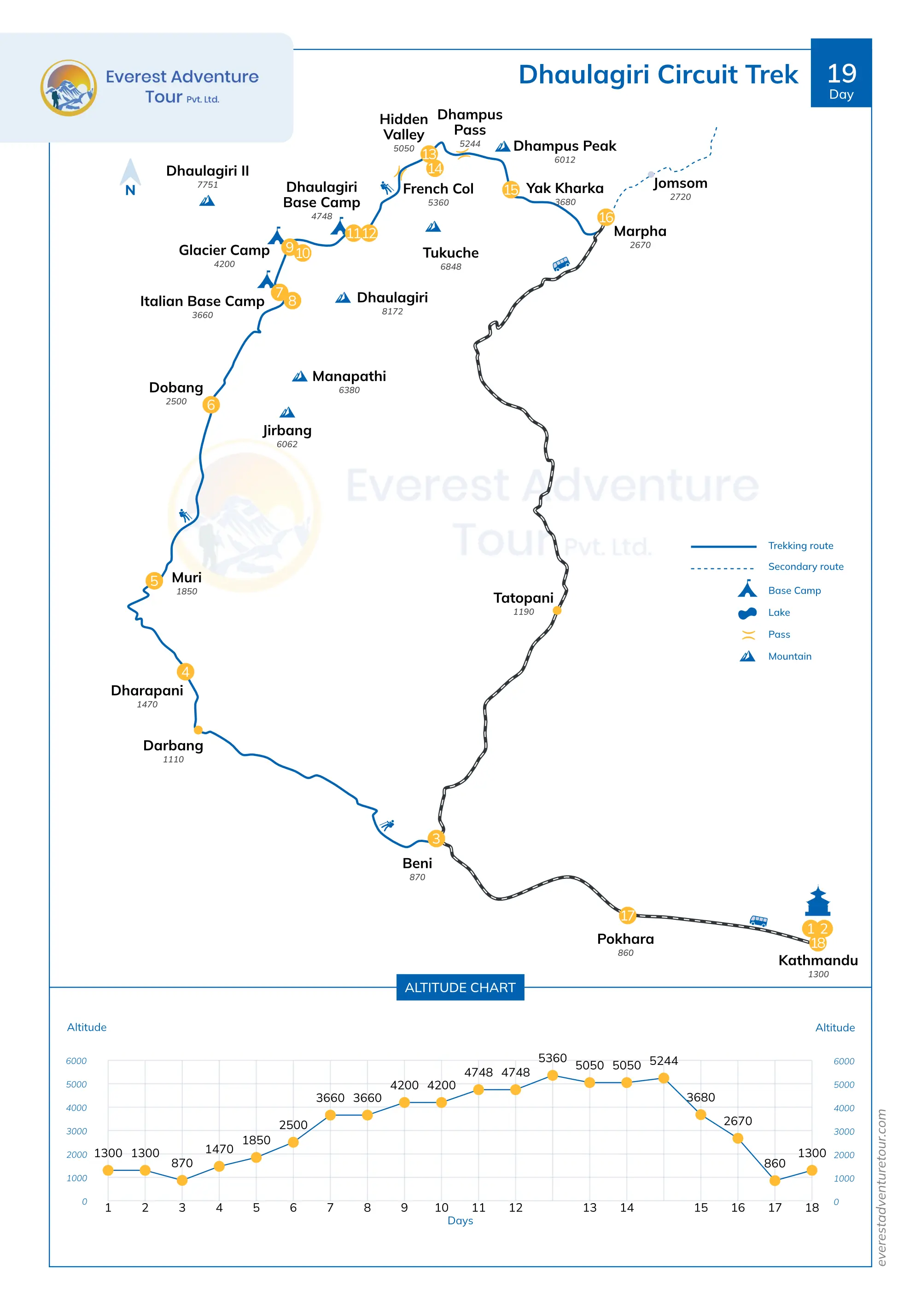
Route Map
Includes
- Airport pickup and drop in Kathmandu
- Hotel in Kathmandu / Pokhara and Tea house / lodges during the trek
- All ground transportation as per Itinerary
- Experienced English-speaking trekking guide and porters
- Trekking permits and TIMS (Trekkers’ Information Management System) card
- Breakfast in Kathmandu / Pokhara and all meals during the trek ((breakfast, lunch, dinner)
- First aid medical kit and oxygen cylinder
- Everest Adventure Tour trek briefing and support
Doesn't Include
- International airfare to/from Nepal
- Travel/trekking insurance (mandatory)
- Personal expenses (hot showers, Wi-Fi, drinks, snacks)
- Optional activities (Dhampus Peak ascent, sightseeing in Pokhara)
- Tips for guide and porters
- Visa fees for Nepal
- Excellent customer service. Our travel experts are ready to help you 24/7.
- Best price guaranteed.
- No credit card or booking fees.
- 100% financial protection.
- Environmentally-friendly tours.
Frequently Asked Questions
The Dhaulagiri Circuit Trek is best undertaken during the pre-monsoon (March to May) and post-monsoon (September to November) seasons. During these months, the weather is relatively stable, skies are clear, and mountain views are breathtaking. Trekking during the monsoon can be challenging due to heavy rainfall, landslides, and slippery trails, while winter months can be extremely cold with significant snow at higher altitudes. Everest Adventure Tour always recommends trekking in these optimal periods for safety and the best experience.
The Dhaulagiri Circuit Trek is considered a challenging high-altitude trek suitable for moderately experienced trekkers. The trek involves long days of walking, steep ascents, and crossing high mountain passes like the French Col at 5,360 meters. Trekkers should have a good level of fitness, stamina, and prior trekking experience at moderate altitudes. Everest Adventure Tour ensures proper acclimatization days are included in the itinerary to help minimize altitude sickness risks.
Our Dhaulagiri Circuit Trek package includes airport transfers in Kathmandu, three-star hotel accommodation in Kathmandu and Pokhara, meals during the trek (breakfast, lunch, and dinner), experienced trekking guides, porters, necessary permits (TIMS and Dhaulagiri Conservation Area permit), and emergency evacuation arrangements. Equipment and personal expenses such as sleeping bags, trekking gear, and tips are not included but can be arranged on request through Everest Adventure Tour.
While prior trekking experience is helpful, it is not strictly mandatory. The trek is suitable for fit and adventurous individuals who are ready for long walks and moderate climbs. Everest Adventure Tour recommends training with cardio exercises, hill walks, and endurance training before embarking on this trek. The presence of experienced guides and porters ensures that even first-time trekkers can safely complete the circuit.
Preparation for high-altitude trekking includes physical conditioning, proper acclimatization, and mental readiness. It is crucial to engage in cardiovascular exercises, strength training, and regular long hikes prior to the trek. During the trek, following a slow and steady pace, staying hydrated, and listening to your guide’s advice is key. Everest Adventure Tour emphasizes rest days at critical altitudes, such as at Glacier Camp and Dhaulagiri Base Camp, to help trekkers adjust to the thin air.
Accommodation during the Dhaulagiri Circuit Trek is primarily in teahouses or lodges that provide basic facilities, including a bed, blanket, and hot meals. In some remote areas, facilities may be more rustic, with limited electricity and shared bathrooms. Everest Adventure Tour selects clean and safe teahouses to ensure trekkers have a comfortable stay while still experiencing the authentic Himalayan lifestyle.
Yes, the itinerary includes dedicated rest and acclimatization days at key locations such as Italian Base Camp, Glacier Camp, and Dhaulagiri Base Camp. These days allow trekkers to adjust to the high altitude, reducing the risk of altitude sickness and giving time to enjoy the breathtaking mountain scenery. Everest Adventure Tour always prioritizes health and safety over speed, ensuring a safer trekking experience.
Hiring a guide is highly recommended for safety, navigation, and enriching the trekking experience. Porters can also be hired to carry heavy luggage, allowing trekkers to enjoy the journey more comfortably. Everest Adventure Tour provides professional guides and porters who are knowledgeable about the terrain, weather conditions, and local culture. They also assist in case of emergencies, making the trek more secure and enjoyable.
Packing for the trek should include layered clothing for varying temperatures, a warm down jacket, trekking boots, trekking poles, sleeping bag, water bottles, sunscreen, sunglasses, hat, and personal medications. Essential trekking documents and permits should also be kept handy. Everest Adventure Tour provides a detailed packing list before departure to help trekkers prepare thoroughly without overpacking.
Altitude sickness can occur at high elevations, even in physically fit individuals. Symptoms include headache, nausea, dizziness, and shortness of breath. Everest Adventure Tour ensures acclimatization days are included and guides monitor all trekkers closely. In case of severe altitude sickness, we follow strict protocols, including descending to a lower altitude and medical assistance if needed. Your safety is our top priority.



