


Breakfast in Kathmandu and all meals during the trek
Highlights
- Remote and less-crowded trekking region in eastern Nepal
- Breathtaking views of Kanchenjunga (8,586 m), the world’s third-highest peak
- Exploration of North and South Base Camps
- Trek through lush rhododendron forests, alpine meadows, and high-altitude landscapes
- Scenic rivers, waterfalls, and suspension bridges along the trail
- Authentic cultural experiences with Sherpa, Limbu, and local Himalayan communities
- Challenging high-altitude trekking up to 5,142 meters
- Visits to traditional villages like Ghunsa, Khambachen, and Lhonak
- Diverse wildlife spotting opportunities including Himalayan birds and mammals
- Stunning photography opportunities with snow-capped peaks, glaciers, and mountain panoramas
Overview
The Kanchenjunga Base Camp Trek, organized by Everest Adventure Tour, is a spectacular journey into the remote eastern Himalayas of Nepal. This trek offers trekkers an intimate experience of towering peaks, lush rhododendron forests, and traditional Sherpa and Limbu villages. Unlike the more popular trekking regions of Nepal, Kanchenjunga remains largely untouched by mass tourism, providing a sense of solitude and raw natural beauty. The trek takes you through scenic trails, cascading rivers, suspension bridges, and high-altitude landscapes, leading to the base camps of the world’s third-highest mountain, Kanchenjunga (8,586 meters).
Along the route, trekkers witness the changing landscape from tropical lowlands to alpine meadows and snowy peaks. The journey begins in Kathmandu, followed by a short flight to Bhadrapur, and a long drive through the beautiful hills of eastern Nepal to Taplejung, the gateway to Kanchenjunga. Highlights of this trek include Ghunsa, Lhonak, and both the North and South Base Camps. The trek is perfect for adventurers seeking a mix of challenging trails, cultural immersion, and pristine Himalayan scenery.
Highlights:
- Remote villages and Sherpa settlements
- Dramatic mountain vistas and glacial views
- Rich biodiversity and rhododendron forests
- North and South Base Camp exploration
- Authentic cultural encounters with local communities
Best Season for Kanchenjunga Base Camp Trek
The best seasons for trekking the Kanchenjunga Base Camp are spring (March to May) and autumn (September to November). During spring, the rhododendron forests are in full bloom, painting the trails with vibrant reds, pinks, and whites. The weather is generally stable, providing clear views of the Kanchenjunga massif, as well as other Himalayan giants like Makalu and Everest in the distance. Spring is ideal for photography enthusiasts and nature lovers due to the colorful flora and moderate trekking conditions.
Autumn, on the other hand, follows the monsoon season, offering fresh, clean air and unobstructed mountain views. The temperatures are moderate, making it comfortable for trekking without extreme cold or heat. Winter treks are possible but come with the risk of heavy snowfall, harsh winds, and frozen trails, making high-altitude camping more challenging. Summer, especially during the monsoon (June to August), is generally avoided due to landslides, leeches, and slippery trails, which can be dangerous in this remote region.
Best season highlights:
- Spring: Rhododendron blooms, moderate weather, clear skies
- Autumn: Crisp air, post-monsoon visibility, vibrant landscapes
- Avoid monsoon due to landslides and slippery trails
- Winter for experienced trekkers only, due to extreme cold
Kanchenjunga Base Camp Trekking Difficulty and Transportation
The Kanchenjunga Base Camp Trek is classified as strenuous and challenging, suitable for experienced trekkers or those with a strong fitness level. The trek involves long hours of walking each day, often on steep trails with significant altitude gains. Altitude sickness is a risk as the route reaches elevations above 5,000 meters at the North Base Camp. Trekkers should be prepared for variable weather conditions, including cold nights and sudden snowstorms at higher elevations. The combination of steep ascents, rough terrain, and long trekking days requires proper physical preparation, endurance, and mental resilience.
Transportation for the trek begins with an international flight to Kathmandu, Nepal’s capital, followed by a domestic flight to Bhadrapur. From Bhadrapur, a scenic yet long drive of 8–9 hours takes trekkers to Taplejung, the starting point of the trek. Within the trek, transportation is primarily on foot, with porters or yaks assisting with heavier luggage. The return journey also involves trekking back to Taplejung, driving to Ilam for sightseeing, and a flight back to Kathmandu, completing a well-rounded and adventurous itinerary.
Difficulty and transport highlights:
- Strenuous trek with high-altitude challenges
- Long daily trekking distances (6–10 hours per day)
- Risk of altitude sickness above 4,500 meters
- Domestic flights to Bhadrapur, road travel to Taplejung
- Porters or yaks for luggage support
Food and Accommodation for Kanchenjunga Base Camp Trek
Food and accommodation during the Kanchenjunga Base Camp Trek are simple but sufficient to meet the needs of trekkers. In lower regions like Taplejung and Sekathum, there are basic guesthouses and lodges offering Nepali and continental meals. As trekkers ascend to higher altitudes such as Ghunsa, Lhonak, and the base camps, the options are more limited, and lodges mainly provide warm meals like rice, dal (lentil soup), noodles, and potatoes. Tea houses along the trail offer a cozy place to rest and warm up after long trekking days.
Accommodation in the remote areas is basic with shared rooms, thin mattresses, and cold water. High-altitude lodges may not have electricity except for solar-powered lights, so it’s advisable to carry a headlamp or flashlight. Trekkers are encouraged to carry their own sleeping bags rated for sub-zero temperatures. Despite the simplicity, these accommodations allow trekkers to enjoy a comfortable and authentic Himalayan experience while being close to nature and local communities.
Food & accommodation highlights:
- Simple tea houses and lodges along the trail
- Warm meals: rice, noodles, soups, and local dishes
- Shared rooms, basic facilities, limited hot water
- Solar-powered lights at higher altitudes
- Bring high-quality sleeping bag for cold nights
Kanchenjunga Base Camp Trekking Permits
Trekking to the Kanchenjunga Base Camp requires specific permits to ensure safety and conservation of this remote region. Trekkers need the Kanchenjunga Conservation Area Permit (KCAP) and a Restricted Area Permit, as the area lies in a protected conservation zone with limited access. These permits are mandatory and are usually arranged by trekking companies like Everest Adventure Tour, which ensures that all paperwork, fees, and regulations are taken care of before the trek begins.
The permits are strictly monitored by the Nepalese government, and trekkers must present them at checkpoints along the trail. The cost of permits contributes to the conservation and management of Kanchenjunga, helping maintain the natural beauty and cultural heritage of the region. Carrying identification, passport copies, and passport-sized photographs is essential, as authorities may require them during permit processing.
Permit highlights:
- Kanchenjunga Conservation Area Permit (KCAP)
- Restricted Area Permit for special regions
- Mandatory checkpoints along the trekking route
- Fees contribute to conservation and local community support
- Arranged easily by professional trekking companies
Why Choose Kanchenjunga Base Camp Trek
The Kanchenjunga Base Camp Trek is an extraordinary journey for those seeking adventure, solitude, and breathtaking Himalayan landscapes. Unlike crowded trekking regions such as Everest or Annapurna, Kanchenjunga offers untouched trails, pristine wilderness, and authentic cultural experiences. Trekkers encounter remote villages, meet local Sherpa and Limbu communities, and experience Nepalese mountain traditions firsthand. The trek offers unparalleled opportunities for photography, wildlife spotting, and mountaineering adventure without the crowds.
Choosing Everest Adventure Tour ensures a safe, well-organized, and enriching experience. The company provides experienced guides, porters, quality logistics, and expert knowledge about the region. Every detail—from transportation, accommodation, permits, to acclimatization strategies—is handled professionally, allowing trekkers to focus on enjoying the adventure. The trek is perfect for high-altitude enthusiasts, nature lovers, and anyone seeking a rewarding Himalayan journey that combines physical challenge with cultural discovery.
Reasons to choose this trek:
- Remote and less-crowded Himalayan adventure
- Authentic cultural encounters with Sherpa and Limbu communities
- Stunning views of Kanchenjunga and surrounding peaks
- Expert guides and organized trekking services
- Challenging yet rewarding experience for seasoned trekkers
Important Note
Trip Itinerary
Today is dedicated to exploring the rich cultural heritage of Kathmandu. The tour includes visits to UNESCO World Heritage Sites such as Pashupatinath Temple, the holiest Hindu shrine in Nepal, and Boudhanath Stupa, a center of Tibetan Buddhism. You will also visit Patan Durbar Square, known for its stunning architecture and historic palaces. Throughout the day, your guide will provide insights into Nepali culture, traditions, and history. The evening will be free to stroll through Thamel, a lively area filled with shops, cafes, and restaurants.
In the morning, you will take a short scenic flight from Kathmandu to Bhadrapur, followed by a road journey to Taplejung at 1,820 meters. The drive spans approximately 260 kilometers and takes around 8–9 hours, offering stunning views of terraced fields, forests, and rivers. Along the way, you may encounter local markets and picturesque villages, providing a glimpse of rural Nepali life. Upon arrival in Taplejung, you will check into a local guesthouse and enjoy a traditional dinner while resting for the trek ahead.
The journey continues as you drive from Taplejung to Sekathum, situated at 1,576 meters. The 60–70 km drive takes approximately 5–6 hours along winding roads that pass through lush forests, hills, and rivers. Sekathum is a small village where trekkers experience the charm of rural eastern Nepal. Upon arrival, you will check into a teahouse or lodge, have lunch, and spend the evening acclimatizing to the surroundings. Your guide will brief you on the upcoming trek stages and provide tips for a safe and enjoyable experience.
The trek begins today as you hike from Sekathum to Amjilosa at 2,400 meters, covering around 10–12 km in 6–7 hours. The trail passes through verdant forests of rhododendron and bamboo, alongside streams and traditional villages. The route gradually ascends, offering spectacular views of snow-capped peaks in the distance. Trekkers will have opportunities to interact with local communities, witness traditional farming methods, and enjoy the serene Himalayan environment. Upon arrival in Amjilosa, you will check into a comfortable teahouse and rest after a fulfilling first day of trekking.
Today’s trek takes you from Amjilosa to Gyabla at 2,730 meters, covering 12–14 km in approximately 6–7 hours. The trail gradually gains altitude, passing through dense forests and quaint hamlets where locals warmly welcome trekkers. Along the way, the scenery opens to reveal panoramic views of the surrounding peaks and valleys. Gyabla is a quiet village that serves as an ideal stop to rest, acclimatize, and enjoy the tranquility of the Himalayas. Your guide will also help with acclimatization strategies to ensure a safe journey ahead.
The hike from Gyabla to Ghunsa, situated at 3,595 meters, spans 12–15 km and takes 5–6 hours. The trail offers increasingly dramatic views of snow-capped peaks, cascading waterfalls, and alpine landscapes. Ghunsa is a traditional Lepcha settlement, known for its rich culture and welcoming residents. Trekkers will notice prayer flags fluttering along the trail, adding a spiritual ambiance. Upon arrival, you can explore the village, interact with locals, and enjoy the spectacular backdrop of Kanchenjunga peaks towering above.
A day of rest and acclimatization is essential for preventing altitude sickness. Trekkers can explore the serene village of Ghunsa, visit small monasteries, or hike nearby trails for short excursions. This day allows the body to adjust to higher altitudes while enjoying stunning views of Kanchenjunga and surrounding peaks. Your guide may lead discussions on trekking techniques, photography opportunities, and cultural insights. Evening activities include relaxation, journaling, or sharing stories with fellow trekkers in the cozy teahouse setting.
Trekking from Ghunsa to Khambachen at 4,050 meters covers 11–12 km in 5–6 hours. The trail ascends steadily through alpine forests, glacial streams, and high-altitude meadows. Khambachen is a small settlement that serves as a gateway to the higher regions of Kanchenjunga. Trekkers can enjoy close-up views of towering peaks and cascading glaciers. The day is physically challenging but rewarding, offering a sense of accomplishment and the pristine Himalayan wilderness. Overnight stay in Khambachen teahouse allows for rest and acclimatization.
Today, the trek takes you from Khambachen to Lhonak at 4,756 meters, covering 10–12 km in 6–7 hours. The route is more rugged, with rocky paths and sparse vegetation. Trekkers experience the raw beauty of high-altitude landscapes, including moraines, glacial streams, and distant snow peaks. Lhonak serves as an important stop before the North Base Camp, offering a sense of isolation and connection with nature. Proper hydration and rest are crucial as you adjust to the increasing altitude.
A highlight of the trek, today you will trek to the North Base Camp (Pangpema) at 5,142 meters and return to Lhonak. The round trip is 15–17 km and takes 9–10 hours. The trail navigates rocky terrains and glacial ridges, providing breathtaking panoramic views of Kanchenjunga’s towering summit. Reaching the North Base Camp is a momentous achievement, offering a sense of awe and fulfillment. After exploring and capturing memories, you return to Lhonak for a well-deserved rest and reflection on the adventure.
Today’s trek is a long descent from Lhonak back to Ghunsa, covering 22–23 km in 9–10 hours. The trail retraces the route through alpine meadows, forests, and picturesque villages, offering different perspectives of the landscapes encountered earlier. The descent allows trekkers to enjoy the scenery at a more relaxed pace, capturing photographs and appreciating the region’s natural beauty. Upon arrival in Ghunsa, you can rest, celebrate your achievements, and prepare for the next stage of the journey toward Selele.
The trek from Ghunsa to Selele Camp at 4,200 meters spans 10–11 km in 6–7 hours. The trail gradually ascends through forests and rugged terrain, leading to a high-altitude camp surrounded by towering peaks and glaciers. Trekkers experience stunning vistas of snow-capped summits and the tranquility of the upper Himalayas. Selele Camp provides basic teahouse accommodations, and the evening offers opportunities for relaxation, photography, and acclimatization, as you prepare for the challenging Selele Pass trek tomorrow.
Today is a challenging yet rewarding day, trekking from Selele Camp to Tseram at 3,870 meters via Selele Pass at 4,480 meters. Covering 20 km in 9–10 hours, the trail ascends steep ridges and passes glacial moraines, offering awe-inspiring views of the Kanchenjunga massif. Crossing the pass is an exhilarating experience, with panoramic views of surrounding peaks and valleys. The descent to Tseram is steep but scenic, leading to comfortable teahouse accommodations. This day demands stamina but rewards trekkers with unparalleled Himalayan vistas.
A day trek from Tseram to Ramche at 4,580 meters covers 12 km in 6–7 hours. The trail navigates high-altitude terrain, passing glaciers, moraines, and rugged ridges. Ramche offers panoramic views of Kanchenjunga and surrounding peaks. The trek provides an opportunity to experience the solitude and majesty of the high Himalayas. Trekkers return to Tseram in the evening for overnight stay, allowing for rest and reflection on the day’s adventure while enjoying a warm meal in a cozy teahouse.
Today you trek from Ramche to Yalung Base Camp (South Base Camp) at 4,840 meters and return to Ramche, covering 14–16 km in 6–7 hours. The route passes glacial streams, rocky ridges, and high-altitude meadows. Reaching the South Base Camp provides a sense of achievement, with panoramic views of Kanchenjunga’s southern slopes. After exploring the base camp, you return to Ramche for rest and acclimatization. The day is physically demanding but immensely rewarding for the breathtaking scenery and personal accomplishment.
Trekking from Ramche to Torantan at 3,370 meters spans 12 km in 6–7 hours. The trail descends gradually through alpine landscapes, offering views of cascading rivers, high ridges, and small villages. Trekkers enjoy the changing scenery and the opportunity to interact with locals along the route. Torantan provides comfortable teahouse accommodations and a welcoming environment to rest after several days at high altitude. This stage allows the body to adjust as the trek progresses toward lower elevations.
Today, you trek from Torantan to Yamphuding at 1,690 meters, covering 18–20 km in 7–8 hours. The descent takes you through lush forests, terraced fields, and traditional villages. Trekkers witness the diversity of Nepal’s landscapes, from high-altitude alpine terrain to subtropical valleys. Yamphuding is a serene village where you can relax, enjoy local hospitality, and reflect on the incredible journey through the Kanchenjunga region.
The trek from Yamphuding to Phumphe at 1,780 meters spans 9–10 km in 4–5 hours. The trail is moderate and winds through forested areas, streams, and small settlements. This stage offers a more leisurely pace, allowing trekkers to enjoy the surrounding beauty and observe local life. Phumphe provides a quiet teahouse for overnight stay, with opportunities for relaxation and socializing with fellow trekkers.
Today’s trek from Phumphe to Kade Bhanjyang covers 6–7 km in 3–4 hours. The trail passes through forests, farmland, and gentle ridges. This shorter day allows trekkers to rest and reflect on the journey as they approach the end of the trekking route. Kade Bhanjyang offers simple accommodation and a peaceful environment for an overnight stay.
After trekking, you will drive from Kade Bhanjyang to Taplejung and continue to Kanyam in Ilam, a scenic journey of 8–9 hours. The drive passes through rolling hills, tea plantations, and vibrant local villages. Upon arrival in Kanyam, known for its lush tea gardens and picturesque landscapes, you will check into a hotel and enjoy a relaxing evening amidst nature, preparing for the next day’s exploration.
Today is a leisure day in Kanyam, allowing trekkers to explore the beautiful tea gardens, rolling hills, and vibrant local culture. You can take walks through verdant landscapes, interact with tea garden workers, and enjoy panoramic views of the surrounding hills. The day offers a peaceful and rejuvenating experience after the strenuous trek. Local cuisine, photography, and cultural exploration provide an enriching conclusion to the Kanchenjunga adventure.
In the morning, you will drive to Bhadrapur for approximately two hours and take a flight back to Kathmandu. Upon arrival, you will be transferred to your hotel. The evening is free for shopping, relaxing, or revisiting favorite spots in the city. This day allows you to rest, reflect on the incredible trekking experience, and prepare for departure.
On the final day, you will be transferred to Tribhuvan International Airport for your onward journey. This marks the end of the unforgettable Kanchenjunga Base Camp Trek with Everest Adventure Tour. Trekkers depart with memories of breathtaking Himalayan landscapes, cultural encounters, and the satisfaction of accomplishing one of Nepal’s most challenging and rewarding treks.
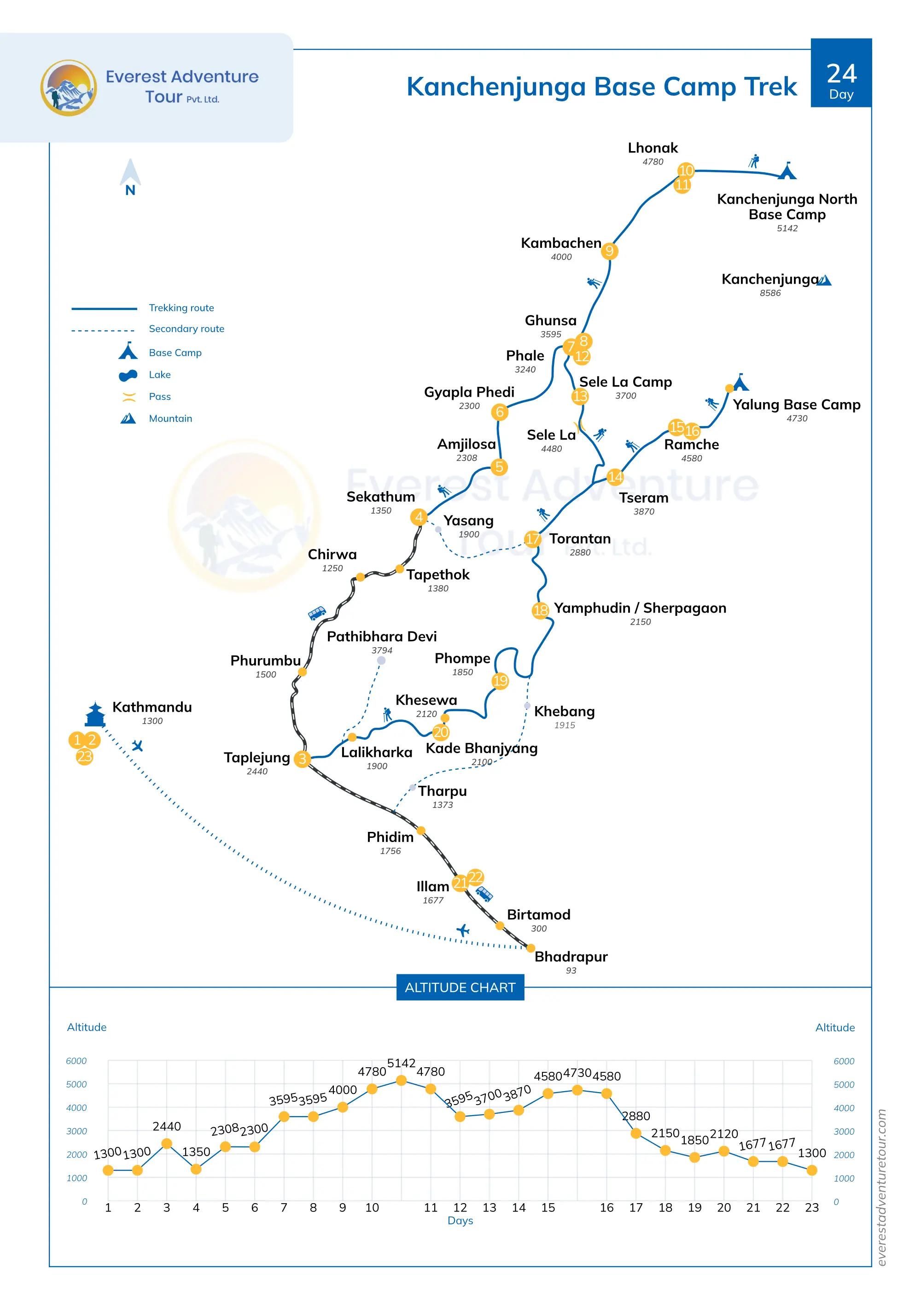
Route Map
Includes
- Airport transfers in Kathmandu
- Domestic flight and all around transportation as per Itinerary
- Hotel in Kathmandu and Tea house / lodges during the trek
- Full board meals (breakfast, lunch, dinner) during trek
- Experienced English-speaking trekking guide and porters
- Trekking permits, Kanchenjunga Conservation Area Permit, TIMS card
- First aid kit and emergency evacuation support
Doesn't Include
- International airfare to/from Nepal
- Travel/trekking insurance (highly recommended)
- Personal expenses (laundry, phone, internet, snacks, drinks)
- Tips for guides and porters
- Optional activities not mentioned in the itinerary
- Alcoholic beverages
- Extra hotel nights due to flight delays or personal reasonsa
- Excellent customer service. Our travel experts are ready to help you 24/7.
- Best price guaranteed.
- No credit card or booking fees.
- 100% financial protection.
- Environmentally-friendly tours.
Frequently Asked Questions
The ideal time for the Kanchenjunga Base Camp Trek is during the pre-monsoon (March to May) and post-monsoon (late September to November) seasons. During these months, the weather is stable, the skies are clear, and the views of the Kanchenjunga and surrounding peaks are spectacular. Everest Adventure Tour recommends planning your trek in these seasons to maximize safety, visibility, and overall trekking experience.
The Kanchenjunga Base Camp Trek is considered a challenging high-altitude trek due to long trekking days, steep ascents, and high altitudes reaching over 5,000 meters. Participants should have prior trekking experience or maintain good physical fitness. Everest Adventure Tour suggests preparing through regular cardio, strength training, and hiking with a backpack to handle daily distances ranging from 6 km to 23 km and altitudes up to 5,142 meters.
The complete trek organized by Everest Adventure Tour spans 24 days, including arrival in Kathmandu, sightseeing, transfers, and acclimatization days. Trekking itself covers remote villages, forests, rivers, and high passes. Daily trekking distances vary between 6 km and 23 km, ensuring a mix of moderate and challenging days, allowing for proper acclimatization and a safe ascent to high-altitude camps.
Accommodation during the Kanchenjunga Base Camp Trek is primarily in teahouses and lodges along the route. Facilities are basic but comfortable, with warm bedding and simple meals. In higher camps such as Lhonak or Selele, accommodations may be more rustic due to the remoteness. Everest Adventure Tour ensures that trekkers have safe and hygienic lodging, with staff assisting in reservations and arrangements throughout the journey.
Trekkers can enjoy locally prepared Nepali meals in teahouses along the route. Typical meals include rice, lentils, vegetables, noodles, soups, and occasional meat dishes. Everest Adventure Tour also advises carrying energy snacks like nuts, chocolate, or energy bars for long trekking days. Drinking water should be purified or boiled, and most lodges provide hot beverages like tea or coffee for refreshment after trekking.
Yes, trekking to the Kanchenjunga region requires multiple permits, including the Kanchenjunga Conservation Area Permit (KCAP) and a restricted area permit. Everest Adventure Tour assists in obtaining all necessary permits and ensures trekkers comply with regulations. These permits help preserve the fragile environment, protect local communities, and support sustainable tourism in the remote Kanchenjunga region.
Altitude can affect trekkers with symptoms such as headache, nausea, dizziness, or fatigue. Proper acclimatization is essential, which is why the itinerary includes rest days in Ghunsa and gradual ascents to higher camps like Lhonak and Ramche. Everest Adventure Tour guides closely monitor each participant for altitude sickness and provide guidelines for safe trekking, including hydration, diet, and pace adjustments.
Trekkers need layered clothing for varying temperatures, including thermal innerwear, down jackets, trekking pants, gloves, hats, and waterproof gear. Sturdy trekking boots, a sleeping bag suitable for cold nights, trekking poles, and a daypack are essential. Everest Adventure Tour provides a detailed packing list to ensure trekkers are well-prepared for both high-altitude conditions and lower valley climates throughout the 24-day journey.
The Kanchenjunga Base Camp Trek is not recommended for complete beginners due to long trekking days, remote terrain, and high-altitude challenges. However, moderately experienced trekkers in good physical condition can successfully complete it with proper preparation. Everest Adventure Tour offers pre-trek guidance, fitness tips, and an experienced support team to help trekkers build confidence and navigate the trail safely.
This trek offers a less crowded, off-the-beaten-path experience compared to other Himalayan treks. Trekkers witness stunning vistas of Kanchenjunga, pristine rhododendron forests, alpine meadows, traditional Limbu and Sherpa villages, and remote high-altitude landscapes. Everest Adventure Tour emphasizes cultural interactions, breathtaking scenery, and the thrill of reaching the North and South Base Camps, making it a truly memorable Himalayan adventure.



