
- 1 - 1 Person US$ 1,499
- 2 - 5 Person US$ 1,299
- 6 - 9 Person US$ 1,250
- 10 - 15 Person US$ 1,220
- 16 - 20 Person US$ 1,199
Highlights
- An ever-exciting moderate adventure to picturesque Tengboche Monastery
- Stunning location of Tengboche, surrounded by pine and rhododendron forests
- Majestic Buddhist monastery, rich in spiritual heritage and mountain culture
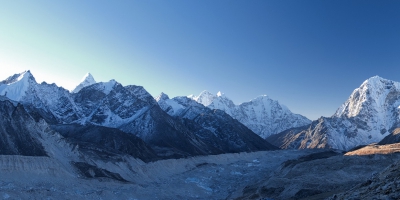
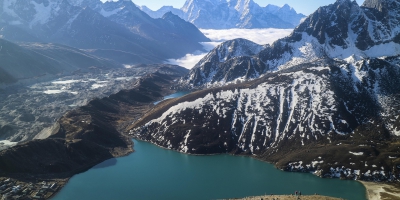
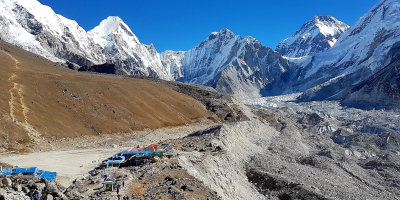
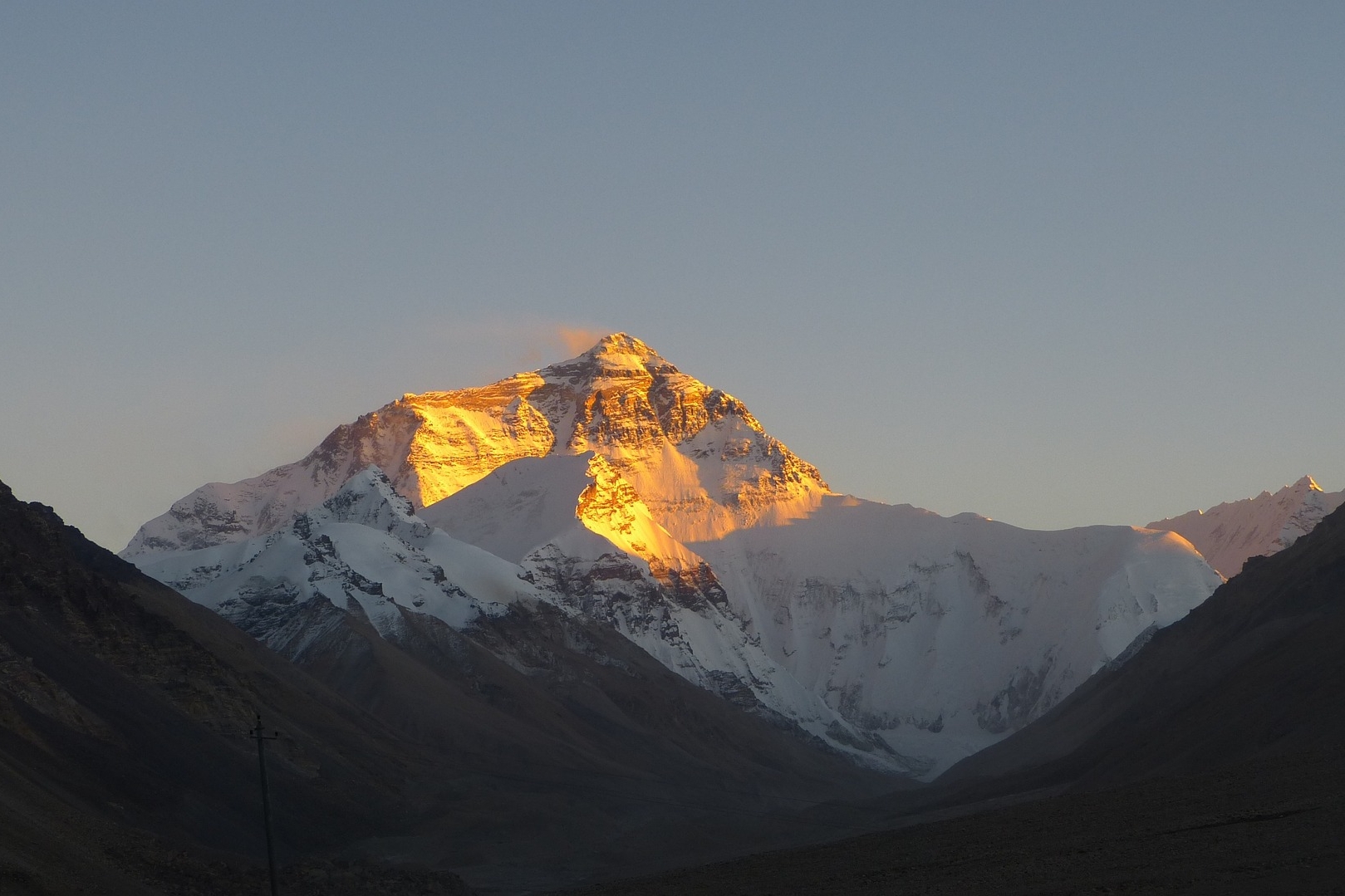
- Daily walks accompanied by constant views of Mt. Everest, Ama Dablam, and other towering peaks
- Scenic flight to Lukla over the Himalayan range – a thrilling start to the journey
- Trek through UNESCO-listed Sagarmatha National Park, home to unique flora and fauna
- Visit Namche Bazaar, the vibrant Sherpa capital with mountain markets and cultural museums
- Exploration of traditional Sherpa villages like Khumjung and Monjo
- Experience the hospitality of Sherpa people and their timeless lifestyle
- Panoramic viewpoint hikes to Everest View Hotel for stunning sunrise/sunset scenes
- Opportunities to spot rare wildlife like Himalayan tahr, musk deer, and colorful pheasants
- Photogenic landscapes of deep valleys, waterfalls, and prayer-flag-draped suspension bridges
- Chance to witness or participate in local festivals like Mani Rimdu (in Tengboche)
- Rich blend of mountains, monasteries, spirituality, and adventure
Overview
Enjoy the Adventure with Scenic Views in the Harmony of Local Cultures
The Everest Panorama Trek by Everest Adventure Tour is a perfectly designed short Himalayan journey that combines cultural exploration with breathtaking mountain scenery. This trek offers an immersive experience into the heart of the Khumbu region, allowing trekkers to witness the grandeur of Mt. Everest without going to extreme altitudes. It is tailored for all levels of travelers—from families and students to elderly adventurers—making it one of the most rewarding and accessible trekking experiences in Nepal. The trek presents a gentle introduction to high-altitude walking, staying below 4,000 meters, which minimizes the risk of altitude sickness while maximizing the scenic and cultural rewards.
From the moment you land in the vibrant city of Kathmandu, the journey unfolds with a mix of history, nature, and spirituality. A short, dramatic mountain flight brings you to Lukla, the starting point of the trek, where trails meander through traditional Sherpa villages, rhododendron forests, and high-altitude landscapes. Along the way, trekkers are treated to awe-inspiring views of Everest, Lhotse, Nuptse, Ama Dablam, and Thamserku. One of the key highlights is visiting Tengboche Monastery, a spiritual center of the Khumbu nestled beneath towering peaks, where you can witness daily prayers and the serene rhythm of Himalayan Buddhist life.
Cultural and Natural Harmony
What sets the Everest Panorama Trek apart is the harmonious blend of nature and culture. The region is home to the warm and welcoming Sherpa people, whose deep-rooted traditions and Buddhist heritage shine through in every stupa, mani wall, and prayer flag that adorns the trails. The trek passes through the Sagarmatha National Park, a UNESCO World Heritage Site, renowned not only for its dramatic landscapes and Himalayan biodiversity but also for its unique mountain culture. Travelers gain a deeper appreciation of the Sherpa way of life, particularly during stops in villages like Namche Bazaar, Khumjung, and Monjo, where ancient customs continue to thrive amidst modern trekking conveniences.
Even with the moderate nature of this trek, the sense of accomplishment and peace it provides is profound. Each day brings a new vista, a deeper connection with the land, and a greater respect for the resilience and spirituality of the local people. Whether you're standing before the golden-roofed monastery of Tengboche or enjoying yak cheese in the Khumjung community, every moment is steeped in the timeless magic of the Himalayas. The final return to Lukla wraps up the adventure with a sense of fulfillment, knowing you've stepped into a sacred space few people ever experience.
With the flexibility to accommodate delays due to weather or flights (sometimes redirected through Manthali Airport), Everest Adventure Tour ensures safety, comfort, and clarity throughout your trip. The Everest Panorama Trek is not just a hike—it's a journey through the soul of the Himalayas.
Major Places for Everest Panorama Trek
The Everest Panorama Trek passes through some of the most iconic and culturally rich locations in the Khumbu region of Nepal. These places are not only known for their natural beauty but also for their deep spiritual significance and unique Sherpa culture. One of the first major stops on the trek is Phakding, a quiet village along the Dudh Koshi River, surrounded by green hills and pine forests. It's a peaceful place where trekkers adjust to the rhythm of the Himalayas.
From Phakding, the trail leads to Namche Bazaar, the bustling hub of the Everest region. Known as the gateway to Everest, Namche is a semi-urban town with markets, cafes, gear shops, and excellent viewpoints. It’s also an ideal place for acclimatization and cultural exploration. From here, trekkers can visit the Everest View Hotel, one of the highest luxury hotels in the world, offering jaw-dropping views of Mt. Everest and Ama Dablam.
Further along, Tengboche Monastery is the spiritual highlight of the trek. Surrounded by a natural amphitheater of snow-capped peaks, this sacred monastery offers an emotional and visually stunning experience. Trekkers can observe monks in prayer and explore the peaceful surroundings. On the return route, Khumjung Village offers an authentic Sherpa lifestyle experience, home to the legendary Yeti scalp at the local monastery and a school founded by Sir Edmund Hillary.
Highlights of major places:
- Phakding: Peaceful riverside village
- Namche Bazaar: Sherpa capital, cultural and trade center
- Tengboche Monastery: Spiritual and scenic highlight
- Khumjung & Khunde: Traditional Sherpa villages
- Monjo: Gateway to Sagarmatha National Park
Best Time for Everest Panorama Trek
The best time to do the Everest Panorama Trek is during Nepal’s two main trekking seasons: spring (March to May) and autumn (September to November). These periods provide the most stable weather conditions, clear skies, and panoramic views of the Himalayas. In spring, the trails are decorated with blooming rhododendrons and wildflowers, while the mountains remain snow-capped and majestic in the background. Autumn, on the other hand, offers crisp air, dry trails, and excellent visibility after the monsoon.
During these seasons, temperatures at lower elevations like Lukla and Namche are mild during the day and moderately cold at night. Higher up in places like Tengboche, it gets colder, but not uncomfortably so with proper clothing. The days are long and sunny, ideal for walking and photography. Additionally, many local festivals, such as Mani Rimdu at Tengboche Monastery, occur in autumn, enriching your cultural experience.
Trekking during winter (December to February) is also possible, but temperatures drop significantly, especially at night. The routes are quieter, but snow may block access to certain trails. Summer/monsoon (June to August) is the least favorable due to heavy rains, muddy paths, and frequent flight delays.
Best seasons:
- Spring (March to May) – blooming flowers, warm days
- Autumn (September to November) – clear skies, great views
- Winter (Dec-Feb) – fewer trekkers, but colder
- Monsoon (Jun-Aug) – not recommended due to rain
Everest Panorama Trekking Difficulty Level
The Everest Panorama Trek is considered a moderate-level trek, ideal for beginners, families, and those seeking a Himalayan experience without the stress of extreme altitude. Unlike the full Everest Base Camp trek, this route stays below 4,000 meters, reducing the risk of acute mountain sickness. With daily walking hours averaging 4 to 6 hours, it allows for gradual acclimatization and comfortable pacing.
The trail includes a mix of well-paved paths, forested trails, and suspension bridges crossing rivers. While there are some steep ascents, especially the climb to Namche Bazaar and Tengboche, they are manageable with proper rest and guidance. Everest Adventure Tour has designed the itinerary to include acclimatization days and gentle ascents to support trekkers of all ages and fitness levels.
That said, a reasonable level of physical fitness is still recommended. Prior hiking experience is helpful but not necessary. Preparation with light cardio, walking, or short hikes weeks before departure will make the trek more enjoyable. No technical skills are required, and the trekking staff ensures safety and comfort throughout.
Difficulty overview:
- Grade: Moderate
- Max Elevation: 3,867 m at Tengboche
- Daily Walking: 4–6 hours
- Good for: Beginners, families, and seniors
- Fitness Required: Basic fitness, no technical skills
Food and Accommodation for Everest Panorama Trek
Food and lodging on the Everest Panorama Trek are designed to provide comfort and nourishment throughout the journey. Trekkers stay in traditional tea houses or mountain lodges managed by local Sherpa families. These lodges offer clean rooms with twin beds, warm blankets, and shared bathrooms. While basic, the rooms are cozy and often come with fantastic views of the surrounding mountains.
Dining in the mountains offers a mix of Nepali, Tibetan, and Western-style meals. The most popular dish is "dal bhat"—a traditional Nepali meal with rice, lentil soup, and seasonal vegetables, served with unlimited refills. You’ll also find momo (dumplings), noodles, fried rice, pasta, pancakes, and even pizza on the menu. Everest Adventure Tour ensures hygienic food preparation and safe drinking water, which can be boiled or treated.
Breakfasts are hearty, often including porridge, eggs, toast, and tea or coffee. Lunch is enjoyed en route at a trailside lodge, while dinner is served at your overnight stop. Hot drinks like herbal tea, ginger lemon honey, and hot chocolate are widely available and help with altitude adjustment.
Accommodation & Food Summary:
- Lodging: Tea houses/lodges with basic amenities
- Rooms: Twin-sharing, shared bathrooms
- Food: Dal bhat, noodles, momo, soups, Western options
- Drinks: Boiled water, herbal teas, coffee
- Hygiene: Maintained by Everest Adventure Tour partners
Network and Communication for Everest Panorama Trek
Connectivity in the Everest region has improved over the years, and trekkers can now stay in touch with family and friends, even from remote villages. Mobile network coverage is available throughout most of the route, particularly in areas like Lukla, Namche Bazaar, and Tengboche. Ncell and NTC SIM cards with data plans can be purchased in Kathmandu before the trek. While the signal can be spotty in some higher or more forested areas, basic communication is usually possible.
In addition to mobile networks, Wi-Fi is available in most tea houses for a small fee. Places like Namche Bazaar offer relatively stable internet, while Tengboche and Khumjung may have slower speeds. Lodges often charge per device or by time usage. Everest Adventure Tour recommends using offline maps and saving important contacts in case of temporary disconnections.
For emergency communication, all guides from Everest Adventure Tour carry mobile phones and radios for quick access to assistance. In case of emergencies like weather changes or health issues, satellite phones or rescue services can be arranged immediately.
Communication Summary:
- Mobile Network: Ncell and NTC (patchy at times)
- Wi-Fi: Available in most lodges (paid)
- Emergency Contact: Guides carry mobile/radio
- Offline Preparation: Download maps and contacts in advance
Everest Panorama Trekking Transportation
Transportation for the Everest Panorama Trek involves a combination of flights and local ground travel. The most thrilling part of the journey is the short scenic flight from Kathmandu to Lukla. This 30-minute flight offers mesmerizing views of the Himalayan range and lands at Tenzing-Hillary Airport, one of the most iconic airports in the world. From Lukla, the trek begins on foot through traditional Sherpa villages and alpine terrain.
Due to air traffic and weather, sometimes flights to Lukla are diverted to Manthali Airport in Ramechhap, about 4-5 hours’ drive from Kathmandu. In such cases, Everest Adventure Tour arranges ground transportation to ensure timely connections. On return, trekkers fly from Lukla to Kathmandu or Manthali, depending on the situation.
Everest Adventure Tour ensures timely airport transfers, private vehicle arrangements for sightseeing in Kathmandu, and all necessary logistics to ensure a seamless trekking experience from arrival to departure.
Transport Details:
- Kathmandu–Lukla Flight: 30 mins, scenic
- Possible Ramechhap Diversion: 4–5 hours’ drive
- In-Trek Transport: On foot
- Airport Transfers: Private vehicles provided
Everest Panorama Trekking Permits
To legally trek in the Everest region, including the Everest Panorama Trek, all trekkers must obtain specific permits. These are mandatory and regulated by the Nepalese government and local conservation authorities to help preserve the fragile mountain ecosystem and support local communities. The good news is that Everest Adventure Tour manages all permit arrangements on behalf of their clients, ensuring a hassle-free experience from the start.
There are two main permits required for this trek. The first is the Sagarmatha National Park Entry Permit, which is needed to enter the protected area of Sagarmatha National Park—home to Mt. Everest and various rare flora and fauna. This permit is issued by the Nepal Tourism Board or at the Monjo checkpoint on the way to Namche Bazaar. The second is the Khumbu Pasang Lhamu Rural Municipality Entry Permit, which was introduced in 2018 to replace the older TIMS (Trekkers’ Information Management System) card for this region. This permit supports local development initiatives and is issued in Lukla.
It is essential to carry both permits throughout the trek, as there are several checkpoints along the way where these documents will be checked by park or local officials. Trekkers without valid permits may face penalties or be denied access to certain areas. Fortunately, when booking with Everest Adventure Tour, your guides will handle all permit verifications and carry copies for added safety.
Required Permits:
- Sagarmatha National Park Entry Permit
- Cost: NPR 3,000 per person (approx. USD 25)
- Khumbu Pasang Lhamu Rural Municipality Entry Permit
- Cost: NPR 2,000 per person (approx. USD 17)
- No TIMS card needed for this region
- All permits arranged by Everest Adventure Tour
Why Choose Everest Panorama Trek
The Everest Panorama Trek is the perfect choice for those who want to witness the beauty of Mt. Everest and the rich culture of the Khumbu region without trekking to extreme altitudes or committing to long, strenuous journeys. It offers a balanced adventure that combines scenic mountain views, Sherpa culture, spiritual encounters, and comfortable trekking days. Ideal for beginners, families, elderly travelers, and even school or corporate groups, this trek delivers an authentic Himalayan experience in under two weeks.
This trek gives you the rare opportunity to stand before the world's highest mountains, including Mt. Everest, Lhotse, Nuptse, and Ama Dablam, all from vantage points like Namche Bazaar and Tengboche. Along the way, you’ll explore ancient monasteries, colorful prayer flags, and traditional Sherpa villages, giving you deep insight into the cultural and spiritual life of the region. All this, while sleeping in cozy lodges and enjoying freshly prepared meals each day.
Everest Adventure Tour ensures your experience is not only exciting but also safe, well-organized, and enriching. With experienced guides, porter services, comfortable logistics, and a well-paced itinerary, your journey is smooth and stress-free. Whether you're a solo traveler or part of a group, the trek is thoughtfully designed to allow for acclimatization, sightseeing, and cultural immersion.
Reasons to Choose Everest Panorama Trek:
- Shorter and easier than Everest Base Camp Trek
- Suitable for all age groups and fitness levels
- Stunning views of Everest and surrounding peaks
- Rich Sherpa culture and visits to famous monasteries
- Managed and guided by experienced team at Everest Adventure Tour
- Less risk of altitude sickness, but equally rewarding
Important Note
Trip Itinerary

Max. altitude

Accommodation

Meals
Max. altitude
Accommodation
Meals
Max. altitude
Accommodation
Meals
Max. altitude
Accommodation
Meals
Max. altitude
Accommodation
Meals
Max. altitude
Accommodation
Meals
Max. altitude
Accommodation
Meals
Max. altitude
Accommodation
Meals
Max. altitude
Accommodation
Meals
Max. altitude
Accommodation
Meals
Max. altitude
Accommodation
Meals
Max. altitude
Accommodation
Meals
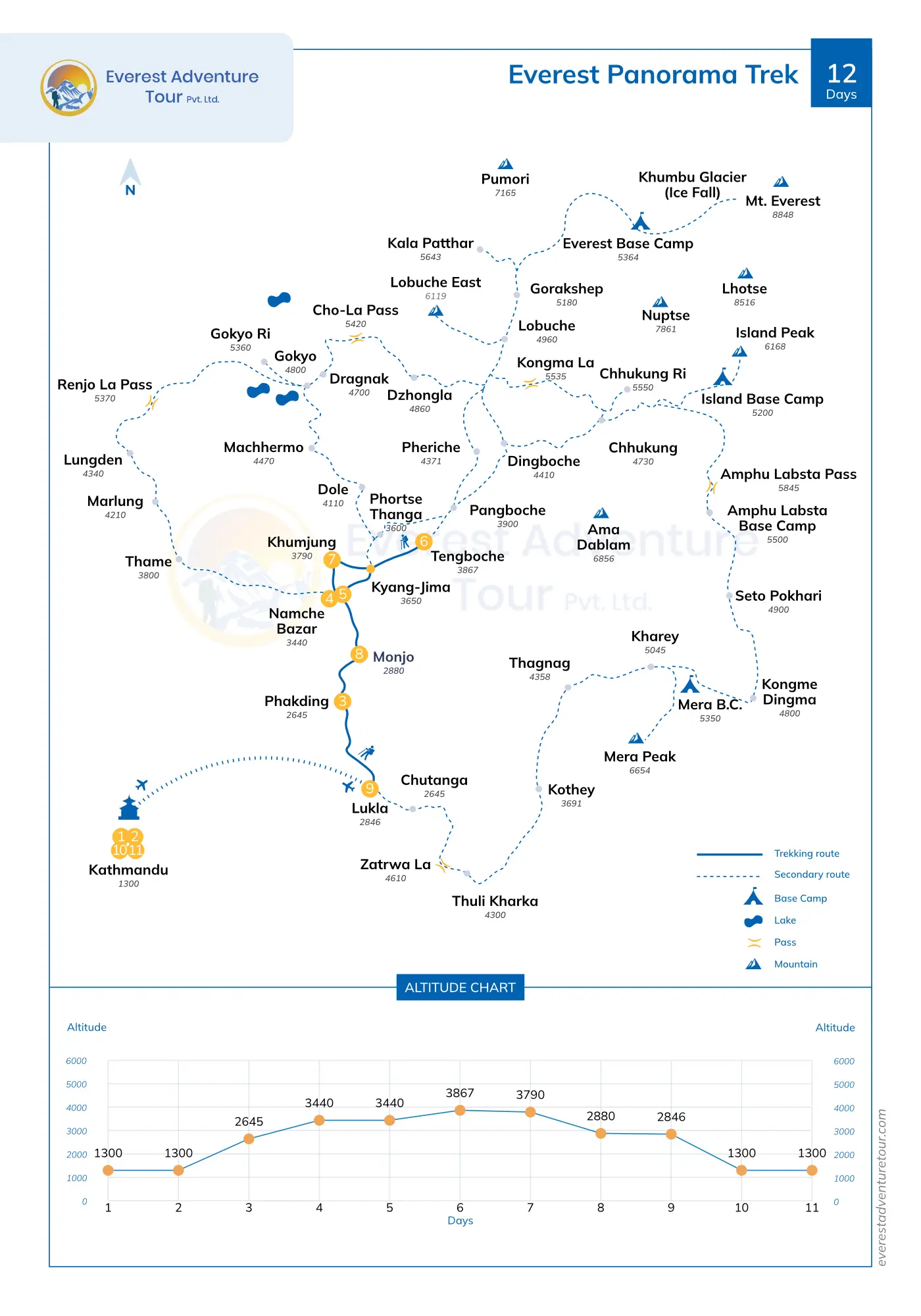
Route Map
Includes
- All Arrival and Departure Transfer from airport to hotel and vice-versa, vehicles according to group size.
- Three star hotels in Kathmandu on bed and breakfast basis.
- Domestic airfare from Kathmandu-Lukla-Kathmandu.
- Full board trekking includes twin sharing accommodation on best available local lodges, includes Breakfast, lunch, dinner with afternoon tea / snacks.
- Service of guide, trekking staff as per size of a group with porters.
- Wages, meals, medical allowance of guides, trekking staff and porters.
- Applicable Trekking Permits, includes Sagarmatha National Park Entrance Fees.
- Comprehensive Medical Kit carried by our guide if required for minor wounds and sickness.
- Sightseeing tour around Kathmandu valley as per the itinerary
- Welcome or Farewell dinner in Kathmandu.
Doesn't Include
- Nepal Visa, Personal Medical & Travel Insurance.?
- Expenses of personal nature, meals in Kathmandu and gratitude or tipping for trekking staff, drivers, porters and guide, including extra snacks and refreshments.?
- Personal trekking gear, including sleeping bags and down jackets (if it is not? included on the trip cost).?
- Emergency Evacuation if required by any means of transportation, including? Helicopter Service.?
- Personal medical kit, as advised by you doctors.?
- Early return from the trek due to personal domestic or medical reasons, no refund will be entertained on breaking the journey.
- Excellent customer service. Our travel experts are ready to help you 24/7.
- Best price guaranteed.
- No credit card or booking fees.
- 100% financial protection.
- Environmentally-friendly tours.
Equipment List
- Thermal underwear (top and bottom)
- Moisture-wicking long-sleeved t-shirts
- Moisture-wicking underwear
- Fleece jacket or pullover
- Insulated down or synthetic jacket (lightweight and warm)
- Waterproof, windproof jacket (Gore-Tex or similar)
- Waterproof, windproof pants
- Trekking pants (convertible preferred)
- Warm beanie or wool hat
- Sun hat or baseball cap
- Neck gaiter, buff, or scarf
- Waterproof trousers (for rain and snow)
- Lightweight inner gloves (thermal or liner gloves)
- Insulated outer gloves or mittens (waterproof)
- Waterproof, broken-in hiking boots with ankle support
- Comfortable camp shoes or sandals (for evenings)
- Trekking socks (wool or synthetic, several pairs)
- Gaiters (optional, for snow and mud)
- Trekking backpack (30-40 liters) with rain cover
- Daypack (optional, for short hikes)
- Sleeping bag (rated to at least -10°C / 14°F)
- Insulated sleeping pad or foam mattress
- Adjustable trekking poles (with rubber tips)
- Insulated water bottles or hydration bladder (2-liter capacity recommended)
- Sunglasses with UV protection
- Headlamp with extra batteries
- Power bank and chargers (for electronics)
- Camera and extra batteries/memory cards
- Travel-size toiletries (toothbrush, toothpaste, biodegradable soap)
- Quick-dry towel
- Wet wipes and hand sanitizer
- Sunscreen (high SPF) and lip balm with SPF
- Personal first aid kit (bandages, blister pads, antiseptic, medication)
- Medications for altitude sickness (Diamox if prescribed)
- Pain relievers, anti-diarrheal, antihistamines
- Earplugs (for noisy lodges)
- Notebook and pen
- Portable solar charger (optional)
- Plastic zip-lock bags (to keep gear dry)
- Lightweight stuff sacks or packing cubes
- Snacks (energy bars, nuts, chocolates)
- Reusable water bottle or hydration system
- Small knife or multi-tool
- Passport-size photos (for permits if needed)
Frequently Asked Questions
?It all depends upon the trip cost as per the itinerary set by Everest Adventure Tour. Normally we accommodate trekkers on normal standard lodge having nice rooms with good foods. But if the clients request us to upgrade the standard of lodge accommodation, we will certainly comply with the request and need of our valuable clients. Where the cost will be slightly higher on Luxury type lodges than on budget or standard lodge accommodation.
?Trekkers will be surprised to find good food menu of varieties, from Tibetan, Nepali, Indian and Chinese to Continental. Includes long list of snacks and drinks for the customer delights in most lodges on treks. The lodge accommodation are nice and lovely according to the choices of the trekkers. From budget, standard to luxury accommodation, either attached or non-attached bath and toilets.
All lodges are clean with good rooms, having large dining with potbellied stoves to make the environment warm and cozy.
Everest Panorama, although a high altitude treks it does involves high passes like in other trekking adventures. Where all age group and family with young children and elderly people of 70 years can enjoy this wonderful treks. But all should be in good physical shape and in sound medical health.
Some can take the challenge having minor medical problem, should take advice from your doctors and inform the company on booking.
The main festivals of the Khumbu Sherpa is Gyalbo Losar, which is New Year falls within the month of mid-February or early March. According to Tibetan Buddhist Calendar, the next big event is Saga Dawa falls at the end April or May. Saga Dawa is the birth Anniversary of Lord Buddha the ‘Light of Asia’. As well Mani Rimdu a colorful religious festivals held in mid-October or first week of November at Tengboche Monastery. Mani Rimdu also takes place in Thame village west of Namche Bazaar at the end of May or first week of June also.
If interested to be part of the festival or to observe the events, please inform us for the actual dates.
Please Note:
Interested people who likes to observe Mani Rimdu Festival the date for 2023 this year is fixed. Celebration is held on 28th, 29th and 30th October. ?Please contact Everest Adventure Tour for more information and details.
A moderate level of fitness is recommended for the Everest Panorama Trek. Trekkers should be comfortable walking 4 to 6 hours a day on uneven terrain, including some steep sections. Regular cardiovascular exercise such as hiking, jogging, or cycling in the weeks leading up to the trek will greatly improve endurance and enjoyment. No technical climbing skills are needed, and the trek is well-suited for beginners who are in good health.
Everest Adventure Tour provides comprehensive support including experienced local guides, porters, and logistical arrangements such as accommodation, meals, and permits. Guides are knowledgeable about altitude sickness prevention, local culture, and emergency protocols. The company ensures safety, comfort, and smooth communication throughout the trek. Porters help carry luggage to ease the physical load, allowing trekkers to focus on enjoying the experience.
Yes, the itinerary is designed with built-in acclimatization days, especially at Namche Bazaar. These rest days allow trekkers to adjust gradually to higher altitudes, reducing the risk of altitude sickness. During acclimatization, trekkers can enjoy short hikes to nearby viewpoints, visit local monasteries, and immerse themselves in Sherpa culture. This careful pacing makes the trek safer and more enjoyable.
The trek begins and ends with a scenic flight from Kathmandu to Lukla and back, which takes about 30 minutes each way and offers spectacular views of the Himalayas. In some cases, due to weather or air traffic, flights may be diverted to Manthali Airport in Ramechhap, about 4-5 hours by road from Kathmandu. Everest Adventure Tour arranges all transportation logistics, including airport transfers and necessary ground transport.
Mobile network coverage is available in most major villages such as Lukla, Namche Bazaar, and Tengboche through providers like Ncell and NTC. While signal strength can be intermittent in more remote areas or dense forests, basic communication is generally possible. Many lodges offer Wi-Fi services for a small fee, especially in larger settlements. Everest Adventure Tour recommends purchasing a local SIM card for better connectivity and advises trekkers to download offline maps before starting.
Trekkers need two main permits: the Sagarmatha National Park Entry Permit and the Khumbu Pasang Lhamu Rural Municipality Permit. The park permit grants access to the protected Sagarmatha National Park, while the rural municipality permit supports local development initiatives. Everest Adventure Tour handles all permit arrangements, so trekkers don’t have to worry about paperwork. Carrying these permits is mandatory for entry into the trekking region and at various checkpoints.