

- 1 - 1 Person US$ 1,200
- 2 - 5 Person US$ 999
- 6 - 9 Person US$ 950
- 10 - 15 Person US$ 920
- 16 - 20 Person US$ 899
Hotel in Kathmandu and Tea house / Lodge during the trek
Breakfast in Kathmandu and all meals during the trek
Highlights
- Exciting adventure exploring the stunning Langtang Himal range’s scenic beauty.
- Cultural and scenic walks to picturesque Langtang Valley and Kyanjin Gompa (3870 m).
- Enchanting forests filled with rhododendron, oak, pine, and fir trees.
- Trek to the sacred Gosainkunda glacial lakes (4310 m), the highest point of the trek.
- Discover traditional Tamang villages rich in ancient heritage and Buddhist culture.
- Panoramic views of towering peaks including Langtang Lirung, Ganesh Himal, and Manaslu.
- Opportunity to witness unique flora and fauna in Langtang National Park.
- Experience local monasteries, cheese factories, and Tibetan Buddhist culture in Kyanjin.
- Participate in or observe the spiritual rituals at Gosainkunda during pilgrimage season.
- Variety of landscapes from lush forests, alpine meadows to high mountain ridges.
Overview
Everest Adventure Tour warmly invites you to explore on the magnificent Langtang Valley & Holy Gosainkunda Trek — a journey into the heart of the northern central Himalayas that promises both awe-inspiring natural beauty and profound cultural experiences. Nestled within the Langtang Himal range and bordered by the Ganesh and Jugal Himal massifs, this trek offers an exquisite blend of rugged mountain terrain, serene valleys, and sacred pilgrimage sites. Over the course of roughly two weeks, adventurers will explore a pristine wilderness that bridges Nepal and the Tibetan Plateau, making this trek a true Himalayan classic.
The trek begins with an exciting drive from Kathmandu to Syabrubesi, where the trail gently ascends through lush forests of rhododendron and pine. The initial stage serves as a perfect introduction to the diverse landscapes and tranquil atmosphere that await in the Langtang region. From the forested hillsides, trekkers arrive at the picturesque Langtang Valley, a broad, scenic basin surrounded by towering peaks such as Langtang Lirung and Langtang Ri. The peaceful village of Kyanjin Gompa, set amidst this stunning alpine backdrop, is an ideal spot to rest, acclimatize, and soak in the mesmerizing views that define this enchanting part of the Himalayas.
Kyanjin offers more than just breathtaking scenery; it is also a cultural hub where Tibetan Buddhist traditions thrive. Here, you can explore local monasteries, cheese factories, and engage with the warm and welcoming Tamang people. For those with energy to spare, short hikes to nearby viewpoints like Kyanjin Ri or Tserko Ri reward trekkers with panoramic vistas of snow-capped peaks and verdant valleys. These excursions deepen your connection with the landscape, providing unforgettable moments of solitude and grandeur.
The adventure continues as the route descends toward Thulo Syabru, a charming village rich in Tamang heritage, and then climbs steeply through dense forests to reach Sing Gompa. From this vantage point, the path leads to the sacred Gosainkunda Lake — the spiritual highlight of the trek. Revered by Hindu devotees, Gosainkunda is famed for its annual Janai Purnima festival, drawing thousands of pilgrims who come to bathe in its holy waters. Surrounded by imposing cliffs and pristine snowfields, the lake’s mystique is heightened by legends that speak of Lord Shiva creating the lake with his trident. Completing the trek involves a rewarding descent back to Dhunche and onward to Kathmandu, leaving trekkers with lasting memories of this extraordinary Himalayan adventure.
Major Places for Langtang Valley and Gosainkunda Trek
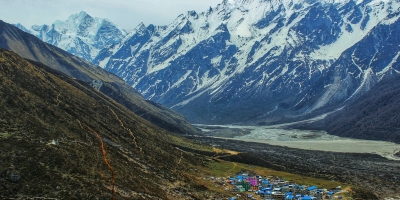
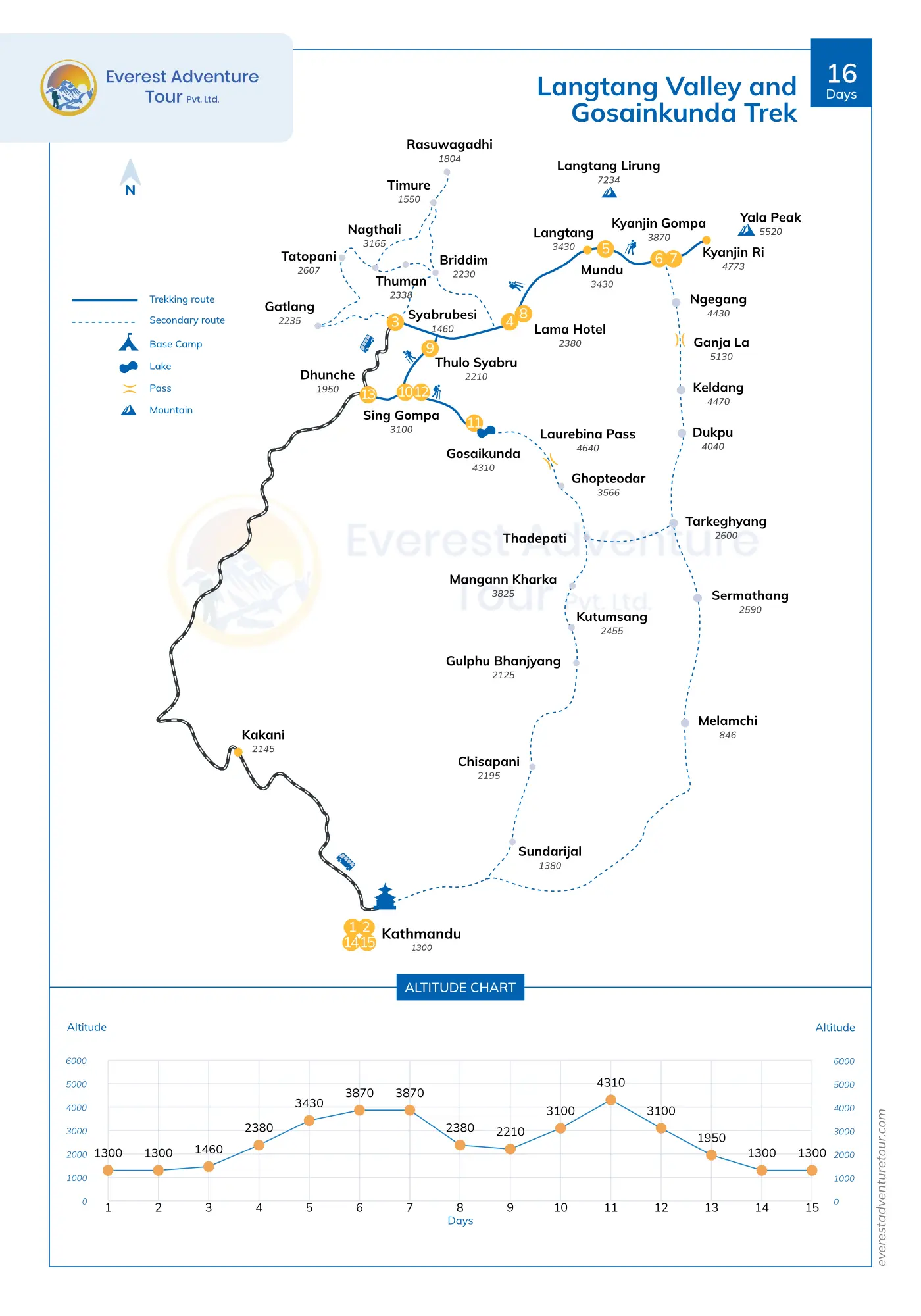
The Langtang Valley and Gosainkunda Trek passes through some of the most remarkable and scenic spots in the Langtang Himal region. Starting from the gateway town of Syabrubesi, trekkers are immersed in rich forests of rhododendron and pine as they ascend toward Lama Hotel. Continuing the journey, the trek crosses through the historic Langtang Village ruins and then reaches the vibrant settlement of Kyanjin Gompa, nestled amidst towering peaks such as Langtang Lirung. Kyanjin serves as a cultural and acclimatization hub, offering panoramic views and local monasteries to explore.
Beyond Kyanjin, the trail descends to Thulo Syabru, a traditional Tamang village that offers insight into local culture and Buddhist heritage. Trekking further, adventurers reach Sing Gompa, a tranquil mountain village surrounded by forested ridges and mountain vistas. The highlight of the trek is the sacred Gosainkunda Lake, perched at 4,310 meters, revered for its religious significance and stunning alpine scenery. The route back descends through Sing Gompa and Dhunche, offering a well-rounded Himalayan experience blending nature, culture, and spirituality.
Key Places:
- Syabrubesi
- Lama Hotel
- Langtang Village ruins
- Kyanjin Gompa
- Thulo Syabru village
- Sing Gompa
- Gosainkunda Lake
- Dhunche Town
Best Season for Langtang Valley and Gosainkunda Trek
The best time to explore on the Langtang Valley and Gosainkunda Trek is during the autumn (September to November) and spring (March to May) seasons. Autumn brings clear skies, moderate temperatures, and excellent mountain visibility, making it ideal for capturing the Himalayan panoramas. This period is also favored because of the stable weather and the post-monsoon freshness of the forests and valleys. Spring is equally spectacular, as the rhododendron forests bloom in vibrant reds and pinks, creating colorful landscapes along the trail.
Winter trekking (December to February) is possible but challenging due to cold temperatures and snow, especially at higher altitudes like Gosainkunda. Summer or monsoon season (June to August) sees heavy rainfall, slippery trails, and possible landslides, making it less suitable for trekking. However, some adventurers enjoy the lush greenery and fewer crowds during this time. Overall, Everest Adventure Tour recommends autumn and spring for the most comfortable and scenic trekking experience in Langtang and Gosainkunda.
Best Seasons at a Glance:
- Autumn (Sept - Nov): Clear skies, moderate temps, best views
- Spring (Mar - May): Rhododendron bloom, vibrant scenery
- Winter (Dec - Feb): Cold, snowy, more difficult
- Summer/Monsoon (Jun - Aug): Heavy rain, slippery trails
Langtang Valley and Gosainkunda Trekking Difficulty
The Langtang Valley and Gosainkunda Trek is considered a moderate to moderately challenging trek suitable for adventurous travelers with a reasonable level of fitness. The trek involves daily walking of 4 to 6 hours on varied terrain, including forest trails, rocky paths, and steep ascents and descents. Some sections, particularly the climb to Gosainkunda Lake and the higher passes, require stamina and acclimatization due to the increasing altitude.
While the trail is well-marked and popular, trekkers should be prepared for occasional challenging weather conditions, altitude changes, and long walking days. Everest Adventure Tour ensures proper acclimatization days, especially at Kyanjin Gompa, and provides guidance to help manage altitude sickness. Overall, the trek is rewarding with stunning views and cultural experiences, suitable for trekkers who are comfortable walking multiple days in high mountain environments.
Difficulty Highlights:
- Moderate to moderately challenging
- Daily walking: 4-6 hours
- Steep climbs near Gosainkunda Lake
- Requires acclimatization days
- Suitable for trekkers with basic fitness
Food and Accommodation for Langtang Valley and Gosainkunda Trek
During the Langtang Valley and Gosainkunda Trek, trekkers will find comfortable and adequate accommodation in tea houses and lodges along the trail. In villages like Lama Hotel, Kyanjin Gompa, Thulo Syabru, and Sing Gompa, lodges offer basic but clean rooms with shared bathrooms. Heating is limited at higher altitudes, so warm clothing and a good sleeping bag are recommended. The lodges provide a friendly atmosphere and the chance to interact with fellow trekkers and locals.
Food on the trek mainly consists of nutritious Nepali and Tibetan dishes such as dal bhat (rice and lentils), momos (dumplings), noodles, and soups. At lower altitudes, menus are more varied, while at higher points like Gosainkunda, options are simpler but still filling. Everest Adventure Tour ensures trekkers are informed about the food options and encourages drinking plenty of water and eating enough to maintain energy levels throughout the journey.
Food & Accommodation Summary:
- Tea houses and lodges with basic amenities
- Clean rooms, shared bathrooms, limited heating
- Nepali and Tibetan cuisine: dal bhat, momos, noodles
- Simpler menu at higher altitudes
- Warm clothing and sleeping bags recommended
Network and Communication for Langtang Valley and Gosainkunda Trek
Staying connected during the Langtang Valley and Gosainkunda Trek has become much easier in recent years, thanks to improved telecommunications infrastructure. Most villages along the route, including Syabrubesi, Lama Hotel, Kyanjin Gompa, and Sing Gompa, have mobile network coverage provided by Nepal’s main telecom companies such as Ncell and Nepal Telecom. However, signal strength can vary depending on the weather and terrain, and coverage tends to be patchy at higher altitudes or dense forest areas.
Internet access is generally available in the teahouses and lodges, often via Wi-Fi, but the speed is usually slow and can be unreliable. Many trekkers rely on local SIM cards purchased in Kathmandu for voice and data services, as roaming charges are expensive and connections may not work well in remote locations. Everest Adventure Tour recommends travelers to inform family or contacts about limited connectivity periods and encourages carrying a portable power bank to keep devices charged during long trekking days.
Network and Communication Summary:
- Mobile network coverage in most villages (Ncell, Nepal Telecom)
- Signal strength varies; limited at higher altitudes
- Wi-Fi available in lodges but often slow/unreliable
- Local SIM cards recommended for data and calls
- Carry portable chargers for uninterrupted power
Langtang Valley and Gosainkunda Trekking Transportation
Transportation for the Langtang Valley and Gosainkunda Trek is well-organized and begins with a scenic drive from Kathmandu to Syabrubesi, the gateway to the trek. The road journey takes approximately 6 to 7 hours, passing through rural villages, terraced fields, and mountain landscapes. The drive itself is a wonderful introduction to Nepal’s diverse geography and culture. From Syabrubesi onward, all travel on the trek is done on foot, as motorized transport is not accessible along the trail.
Returning from Dhunche to Kathmandu, trekkers again enjoy a road journey through the same picturesque regions. Everest Adventure Tour ensures safe and comfortable transportation by using reliable vehicles and experienced drivers, providing seamless transfers at the start and end of the trek. For travelers preferring a quicker arrival, domestic flights to nearby airports such as Lukla are not applicable here, making road transport the primary option for this region.
Transportation Highlights:
- 6-7 hour drive from Kathmandu to Syabrubesi
- Trekking on foot throughout Langtang and Gosainkunda trails
- Road transport from Dhunche back to Kathmandu
- Reliable vehicles and experienced drivers by Everest Adventure Tour
- No domestic flights available for this trek’s starting point
Langtang Valley and Gosainkunda Trekking Permits
To undertake the Langtang Valley and Gosainkunda Trek, trekkers must obtain several permits for legal access and conservation efforts. The primary permits required include the Langtang National Park Permit and the Annapurna Conservation Area Permit (if the route overlaps with certain sections). Additionally, all trekkers must carry the TIMS (Trekkers’ Information Management System) card, which helps monitor and ensure safety on trekking routes.
Everest Adventure Tour assists clients in securing all necessary permits before the trek begins, simplifying the process for travelers. The permit fees contribute directly to the preservation of natural environments and local communities along the trekking trails. Carrying permits at all times during the trek is mandatory, as park rangers may conduct random checks to ensure compliance and support sustainable tourism in the region.
Permit Details:
- Langtang National Park Permit (mandatory)
- TIMS (Trekkers’ Information Management System) card
- Additional permits if passing through overlapping conservation areas
- Everest Adventure Tour handles permit acquisition
- Permits support conservation and local livelihoods
Why Choose Langtang Valley and Gosainkunda Trek
Choosing the Langtang Valley and Gosainkunda Trek with Everest Adventure Tour means exploring on an extraordinary journey through some of Nepal’s most untouched and culturally rich mountain landscapes. Unlike busier trekking regions, Langtang offers a more serene and authentic experience, with fewer crowds but equally breathtaking views of the Himalayas. This trek combines natural beauty, cultural immersion, and spiritual significance, especially with the inclusion of the sacred Gosainkunda Lake pilgrimage site.
Everest Adventure Tour prides itself on delivering a well-organized, safe, and memorable trekking experience tailored to your needs. Their expert guides, quality accommodations, and attention to detail ensure that every aspect of the trip is smooth and rewarding. Whether you are an avid trekker or a nature lover seeking peace and adventure, Langtang Valley and Gosainkunda Trek is a perfect choice for exploring Nepal’s majestic Himalayas while supporting sustainable tourism.
Reasons to Choose This Trek:
- Less crowded, authentic trekking experience
- Stunning natural beauty and Himalayan vistas
- Cultural immersion in Tamang villages and monasteries
- Sacred pilgrimage to Gosainkunda Lake
- Expert guidance and well-organized tours by Everest Adventure Tour
Important Note
Trip Itinerary
Route Map
Includes
- All Arrival and Departure Transfer from airport to hotel and vice-versa, vehicles according to group size.
- Three Star hotels in Kathmandu on bed and breakfast basis only.
- Transportation on start of trekking and after trek to and from Kathmandu.
- Full board trekking includes twin sharing accommodation on best available local lodges, includes Breakfast, lunch, dinner with afternoon tea / snacks.
- Service of guide, trekking staff as per size of a group with porters.
- Wages, meals, medical allowance of guides, trekking staff and porters.
- Applicable Trekking Permits TIMS (Trekking Information Management Systems). Includes Langtang National Park entrance Fees.
- Comprehensive Medical Kit carried by our guide if required for minor wounds and sickness.
- Sightseeing tour around Kathmandu valley as per the itinerary.
- Welcome or Farewell dinner in Kathmandu.
Doesn't Include
- Nepal Visa, Personal Medical & Travel Insurance.?
- Expenses of personal nature, meals in Kathmandu and gratitude or tipping for trekking staff, drivers, porters and guide, including extra snacks and refreshments.?
- Personal trekking gear, including sleeping bags and down jackets (if it is not? included on the trip cost).?
- Emergency Evacuation if required by any means of transportation, including? Helicopter Service.?
- Personal medical kit, as advised by you doctors.?
- Early return from the trek due to personal domestic or medical reasons, no refund will be entertained on breaking the journey.
- Excellent customer service. Our travel experts are ready to help you 24/7.
- Best price guaranteed.
- No credit card or booking fees.
- 100% financial protection.
- Environmentally-friendly tours.
Equipment List
- Thermal underwear (top and bottom)
- Moisture-wicking long-sleeved t-shirts
- Moisture-wicking underwear
- Fleece jacket or pullover
- Insulated down or synthetic jacket (lightweight and warm)
- Waterproof, windproof jacket (Gore-Tex or similar)
- Waterproof, windproof pants
- Trekking pants (convertible preferred)
- Warm beanie or wool hat
- Sun hat or baseball cap
- Neck gaiter, buff, or scarf
- Waterproof trousers (for rain and snow)
- Lightweight inner gloves (thermal or liner gloves)
- Insulated outer gloves or mittens (waterproof)
- Waterproof, broken-in hiking boots with ankle support
- Comfortable camp shoes or sandals (for evenings)
- Trekking socks (wool or synthetic, several pairs)
- Gaiters (optional, for snow and mud)
- Trekking backpack (30-40 liters) with rain cover
- Daypack (optional, for short hikes)
- Sleeping bag (rated to at least -10°C / 14°F)
- Insulated sleeping pad or foam mattress
- Adjustable trekking poles (with rubber tips)
- Insulated water bottles or hydration bladder (2-liter capacity recommended)
- Sunglasses with UV protection
- Headlamp with extra batteries
- Power bank and chargers (for electronics)
- Camera and extra batteries/memory cards
- Travel-size toiletries (toothbrush, toothpaste, biodegradable soap)
- Quick-dry towel
- Wet wipes and hand sanitizer
- Sunscreen (high SPF) and lip balm with SPF
- Personal first aid kit (bandages, blister pads, antiseptic, medication)
- Medications for altitude sickness (Diamox if prescribed)
- Pain relievers, anti-diarrheal, antihistamines
- Earplugs (for noisy lodges)
- Notebook and pen
- Portable solar charger (optional)
- Plastic zip-lock bags (to keep gear dry)
- Lightweight stuff sacks or packing cubes
- Snacks (energy bars, nuts, chocolates)
- Reusable water bottle or hydration system
- Small knife or multi-tool
- Passport-size photos (for permits if needed)
Frequently Asked Questions
The Langtang Valley and Gosainkunda Trek is suitable for a wide age range, from 14 to 70 years old. It is considered a moderate to adventurous trek, so physical fitness and good health are important. Young teens should be accompanied by parents or guardians for safety and support. The trek involves some steep uphill climbs, especially on the first day to Lama Hotel and the ascent to Gosainkunda Lake. However, with slow pacing, adequate rest, and acclimatization, people of many ages can enjoy the trek safely.
Trekkers can expect a diverse menu featuring Tibetan, Nepali, Indian, Chinese, and Continental dishes throughout the trek. Most lodges offer snacks and beverages to suit different tastes. Accommodation ranges from budget to standard in villages like Syabrubesi and Kyanjin, with clean rooms, warm dining areas, and shared bathrooms. Higher altitude locations such as Thulo Syabru and Gosainkunda have more basic lodges, but trekkers often find the hospitality warm and memorable, adding to the adventure.
Langtang Valley is one of Nepal’s most popular trekking destinations, ranked among the top moderate treks due to its accessibility from Kathmandu and stunning landscapes. It attracts a steady flow of trekkers year-round. Gosainkunda, on the other hand, is especially famous among Hindu pilgrims for its sacred lakes, drawing thousands during religious festivals like Janai Purnima. The combination of cultural, spiritual, and natural attractions makes this trek uniquely rewarding and less crowded compared to other major trails.
Most lodges along the trek have electricity powered by hydro or solar energy, allowing trekkers to charge electronic devices for a small fee. Wi-Fi or internet access is generally available but can be slow and unreliable due to weather or terrain. The best connectivity spots are Syabrubesi, Kyanjin Gompa, and Sing Gompa. Local SIM cards, available in Kathmandu, work well in these areas and provide a good option for mobile data and calls during the trek.
Spring, from March to May, is the ideal season for witnessing wildflowers blooming along the Langtang Valley and Gosainkunda Trek. The rhododendron forests come alive with vivid colors, ranging from tall flowering trees to small shrubs. The forests and meadows near Sing Gompa and on the way down to Dhunche are particularly spectacular. This season offers a magical natural experience with bright, colorful landscapes and pleasant weather.
This trek is rated as moderate to moderately challenging. While the daily trekking duration ranges between 4 to 6 hours, the altitude and some steep climbs, particularly near Gosainkunda Lake (4,310 meters), can be physically demanding. Proper acclimatization days, such as the stay in Kyanjin Gompa, help reduce altitude sickness risk. Good fitness, preparation, and a steady walking pace are key to enjoying this trek.
Trekkers must have the Langtang National Park Permit and a TIMS (Trekkers’ Information Management System) card. These permits are mandatory and ensure safety and conservation of the trekking area. Everest Adventure Tour assists all clients in securing permits before the trek to provide a hassle-free experience. Permit fees contribute directly to environmental protection and support local communities.
Weather varies significantly with the seasons. Autumn (September to November) offers stable, clear skies and comfortable temperatures, while spring (March to May) provides blooming flora and mild weather. Winter can be very cold, especially at higher altitudes, with snow possible. The monsoon season (June to August) brings heavy rainfall, slippery trails, and possible landslides, making trekking more challenging and less advisable.
The trek starts with a 6-7 hour drive from Kathmandu to Syabrubesi through scenic rural landscapes. From Syabrubesi, trekking continues on foot as motorized vehicles are not accessible along the trail. The trek ends at Dhunche, from where trekkers are transported back to Kathmandu by road. Everest Adventure Tour arranges all transport, ensuring comfort and safety during transfers.
Langtang National Park is home to diverse wildlife, including red pandas, Himalayan black bears, musk deer, and various bird species. Trekkers may spot colorful pheasants, vultures, and even elusive mammals if lucky. The rich biodiversity adds a unique element of adventure and discovery to the trek, especially within the rhododendron and oak forests.
While the trek reaches elevations over 4,000 meters at Gosainkunda, proper acclimatization days and gradual ascent help mitigate altitude sickness risks. Everest Adventure Tour emphasizes slow pacing, hydration, and rest days, particularly at Kyanjin Gompa, to ensure trekkers remain healthy and comfortable.
Yes, Everest Adventure Tour provides experienced local guides and porters to enhance your trekking experience. Guides offer valuable insights into local culture, history, and nature, while porters help carry heavy loads, allowing trekkers to enjoy the journey with less physical strain.
While it is possible to trek independently, using a reputable company like Everest Adventure Tour ensures safety, permit processing, accommodation arrangements, and professional guidance. Independent trekkers may face language barriers, logistics challenges, and difficulty managing emergencies.
Essential items include layered clothing for variable temperatures, sturdy trekking boots, a warm sleeping bag, rain gear, sunscreen, sunglasses, a first-aid kit, and water purification tablets. Packing light but adequately prepared for cold nights and altitude changes is important. Everest Adventure Tour provides a detailed packing list before the trek.
A reasonable level of fitness is necessary to enjoy this trek comfortably. Regular cardiovascular exercise, hiking practice, and stamina building before the trip are recommended. Daily trekking involves several hours of walking over uneven terrain and altitude gain, so good health and endurance are important.