

- 1 - 1 Person US$ 1,450
- 2 - 5 Person US$ 1,399
- 6 - 12 Person US$ 1,350
- 13 - 20 Person US$ 1,299
Hotel in Kathmandu and Lodge / Tea House during the trek
Breakfast in Kathmandu and all meals during the trek
Highlights
- Scenic flight from Kathmandu to Pokhara with stunning Himalayan views
- Trekking through Mustang region’s unique landscapes and traditional Tibetan villages
- Visit to Jomsom, a gateway to Upper Mustang and Kali Gandaki River valley
- Exploring ancient Kagbeni village with its medieval architecture and monasteries
- Spiritual pilgrimage to Muktinath Temple, sacred to both Hindus and Buddhists
- Experience cleansing rituals in the holy waters of Muktinath’s 108 water spouts
- Stunning views of Annapurna, Dhaulagiri, and Nilgiri mountain ranges
- Cultural immersion with local Tibetan and Nepali communities
- Return flights offering panoramic vistas of the Himalayas and natural landscapes
Overview
The Muktinath Tour offered by Everest Adventure Tour is a captivating journey that combines spiritual reverence with breathtaking natural beauty. Nestled in the Mustang district of Nepal, Muktinath is one of the most sacred pilgrimage sites revered by both Hindus and Buddhists alike. This tour offers travelers a unique opportunity to immerse themselves in ancient cultures while trekking through some of Nepal’s most dramatic and pristine Himalayan landscapes. The experience is both a physical adventure and a deeply spiritual journey that leaves a lasting impression on every visitor.
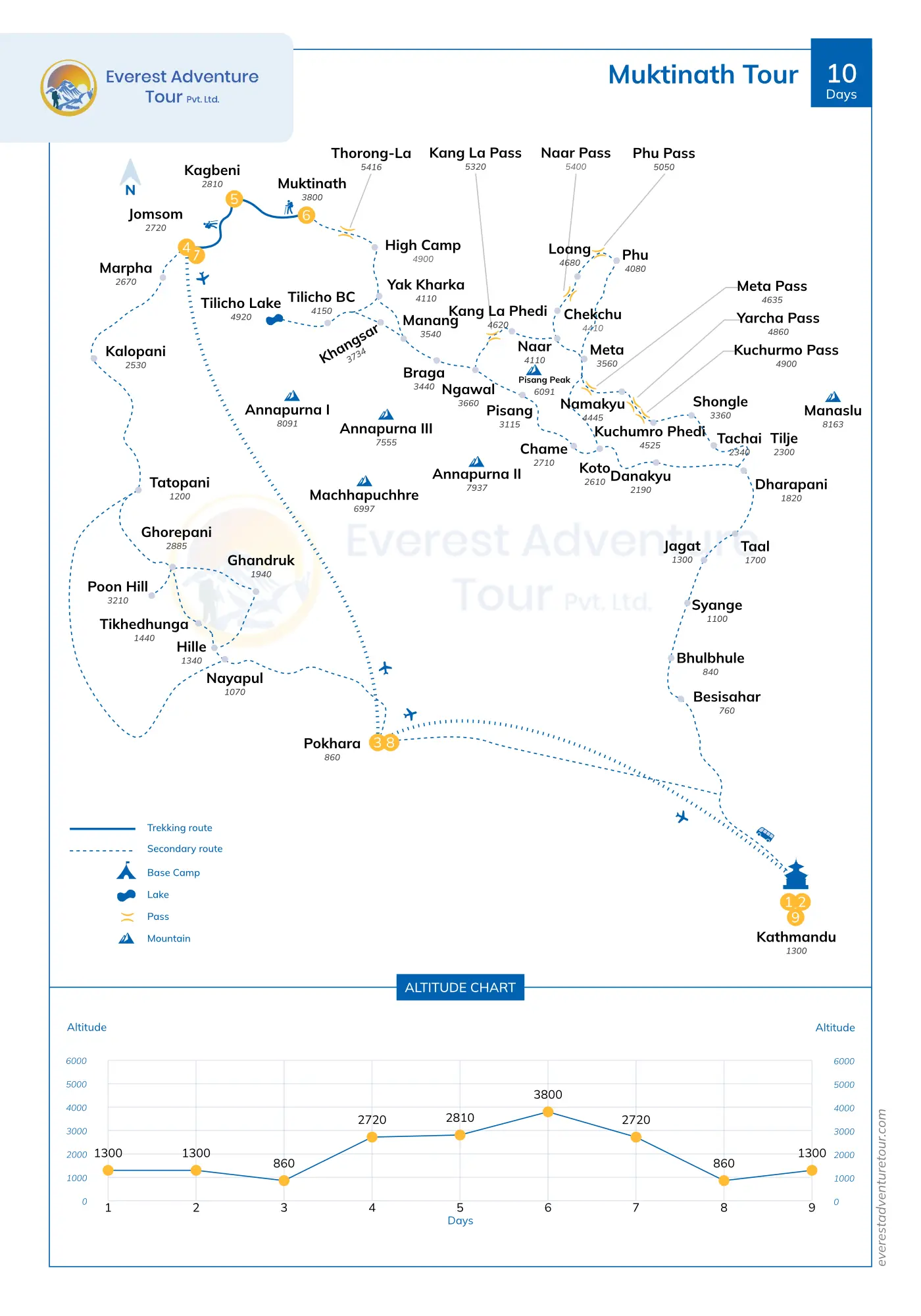
Starting in the vibrant city of Kathmandu, travelers are introduced to Nepal’s rich heritage and diverse culture. After a brief exploration of the capital, the journey continues to the tranquil city of Pokhara, known for its serene lakeside ambiance and stunning mountain views. From Pokhara, a scenic flight takes guests to Jomsom, the gateway to the Mustang region and the starting point for the trek to Muktinath. This flight itself is an awe-inspiring experience, with panoramic views of towering peaks, deep river valleys, and rugged terrain.
The trek from Jomsom to Muktinath is a highlight of the tour, offering a blend of natural beauty and cultural discovery. Along the way, trekkers pass through traditional villages like Kagbeni, where time seems to have stood still, preserving age-old customs and architecture. The trail showcases dramatic vistas of snow-capped peaks, deep gorges, and high-altitude deserts. Reaching Muktinath, travelers are greeted by the iconic temple complex situated at an altitude of 3,710 meters. This sacred shrine, famous for its 108 holy water spouts and the natural gas-fed eternal flame, is a profound site for cleansing and prayer for pilgrims and visitors.
After soaking in the spiritual atmosphere of Muktinath, the tour retraces its path back to Jomsom, offering further time to explore local culture and markets. The return flights from Jomsom to Pokhara and then to Kathmandu provide a comfortable end to the adventure. Everest Adventure Tour ensures that every aspect of the journey is thoughtfully planned, blending comfort, safety, and authentic cultural experiences to make the Muktinath Tour a truly memorable pilgrimage and trekking adventure.
Best Season for Muktinath Tour
The best season to undertake on the Muktinath Tour is during the spring (March to May) and autumn (September to November) months. These periods offer the most favorable weather conditions, with clear skies, moderate temperatures, and minimal rainfall, making trekking both safer and more enjoyable. Spring is especially beautiful as rhododendrons and other wildflowers bloom along the trail, creating vibrant landscapes. Autumn offers crisp, clear air, ideal for breathtaking mountain views of the Annapurna and Dhaulagiri ranges.
Winter months can be extremely cold, especially at higher altitudes, and the trail may be covered with snow, which increases the difficulty and risks of the trek. Monsoon season (June to August) is generally not recommended due to heavy rainfall, which leads to slippery trails and potential landslides. Proper timing of your tour is crucial to fully appreciate the stunning natural beauty and cultural richness of the Mustang region.
Short Points:
- Best time: Spring (March-May) and Autumn (Sept-Nov)
- Avoid monsoon and winter for safer trekking
- Spring offers blooming flowers; autumn offers clear mountain views
- Weather is moderate and pleasant during these seasons
Muktinath Tour Difficulty and Transportation
The Muktinath Tour involves moderate trekking, suitable for individuals with a reasonable level of fitness. The trek covers rugged terrain, ranging from gentle paths to steep ascents, with altitudes reaching up to 3,710 meters at the Muktinath temple. Although the route does not require technical climbing skills, trekkers should be prepared for long walking hours, fluctuating temperatures, and the effects of high altitude. It is important to acclimatize properly to avoid altitude sickness, which can occur due to the rapid elevation gain.
Transportation for the tour begins with a flight from Kathmandu to Pokhara, a beautiful city known for its lakeside serenity and mountain views. From Pokhara, a short scenic flight takes you to Jomsom, the gateway to the Mustang region and the trek’s starting point. Flights between Kathmandu, Pokhara, and Jomsom are the most efficient and time-saving modes of transport, although sometimes weather conditions may affect schedules. Ground transportation is minimal during the trek itself, which relies on walking through picturesque villages and mountain trails.
Short Points:
- Moderate trek; requires reasonable fitness level
- Highest altitude: 3,710 meters (Muktinath temple)
- Proper acclimatization necessary to prevent altitude sickness
- Flights connect Kathmandu, Pokhara, and Jomsom
- Trekking involves walking through varied terrain and local villages
Food and Accommodation for Muktinath Tour
During the Muktinath Tour, accommodation is primarily in teahouses and lodges, which offer basic but comfortable lodging along the trekking route. These teahouses provide a cozy atmosphere where travelers can rest and socialize with fellow trekkers. Facilities may be simple, including shared bathrooms and limited heating, so it’s advisable to bring warm clothing and any personal comfort items. In larger towns like Pokhara and Jomsom, you can expect more comfortable hotels with additional amenities.
Food on the trek is typically a mix of traditional Nepali and Tibetan cuisine, including dishes like dal bhat (lentil soup with rice), momo (dumplings), and noodles. Most teahouses serve a variety of meals to cater to different tastes, including vegetarian options. Staying hydrated is important, so bottled water or boiled water is recommended. The food is generally hearty and filling, designed to fuel trekkers for long days on the trail.
Short Points:
- Accommodation mainly in teahouses and lodges
- Basic facilities, shared bathrooms, limited heating
- Comfortable hotels available in Pokhara and Jomsom
- Local cuisine: dal bhat, momo, noodles, vegetarian options
- Importance of hydration and safe drinking water
Muktinath Tour Permits
Permits are mandatory for trekking to Muktinath, as it lies within the Annapurna Conservation Area and Mustang region, both protected zones. Trekkers need to obtain the Annapurna Conservation Area Permit (ACAP), which helps fund the conservation and development of the region. Additionally, a Mustang Restricted Area Permit is required for access to the Upper Mustang region, including parts of the trek from Jomsom to Muktinath.
Everest Adventure Tour assists travelers in securing all necessary permits before the journey, ensuring a hassle-free start to the trek. These permits not only regulate tourism but also help preserve the natural environment and cultural heritage of Mustang. It is important for trekkers to carry these permits at all times during the trek, as checkpoints are common along the route.
Short Points:
- Annapurna Conservation Area Permit (ACAP) required
- Mustang Restricted Area Permit mandatory for Upper Mustang access
- Permits help conserve environment and culture
- Everest Adventure Tour handles permit arrangements
- Carry permits during the trek; checkpoints frequent
Why Choose Muktinath Tour with Everest Adventure Tour
Choosing Everest Adventure Tour for your Muktinath pilgrimage ensures a well-organized, safe, and culturally enriching experience. With years of expertise in trekking and adventure tourism in Nepal, the company offers personalized itineraries, professional guides, and support staff who prioritize your comfort and safety. They provide reliable transportation, quality accommodation, and assistance with permits and logistics, allowing you to focus on enjoying the spiritual and scenic journey.
Moreover, Everest Adventure Tour is committed to sustainable and responsible tourism practices that respect local communities and the fragile Himalayan environment. Their guides are knowledgeable not only about trekking routes but also about the cultural and religious significance of Muktinath, enriching your journey with insightful stories and historical context. With their strong network and experience, travelers receive excellent support throughout the tour, making it an unforgettable pilgrimage.
Short Points:
- Experienced guides and support staff
- Customized, well-organized itineraries
- Assistance with permits, accommodation, and transport
- Commitment to responsible and sustainable tourism
- Deep cultural and spiritual knowledge provided by guides
Important Note
Trip Itinerary
Route Map
Includes
- Airport transfers
- All ground transportation and domestic flights as per itinerary
- Hotel in Kathmandu / Pokhara and Lodge / Tea House during the trek
- Experienced trekking guide and support staff
- Trekking permits and entry fees
- Breakfast in Kathmandu and all meals during the trek
Doesn't Include
- International airfare to/from Nepal
- Nepal visa fees
- Personal expenses and tips
- Travel insurance
- Sleeping bags and personal trekking gear rental
- Excellent customer service. Our travel experts are ready to help you 24/7.
- Best price guaranteed.
- No credit card or booking fees.
- 100% financial protection.
- Environmentally-friendly tours.
Reviews
Медитация в Непале
Всё хорошо, знаю эту компанию год, можете смело доверять! Хорошие треки, адекватные цены. Рад знакомству с ними. Всем хорошего настроения!
Frequently Asked Questions
The best time to undertake the Muktinath Tour is during the spring (March to May) and autumn (September to November) seasons. During these months, the weather is generally clear and mild, offering excellent mountain views and comfortable trekking conditions. Everest Adventure Tour recommends avoiding the monsoon season (June to August) due to heavy rainfall and slippery trails, as well as the harsh winter months (December to February), which bring snow and freezing temperatures, making the trek more challenging.
The Muktinath trek is considered moderate in terms of difficulty. While it does not require technical climbing skills, trekkers should be in good physical condition with the ability to walk for several hours daily on uneven mountain trails. Everest Adventure Tour advises all participants to engage in regular cardiovascular exercises, such as walking, jogging, or hiking, before the trip to build stamina and endurance. Altitude acclimatization is also important, as the trek reaches elevations above 3,700 meters.
Yes, trekking in the Mustang region and to Muktinath requires special permits. Everest Adventure Tour will arrange all necessary permits on your behalf, including the Annapurna Conservation Area Permit (ACAP) and the Restricted Area Permit for Upper Mustang if the itinerary covers that region. These permits help regulate tourism to protect the fragile environment and cultural heritage. You must carry these permits with you throughout the trek, as they may be checked at checkpoints.
Accommodation during the Muktinath Tour varies from comfortable hotels in Kathmandu and Pokhara to traditional tea houses or lodges along the trekking route. Tea houses are basic but provide warm meals, a bed, and a friendly atmosphere. Everest Adventure Tour carefully selects accommodations that prioritize cleanliness, safety, and hospitality. While facilities may be modest in remote areas, they offer a genuine experience of local hospitality and cultural immersion, essential parts of the trekking adventure.
The food during the Muktinath trek mainly consists of traditional Nepali and Tibetan dishes. Common meals include dal bhat (rice and lentils), momos (dumplings), noodles, soups, and vegetable curries. Everest Adventure Tour ensures that trekkers receive nutritious and well-balanced meals to maintain energy levels. Tea houses along the route also serve hot beverages like ginger tea and butter tea, which are especially comforting in cold weather. Vegetarian and special dietary needs can be accommodated with advance notice.
Altitude sickness can be a concern on the Muktinath trek because the route ascends to elevations above 3,700 meters (Muktinath itself is at about 3,800 meters). Everest Adventure Tour places a strong emphasis on acclimatization, recommending gradual ascent and rest days when needed. Symptoms of altitude sickness include headache, nausea, dizziness, and fatigue. Our guides are trained to recognize these symptoms and will advise appropriate measures, including slowing the pace or descending if necessary to ensure your safety.
Packing appropriately is essential for a successful trek. Essential items include layered clothing for varying temperatures, a warm down jacket, sturdy trekking boots, a hat, gloves, sunscreen, sunglasses, and a good-quality sleeping bag. Everest Adventure Tour will provide you with a detailed packing list before departure. It’s advisable to carry a small daypack for essentials during trekking and keep heavier luggage at the hotel or with our support team to lighten your load on the trail.
Group sizes for the Muktinath Tour with Everest Adventure Tour usually range from 6 to 12 participants. This size allows for a personalized experience while maintaining group dynamics and safety. Smaller groups ensure better interaction with guides and local communities, as well as more flexibility in the itinerary. Private or customized tours are also available upon request for solo travelers or smaller parties who prefer a more exclusive trekking experience.
Credit card facilities and ATMs are only available in major towns like Kathmandu, Pokhara, and Jomsom. Once you begin trekking towards Muktinath, there will be no access to ATMs or electronic payment options. Everest Adventure Tour advises carrying sufficient cash in Nepali Rupees before starting the trek to cover meals, accommodation, and any personal expenses along the route. It’s also wise to bring some US dollars as backup currency in case of emergencies.
Your safety is Everest Adventure Tour’s top priority. Our guides are trained in first aid and carry basic medical kits. In case of serious medical issues, evacuation arrangements via helicopter or rapid descent will be coordinated promptly. Jomsom and Pokhara have hospitals and clinics equipped for emergencies. We recommend trekkers obtain comprehensive travel insurance that covers high-altitude trekking and emergency evacuation before joining the tour, ensuring peace of mind throughout the journey.